

Qingdao, China, Aprial 2023. ROCPLEX shares a practical update for wet-area plywood buyers. Builders ask one question more than ever. Is Marine Plywood Waterproof, and what makes it resist water? This release answers that question with clear, jobsite language. It also links the topic to formwork plywood choices.
For wet-zone builds, buyers often ask for a clear spec instead of a vague label. If you need a proven export option, ROCPLEX Marine Plywood focuses on tight cores, stable bonding, and clean veneer build for repeat performance.
ROCPLEX supplies formwork plywood for concrete work worldwide. Our range includes film-faced plywood and shuttering panels for fast cycles. We also supply marine-grade plywood for wet environments. Buyers often mix these products in one program. Therefore, a clear spec saves time and reduces claims.
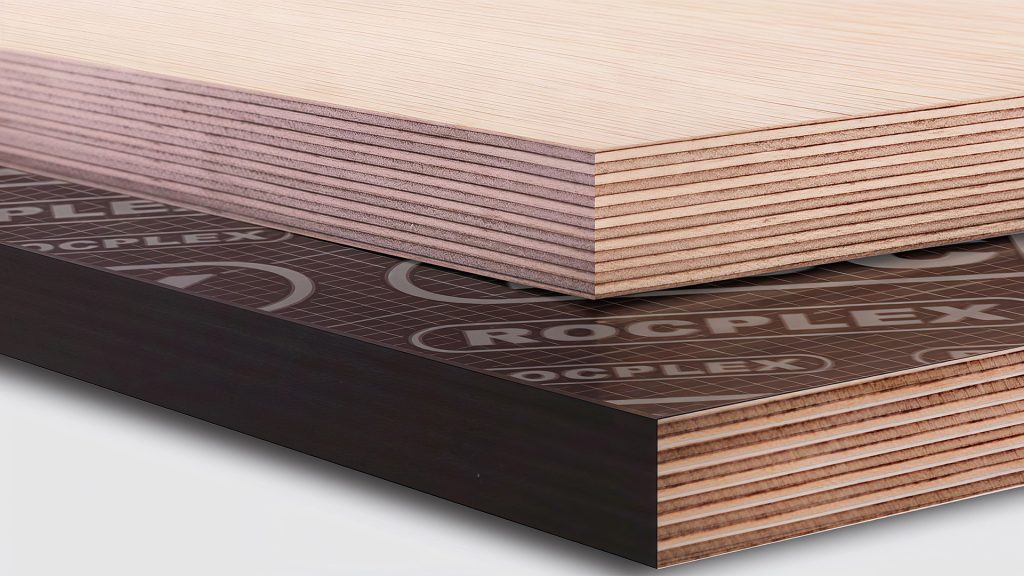
Is Marine Plywood Waterproof for real projects?
Is Marine Plywood Waterproof in the same way as plastic? No, wood still absorbs moisture. However, marine-grade plywood resists water far better than common interior panels. It uses stronger adhesive and cleaner cores. It also limits voids that trap water. Many guides describe it as water resistant, not “fully waterproof.”
Rain is not the only test. Standing water stresses a panel more than spray. Salt air adds pressure through repeated wet and dry cycles. Fasteners create small entry points for moisture. Edges act like open straws when you leave them raw. So, the final result depends on your detailing.
Is Marine Plywood Waterproof because of the glue line?
Is Marine Plywood Waterproof mainly because of the glue? In most failures, the glue line fails first. Marine plywood uses durable adhesives that resist wet cycling. Many mills use phenolic resin systems for exterior bonding. Buyers often call this phenolic glue plywood in trade talk.
Standards explain the same idea with test methods. EN 314-2 sets bonding quality requirements for plywood. It includes boiling water immersion for the highest bond class. That testing targets glue line strength under severe moisture stress.
How marine plywood slows water inside the panel
Is Marine Plywood Waterproof only because of glue? No, water also travels through the core. Core build quality decides how fast water moves. A tight core slows that travel and keeps strength more stable.
Tight veneers and low voids reduce water channels
Water moves quickly through gaps. A void acts like a small tunnel inside the sheet. Marine plywood aims to limit these gaps. Many buyers ask for BS 1088 marine plywood for this reason. Retailers describe BS 1088 panels as having durable construction with no voids.
Veneer selection also supports stability. Uniform veneers share stress across the sheet. They reduce weak spots under wheel loads. This matters for docks, ramps, and wet storage yards.
Balanced layup helps panels stay flat
Moisture makes wood fibres swell. Swelling can differ from one face to the other. That difference can cause warp and twist. A balanced layup reduces that risk. Press control also matters, because it keeps glue spread even.
Flatness reduces callbacks for wholesalers. Straight sheets install faster on site. Consistency also supports repeat orders. Program buyers care about the next batch, not only today’s load.
Is Marine Plywood Waterproof at the edges and screw holes?
Edges and holes decide most real failures. Water enters fastest through exposed end grain. Screw holes act like small funnels. Cutouts for drains create larger entry points. Therefore, sealing becomes part of the system.
Edge sealing is simple and effective. You can use edge paint, resin, or a coating system. Contractors often seal twice on high-risk edges. They also seal again after field cuts. That habit extends panel life in wet projects.
For boat interiors, buyers often use epoxy on edges and holes. For outdoor structures, a quality exterior paint system helps. In both cases, the goal stays the same. You block water at the entry points.
Is Marine Plywood Waterproof compared with “waterproof plywood”?
Some sellers use waterproof plywood as a broad label. Marine-grade plywood is more specific in build intent. It aims for tighter cores and better veneer control. It also uses exterior bonding in most cases.
Exterior plywood can still perform well in rain. However, lower grades may include more core gaps. They may also vary more from batch to batch. For wholesalers, that variation raises risk. For contractors, it raises rework costs.
A simple rule helps. Choose marine-grade plywood when failure costs are high. Choose standard exterior plywood when exposure is short and well managed. For constant wet work, add sealing and coatings either way.
Is Marine Plywood Waterproof in bathrooms and wet rooms?
Bathrooms and kitchens bring daily humidity. Splash zones also stay damp for hours. Marine-grade plywood can work well in these spaces. Still, you must protect edges and joints.
Use a sealing plan before installation. Seal cut edges and drill holes first. Then apply a durable coating on the face. Also keep the panel off standing water where possible. These steps keep swelling low and joints tight.
For wet concrete work, the same logic applies. Concrete slab plywood sees water and cement paste every pour. Good sealing and cleaning improve service life. When you need the best release, choose film faced plywood.
ROCPLEX’s panel team keeps the message simple. “Buy the right bonding first, then seal every edge,” says a ROCPLEX technical manager. “That approach prevents most wet-use failures.” This guidance applies to marine panels and to shuttering panels on busy sites.
What “waterproof” means in plywood buying language
Is Marine Plywood Waterproof can trigger confusion in tenders. Some specs use “waterproof plywood” as a loose term. Other specs demand a standard, such as BS 1088. In practice, define what the sheet must survive. Then match bonding and protection to that exposure.
EN 314-2 bonding classes connect to exposure
EN 314-2 defines bonding quality by intended conditions. It uses wet and boiling tests to prove bond strength. Class 3 targets unprotected exterior conditions in the standard. That test includes boiling water exposure and drying steps.
Many buyers still say WBP plywood for exterior bonding. The term links to “Weather and Boil Proof” in trade language. Modern specs often refer to EN classes instead. Still, WBP remains common shorthand in many markets.
Bond quality drives real water resistance over time, especially under wet-dry cycling. For a simple reference on bonding classes and end-use conditions, see BS EN 314-2 bond quality requirements. When the job also involves concrete work, many contractors switch to film faced plywood for cleaner release and higher formwork cycles.
BS1088 marine plywood signals high build quality
BS 1088 is a British Standard linked to marine plywood. It points to higher veneer quality and better core control. Many markets treat BS 1088 marine plywood as a premium label. Still, match the panel to your job.
Marine grade does not stop decay by itself
Some buyers think marine grade stops rot. Marine plywood is not decay treated by default. APA notes that marine-grade plywood is not treated to enhance decay resistance. If decay is a concern, plan treatment and good drainage.
Is Marine Plywood Waterproof enough for concrete formwork?
ROCPLEX sells formwork plywood for concrete jobs worldwide. Many buyers ask if marine plywood can replace formwork plywood. The answer depends on surface needs and reuse cycles. Separate bond durability from concrete release performance.
Film faced plywood often wins on release and finish
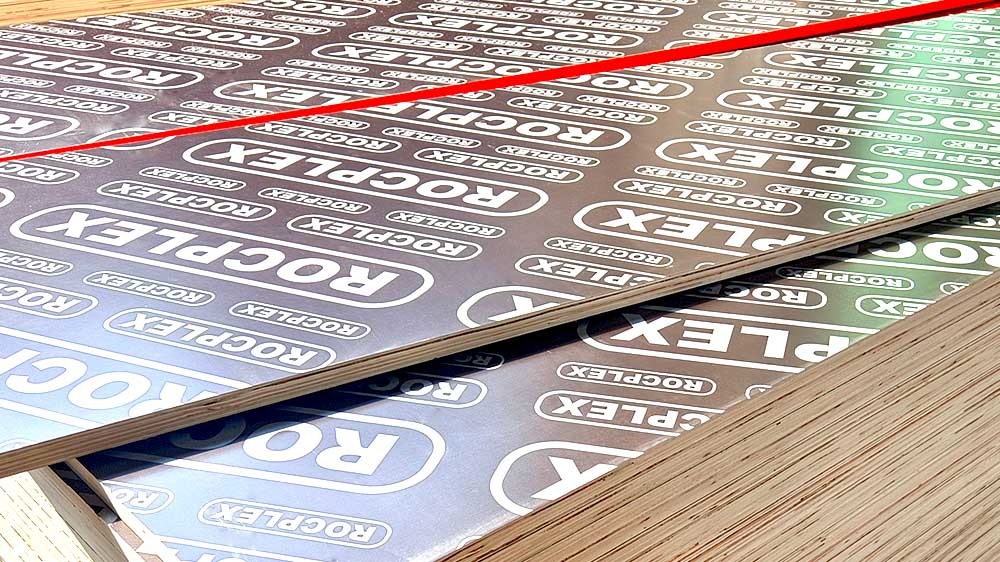
Film faced plywood adds a phenolic film on the face. The film improves release and protects the veneer. It also supports a cleaner concrete finish. Many contractors choose film-faced plywood as a default formwork panel.
Marine plywood resists water well, yet it lacks the same film face. It can stick more to concrete when you skip release agent. It can also wear faster on the surface. Therefore, film-faced plywood often delivers higher reuse cycles in concrete formwork.
For harsh job cycles, some buyers compare coated panels as an alternative to standard faces. Xlife formwork plywood targets higher abrasion routines, while PP plastic plywood supports projects that prioritise a sealed surface and fast cleaning.
Practical formwork tips that protect any plywood
Use a consistent release oil system on every pour. Clean concrete paste off the face after stripping. Store panels on level bearers between pours. Keep edges sealed and repair chips early. These habits can add real reuses to shuttering plywood.
Is Marine Plywood Waterproof if the grade is wrong?
The market uses the word “marine” too loosely. Some panels carry the label but miss core control. Others use lower bond systems for cost reasons. So, buyers should verify before they scale.
Ask for bonding information tied to a standard test method. Request core photos from cut samples. Confirm the face and core veneer quality in writing. If you buy to BS1088 marine plywood, ask for supporting documents. If you buy to an EN exposure class, ask for test records.
Also check that the supplier explains limits honestly. Marine grade does not mean decay proof. It does not replace a sealing system. It also does not fix poor installation. A supplier who says that helps you avoid claims.
Common buyer pain points and clear fixes
Wholesalers and contractors report similar issues. A clear spec and good handling prevent most failures.
Delamination fears rise after heavy rain. Choose exterior bonding and confirm records where possible. Edge swelling happens in open yards. Specify edge sealing or apply sealer after cutting. Warp shows up after humid shipping. Ask for moisture control and flatness tolerance.
Face wear can also surprise new buyers. Grit works like sandpaper under traffic. Sweep often and wash with mild soap. Avoid waxy cleaners that reduce grip and slow drying. Rotate panels when one zone takes all the wear.
A trade-ready spec that reduces disputes
Is Marine Plywood Waterproof becomes easier to answer when the spec is clear. Use a short checklist that any buyer can send in one message.
Start with thickness and sheet size. Next, define core species and veneer grade. Then specify bonding for exposure. If you need WBP-bonded plywood performance, state it clearly. Add a standard reference when the project demands it, such as BS 1088 marine plywood.
Now add the protection plan. Require sealed edges for wet storage. Specify a coating system for direct weather exposure. Also state the intended environment, such as coastal or inland. This detail helps the mill select the right resin system.
For mixed purchases, add one more line. Specify if you also need film-faced plywood for concrete release. If the job uses shuttering panels, state target reuse cycles. This avoids last-minute substitutions.
Quick checks before you load a container
These checks do not replace lab tests. Still, they catch obvious problems early. They also help new buyers learn faster.
Ask for a cut edge photo from the mill. You want tight, consistent plies and few gaps. Check weight consistency across the lot. Large swings can signal core variation. Request face photos under good light. You want clean veneer without open defects.
If you run a trial, focus on the glue line and edges. Wet cycling usually fails at the bond first. Edges often fail next if you leave them raw. Test sealing along with the panel. That gives a more honest result.
Storage and shipping tips for wholesalers
Marine plywood can travel long distances well. Still, moisture control during shipping matters. Keep packs off the container floor with dunnage. Use dry pallets and strong strapping. Protect corners to reduce edge cracks.
In humid lanes, add desiccant where it makes sense. Ventilation also helps in some seasons. After arrival, keep packs covered but breathable. Avoid trapping water under plastic. Let air move around the stack.
In warehouses, keep panels flat and supported. Store them away from direct ground moisture. Rotate stock and avoid long yard exposure. These steps protect your margin and your reputation.
How ROCPLEX Marine Plywood supports export programs
ROCPLEX builds marine plywood with export buyers in mind. We focus on stable veneers, controlled pressing, and consistent bonding. Our team tracks glue spread, press time, and temperature. We also check flatness and edge condition before packing.
We offer marine-grade plywood for wet environments and repeated cleaning. Also supply formwork plywood for concrete work. This combination helps wholesalers serve mixed demand. Buyers can load one container with both lines. They can also keep one supplier for documents and packing.
When clients ask, “Is Marine Plywood Waterproof,” we answer with scope and limits. We explain what the panel resists and what it cannot resist. We also share sealing and coating guidance. That guidance reduces avoidable claims.
People also ask about marine plywood
Can marine plywood stay underwater?
Marine plywood resists water, yet wood still absorbs moisture. Long submersion stresses edges and joints. Seal edges and faces for any long wet exposure. Use epoxy systems for high-risk marine builds.
Does marine plywood stop rot?
No plywood stops rot by itself. Rot needs fungi plus moisture plus time. APA notes that marine grade plywood is not decay treated. Plan treatment when decay risk is high.
Is WBP plywood the same as marine plywood?
WBP plywood describes bonding performance, not a full build spec. Marine-grade plywood also targets veneer quality and low voids. Many marine panels use WBP-bonded plywood. Not all WBP panels meet marine grade expectations.
Which plywood is best for concrete forms?
Most contractors choose film-faced plywood for concrete formwork. The film improves release and protects the face. It also supports higher reuse cycles in many projects.
Can I use marine plywood outdoors without coating?
You can, but you take more risk. Sun, rain, and dirt will attack the surface. A coating system extends life and keeps faces cleaner. Edge sealing is the first priority.
A clear close for program buyers
Is Marine Plywood Waterproof becomes useful when you define the job. Decide if you need bond durability, surface protection, or both. For wet storage, choose marine-grade plywood with exterior bonding. Direct weather, add sealing and a coating system. For concrete forms, specify film-faced plywood for release and finish.
If you need stable supply for export, consider ROCPLEX Marine Plywood. Send your thickness, sheet size, and target standard. Add your exposure details and destination port. Our team will reply with a clear offer and lead plan.
If you want a fast quotation, share thickness, sheet size, target standard, and destination port. You can send your request through our contact page, and we will reply with lead time, packing plan, and a clear spec suggestion.
Post time: Apr-14-2023