

Formwork Beams: Why ROCPLEX H20 Timber Beams Fit Fast Slab Cycles
Formwork beams support plywood and panels during concrete pours. They help keep the deck flat, control deflection, and improve cycle speed on active sites. When the beam stays straight and stable, crews set out faster, and pours finish cleaner.
For most daily jobs, contractors start with the H20 timber beam. It combines practical handling with reliable support. In addition, H20 beams fit common slab formwork systems and table formwork layouts. That is why this guide focuses on H20 first, while still explaining where LVL can help.
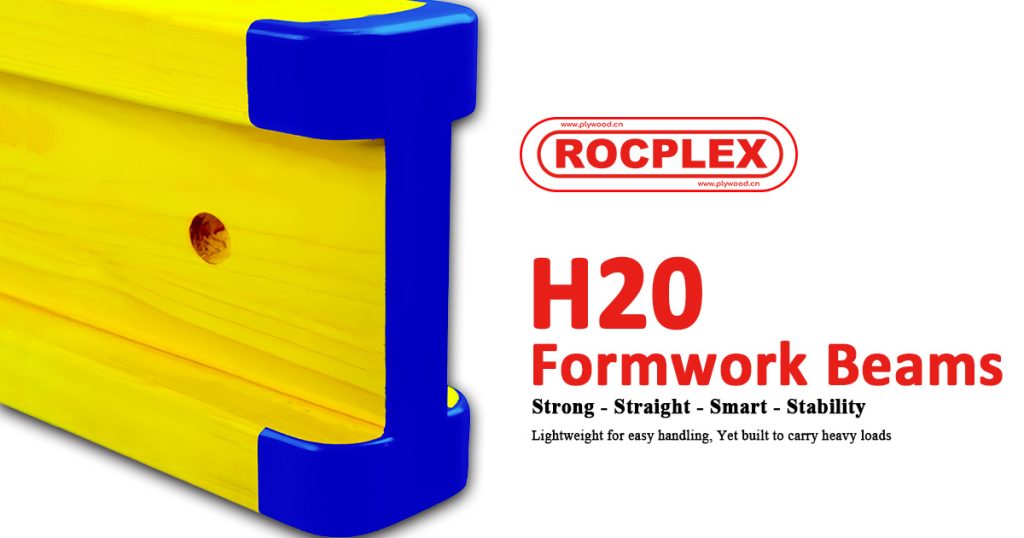
H20 formwork beams with end protection, ready for fast slab cycles and clean pours.
Quick links (recommended for readers)
- View the ROCPLEX beam range
- ROCPLEX H20 timber beams
- LVL beams for formwork
- Film faced plywood for concrete formwork panels
What formwork beams do on site
A good beam does a few simple jobs very well. First, it carries wet concrete loads through the deck system. Next, it keeps panel joints stable so the surface stays flat. As a result, you reduce rework from uneven pours, leaks, and misalignment.
Common benefits of quality concrete formwork beams:
- Faster set-out because crews repeat the same grid
- Cleaner results because panels move less
- Higher reuse value because beams stay straight longer
- Lower waste because end damage drops
Why H20 timber beams are the main choice for contractors
H20 beams are popular for a reason. They feel easy to handle, and they suit fast slab cycles. At the same time, they support repeat layouts in table formwork systems. Therefore, crews can work faster without changing habits or tools.
Choose H20 timber beams when you need:
- Quick placement under slab decks
- Consistent support for plywood and panels
- A practical beam format for repeated cycles
- A proven option used across many forming systems
If you buy for distribution, H20 also simplifies stocking. Most customers already know the format, so the conversation becomes easier.
H20 vs LVL: when each option makes sense
Many buyers ask whether LVL is “better” than H20. The answer depends on the job. H20 formwork beams are often the first choice for daily slab work because they balance handling and performance. However, LVL beams for formwork can fit projects that need long straight runs or planned bearer layouts.
A simple way to decide:
- Pick H20 for fast cycles, slab work, and common system compatibility
- Consider LVL for long runs, consistent sizing, and planned bearers and joists
In short, H20 is usually the main workhorse, while LVL is a useful alternative in specific layouts.
Typical applications: slab, wall, column, and edge forming
Most sites use timber formwork beams in two ways. On slab decks, beams work as joists under panels. For walls and columns, beams support vertical panels and help hold alignment. In addition, beams support edge forming where straight edges matter.
Typical uses include:
- Slab formwork support under plywood and panels
- Wall formwork stability for clean lines and consistent spacing
- Column setups with repeat panels and bracing
- Edge forming where straightness impacts finishing work
How to specify H20 beams for a quotation
To avoid delays, it helps to send one clean spec list. First, confirm whether your job is mainly slabs, walls, or mixed work. Next, confirm your length plan. Then share your packing and destination details.
A practical quotation checklist:
- Beam type: H20 timber beams
- Lengths: single length or mixed length schedule
- Quantity: packages or containers
- Use: slab, wall, or mixed
- Destination port and target delivery time
- Any special packing request (labels, bundle protection, pallet plan)
If you want fewer claims, also ask for consistent markings and protected bundles.
Quality checks that protect your reuse value
Price matters, but repeat performance matters more. Therefore, buyers should confirm basic quality points before placing volume orders.
Key checks for H20 formwork beams:
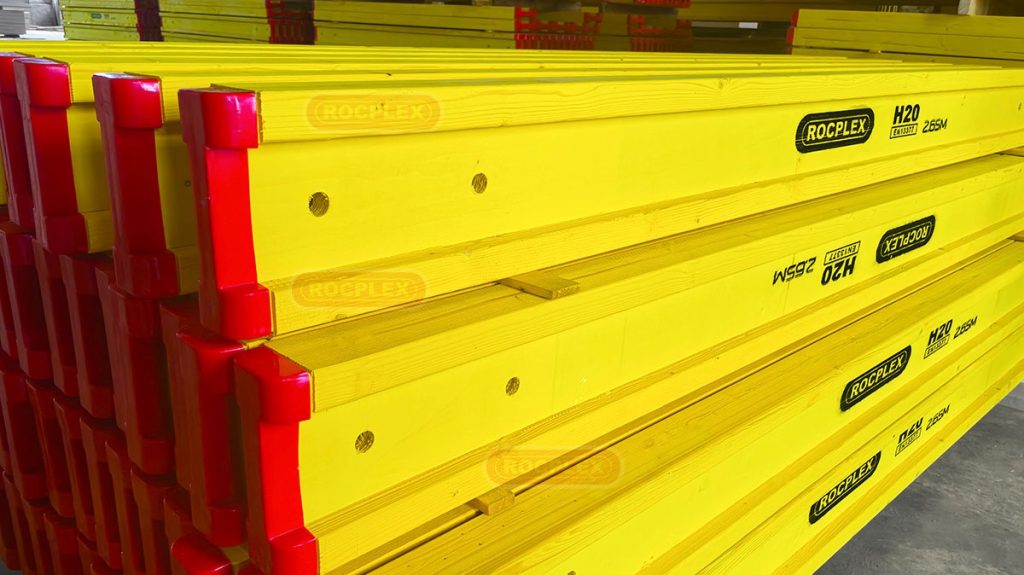
- Straightness and stable sizing across the lot
- End protection to reduce splitting from impacts
- Surface protection to resist wear and moisture
- Bonding quality for repeat site cycles
- Lot consistency to reduce mixing issues on site
If you distribute beams, these checks also reduce after-sales complaints. That protects your margin and customer relationships.
For buyers who need a QC checkpoint: watch our factory production and inspection video on YouTube. It shows routine checks for straightness, end protection, coating, and lot marking.
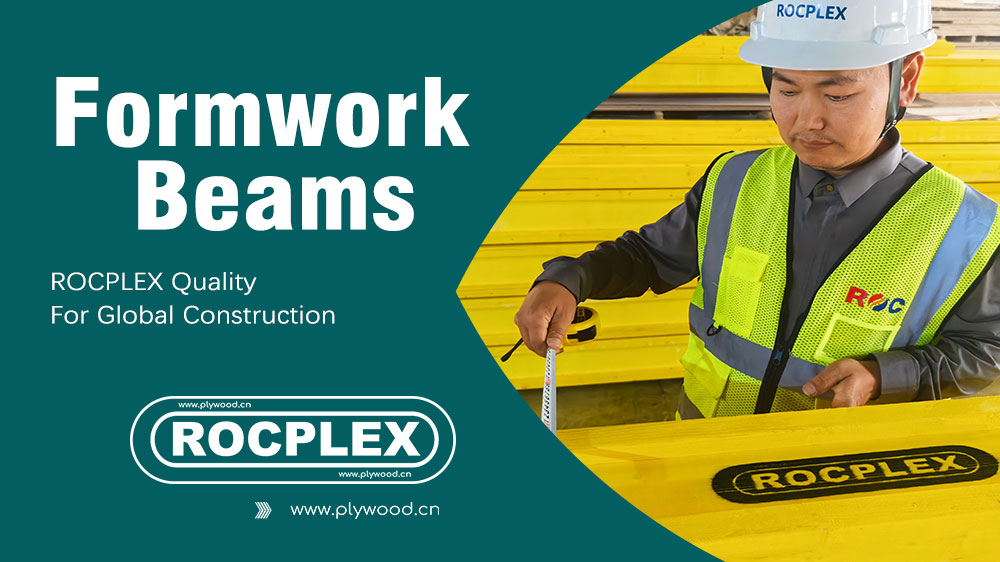
Factory QC check: measuring, marking, and packing control before shipment.
Handling and storage tips to extend service life
Even the best formwork beam loses value when storage is poor. For that reason, simple routines make a big difference.
Best practices:
- Store beams off the ground
- Keep bundles dry and covered during rain
- Avoid end hits during lifting and moving
- Clean concrete residue after each cycle
- Rotate stock so wear stays even across bundles
When crews follow these steps, reuse cycles normally increase. As a result, the job cost per pour drops.
Packing and shipping notes for wholesalers
For export buyers, packing quality reduces damage claims. In addition, good labeling speeds up warehouse receiving and site delivery.
What to confirm before production:
- Bundle protection: end and edge protection
- Clear marks: beam type, length, lot number
- Length plan: standard lengths or mixed schedule
- Container loading: stable bundles reduce movement
- Documentation: packing list that matches marks
If you sell into multiple markets, standardizing these items makes repeat orders much easier.
External reference (for buyers who need a standards checkpoint)
Many buyers reference EN 13377 when they compare timber formwork beams across suppliers. Use the official overview as a checklist when you confirm product type and factory control.
EN 13377 overview: Prefabricated timber formwork beams (SIS)
FAQ
1) What are formwork beams used for?
Formwork beams support panels and plywood during pours. They help carry loads, keep the deck flat, and improve cycle speed in slab and wall work.
2) Why do contractors choose H20 timber beams?
H20 beams are practical for daily cycles. They are easier to handle, and they suit repeat layouts. In addition, good end protection helps extend reuse life.
3) Are H20 beams and LVL beams the same?
No. H20 is a common beam format used in forming systems. LVL is an engineered option that can suit long straight runs. However, H20 is usually the first choice for fast slab cycles.
4) What reduces reuse life the most?
End impacts, wet storage, and surface cuts reduce reuse quickly. In contrast, dry storage, careful lifting, and routine cleaning extend service life.
5) Can I source beams and plywood together?
Yes. Many buyers bundle beams with film faced plywood to simplify supply and reduce compatibility issues.
6) What should I send for a quotation?
Send beam type (H20), length plan, quantity, destination port, and main use (slab, wall, or mixed). Also share your target delivery time.
Ready to price your H20 beams?
Send your preferred lengths, quantity, and destination port. If possible, add your main use (slab, wall, or mixed) and your target reuse cycles. We will reply with a clear recommendation, packing plan, and a quotation you can forward to your team or customer.
Compare engineered options for bearer and joist layouts: Formwork LVL
Post time: Aug-18-2025