

What Buyers Want From 3 Ply Yellow Panel
Busy projects value speed, predictability, and finish quality. 3 ply yellow panel delivers that mix with simple routines. The rigid three-layer core limits deflection at pressure. Faces carry a tough coating that cleans fast. Release agents work with thin, even coats. Crews then strike sooner and move forms again. Owners see tidy surfaces and fewer patch notes.
Grade consistency matters across batches. ROCPLEX focuses on steady density and clean joints. Moisture sits in a tight window. Face quality stays uniform from pack to pack. That stability protects your program and your margin.
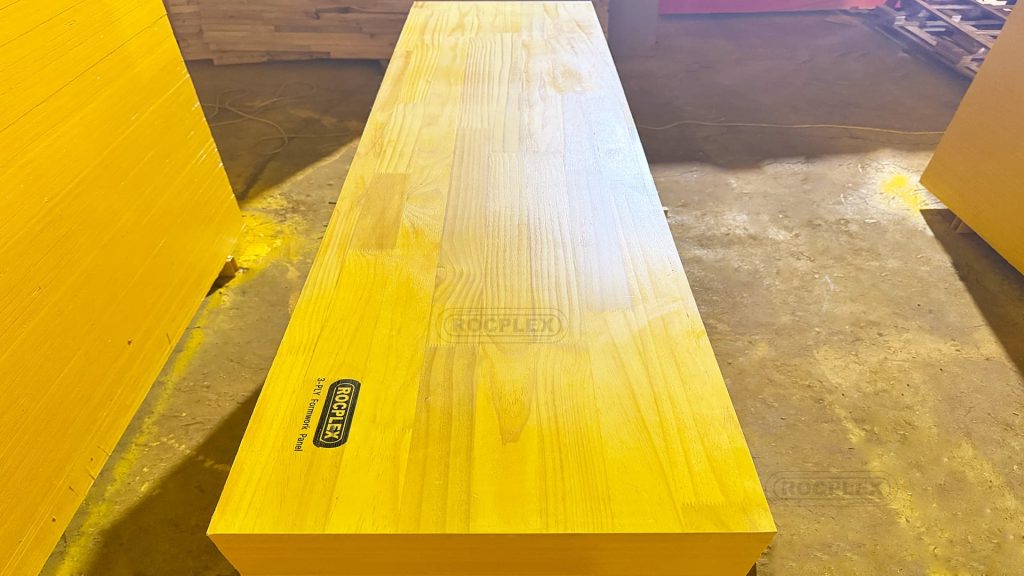
How The Panel Is Built
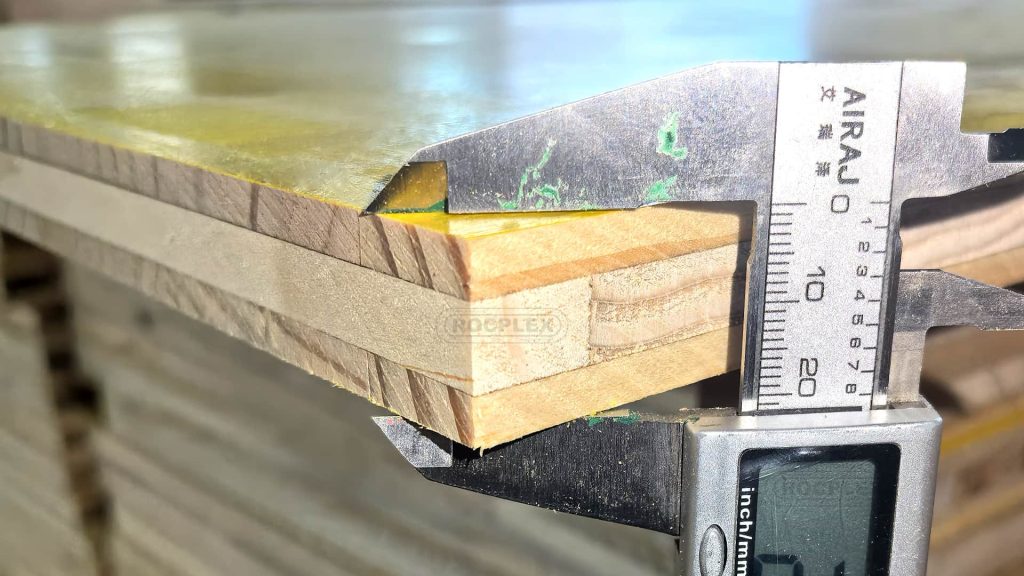
Each sheet uses three cross-laminated spruce layers. Adhesives cure under heat and pressure. The yellow coating resists water and site grime. Edges receive a durable seal for long routes. This build makes a stiff, light panel for concrete formwork.
Veneer selection sets the tone. Clean cores avoid gaps and weak points. Glue spread remains even across the layup. Press time and temperature follow the spec. ROCPLEX tracks each lot with traceable data. Your team receives panels that behave the same.
3 Ply Yellow Panel Vs 3 Ply Shuttering Panel
A 3 Ply Shuttering Panel is a broad jobsite term. It includes many coatings and grades. 3 ply yellow panel is a defined build with a bright face. The face sheds paste and cleans in minutes. Edges resist wicking when sealed well.
Hidden pours can use basic shuttering panel grades. Visible pours benefit from the yellow face. Crews see fewer imprint risks on columns. Cores and walls strip without gouging. Life-cycle cost usually favors the yellow face on tight schedules.
Strength, Stiffness, And Finish Class
Engineers watch stiffness first. The cross-laminated core controls deflection. That protects walls from ripples. MOR and MOE values reflect veneer quality. Tight grading keeps those numbers high.
Finish class depends on release, vibration, and seams. The coated face helps a lot. Tie spacing and screw patterns still matter. Backer rods seal joints and reduce grout loss. Crews then achieve neat, even faces. Patching lists shrink across the job.
3 Ply Yellow Panel Sizes And Thicknesses
Standard sizes include 1220 × 2440 mm. Many sites also favor 500 × 2000 mm strips. Others use 200 × 2000 mm for beams. Typical thicknesses range from 21 to 27 mm. Thicker sheets span farther between bearers. Thinner sheets help manual handling on dense supports.
Pick thickness by pressure, span, and finish target. Heavy pours favor 27 mm. Tighter centers may accept 21 mm. Balance lifting limits with stiffness needs. ROCPLEX can bundle mixed sizes in one pack. Your teams then cut less on site.
Edge Sealing And Cut Protection
Factory edges arrive sealed and dry. New cuts need paint the same day. Use a compatible PU or epoxy edge coat. Mark the cut date on the paint stripe. That simple step blocks wicking and delam risks.
Saw choice also matters. Use a sharp, fine blade for clean edges. Support sheets during long cuts. Blow off dust before oiling. Clean edges reduce water paths and protect cycle counts.
Handling, Storage, And Transport
Plan lift points before unloading. Use spreaders for long bundles. Keep forks smooth and free of burrs. Never drag faces across abrasive decks. That rule avoids instant scratches.
Store panels flat on straight dunnage. Leave air gaps and cover with a breathable tarp. Keep stacks off the ground and away from heat. During stripping, use plastic wedges near ties. Clean faces with soft pads and water. Dry panels before stacking. These steps extend service life across cycles.

3 Ply Yellow Panel Release And Cleaning
Pick a release agent matched to coated faces. Apply a thin, even mist. Wipe off pools that trap dust. Reapply after long delays or dust storms. Good release habits raise finish class.
After stripping, wash with clean water. Remove fines before they bond. Avoid harsh solvents that dull the color. Touch up edges as needed. Keep a cycle log on each bundle. Simple routines protect investment and time.
3 Ply Yellow Panel On Walls, Cores, And Slabs
Tall shear walls demand predictable friction. The yellow face provides smooth, uniform release. Columns need crisp corners for wraps. Coated faces hold edges across cycles. Cores and slabs benefit from fast stripping. Crews pry less and damage less.
Cold weather stresses glue lines. Quality adhesive keeps layers locked. Hot weather tests edge seals. Double coats hold against sun and spray. Dense rebar mats scuff weak faces. The yellow coat resists that daily abuse.
3 Ply Yellow Panel Layout And Support
Start with load, span, and target finish. Align seams over strong bearers. Stagger joints to avoid long lines. Pre-drill near edges to prevent splits. Use screws with correct shank and head. Keep heads flush to avoid telegraphing.
Seal seams in wet weather. Back-butter edges with compatible sealant. Stop drips that stain fresh concrete. Mark sheets for rotation. Rotate to balance wear across faces. These details raise reuse counts.
3 Ply Yellow Panel Cost And ROI
Ticket price is only one input. Life-cycle cost decides winners. Each extra reuse lowers cost per pour. Cleaner finishes cut patch labor. Earlier strikes shorten crane hours. Fewer claims protect margin across months.
Track three numbers on every job. Count reuses per sheet. Measure patch hours per pour. Record delays tied to form repairs. Trends appear within weeks. Teams then pick the right panel grade with data.
Compliance, Documents, And Labeling
Public and private jobs need proof. Request test reports on glue class and moisture. Confirm thickness tolerance and density. Check emission class if required. Verify face quality and edge coating type.
ROCPLEX prepares tidy document packs. Bundle labels show size, thickness, and lot. QR codes link to digital files. Receivers scan and move fast. Audits also run smoother with clear records. Admin time drops for your office.
Sustainability And Chain Of Custody
Buyers now ask for verified sourcing. Chain-of-custody documents support that goal. Durable sheets also cut waste. More reuses mean fewer panels consumed. Low-emission resins support indoor projects and targets.
ROCPLEX aligns labels with client portals. Paperwork matches local tender rules. Warehouses scan labels without re-entry. Compliance becomes easy rather than slow. That helps you win and keep key accounts.
Where Related Products Fit
Some jobs favor other options. A Triply Panel shares the three-layer idea with different coatings. Basic formwork boards suit short programs or hidden zones. Many crews keep form boards for on-the-fly blocking. Heavy duty formwork panels help on large cores and towers. Boards for concrete formwork cover diverse sizes for special shapes. Choose by pressure, span, and finish class. Let the task define the panel.
Why ROCPLEX 3 Ply Yellow Panel Wins
Production discipline creates repeatable panels. Veneer moisture remains in a narrow band. Glue lines cure under strict controls. Edges receive two coats for export routes. Packs include corner protectors and water-resistant wrap.
Consistency saves time for contractors. Crews learn the grip and screw hold. Release behaves the same each cycle. Labels and QR codes cut checking time. Claims stay rare and simple to resolve. That predictability protects your brand and margin.
Ordering Checklist For Fast Supply
List size, thickness, and quantity. State edge coat color if needed. Define expected reuses per set. Share unloading limits and gear. Request test reports and moisture data. Ask for spare edge paint and brushes. Add QR links for files and care guides. With this list, orders move fast and clean.
FAQs On 3 Ply Yellow Panel
How many reuses can I expect?
Care drives the number more than grade. Clean, seal, and store well for best results.
Does the face still need release oil?
Yes. Light, even coats support clean release and finish class.
Can I cut panels on site?
You can. Use a fine blade and seal cuts immediately.
Which thickness should I choose?
Match thickness to pressure and bearer spacing. Heavy pours need thicker sheets.
Will rain damage the face?
Short showers rarely cause trouble. Long soaking needs fast drying and repainting.
ROCPLEX Support For Contractors And Wholesalers
Project success depends on more than sheets. Bids need data. Schedules need stock. ROCPLEX reserves production slots and holds safety stock for key sizes. Mixed packs support phased pours. We ship with strong strapping and clear labels.
Technical support stands next to supply. Our team helps with layout, handling, and release routines. We also provide training sheets for crews. These notes boost cycles and cut patch time. Your program then moves with fewer surprises.
Plan Your Next Pour With ROCPLEX 3 Ply Yellow Panel
Share the next pour plan with our team. We will match sizes and thickness to your spans and pressure. Ask for samples and a fast data set. Let your crew test the panels on live work. Watch resets tighten and patch lists shrink. ROCPLEX stands ready to support your bids, pours, and growth.
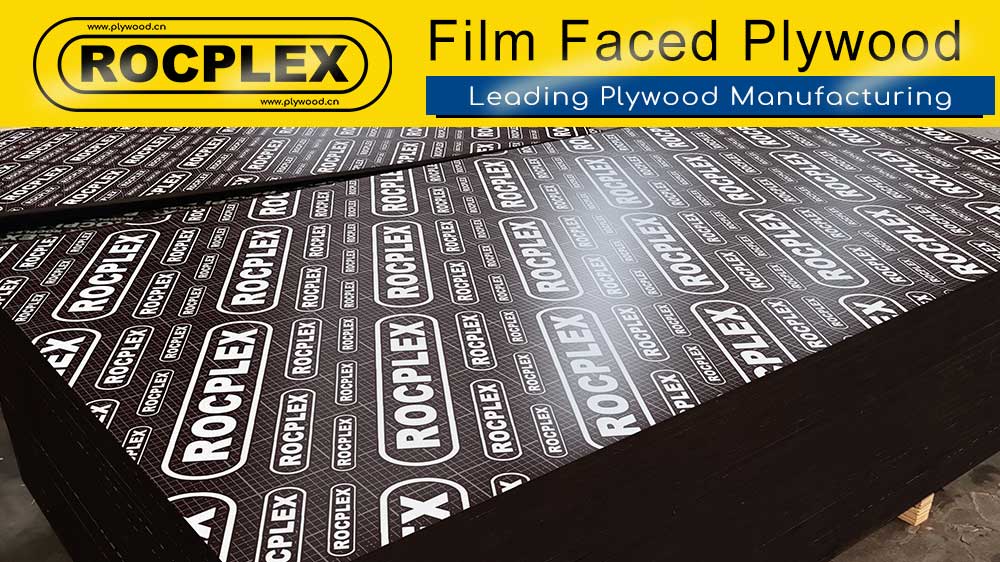
Formwork Plywood
Formwork plywood, also known as formply, shuttering plywood, or film faced plywood. It is a durable and versatile material used in concrete formwork and other construction applications.
What is Formwork plywood?
Formwork plywood is specifically designed for use in concrete formwork, providing a smooth, uniform, and durable surface that can withstand the harsh conditions encountered in construction projects. The surface of formply is smooth and non-porous, reducing the need for additional finishing work and saving time and costs.
Formwork construction film faced plywood is made from layers of hardwood or softwood veneers bonded together with strong, moisture-resistant adhesives like phenolic or melamine resin. This engineered construction offers excellent strength, rigidity, and durability, making it capable of withstanding heavy loads and repeated use.
Advantages of Formwork plywood.
One of the significant advantages of formply is its water and chemical resistance. Treated with water-resistant and chemical-resistant coatings. It can maintain its structural integrity even when exposed to harsh elements found on construction sites.
Shuttering plywood is also reusable, making it a cost-effective option for construction projects. With proper care and maintenance, it can be used multiple times, reducing waste and minimizing costs.
Construction use shuttering plywood has various applications in the construction industry, including concrete formwork, wall and column shuttering, slabs and beams, and temporary structures like scaffolding and exhibition booths.
Formwork plywood is a versatile, durable, and cost-effective solution for construction projects. Its strength, water resistance, and reusability make it a popular choice for concrete formwork and other applications.
Formwork plywood is available in a range of sizes and thicknesses to suit various construction needs. It can be easily cut to size and shaped according to the specific requirements of the project. This versatility makes it a popular choice among contractors and builders who require customized solutions for their construction projects. Whether it is for building foundations, walls, columns, slabs, or temporary structures, formwork plywood is a reliable and cost-effective option that provides excellent performance and durability.
Post time: Nov-24-2025