

A slab job slows down in quiet ways. The deck line drifts. Reset time stretches. Damaged beam ends start showing up in every stack. That is why buyers do not search for an H20 formwork beam just to learn the name. They search because they want a beam that keeps table work moving, supports plywood cleanly, and survives repeat handling without turning into a claims problem. On the ROCPLEX site, H20 beams are positioned exactly in that role: a practical timber beam for slab and table formwork, built for robust support and steady site use.
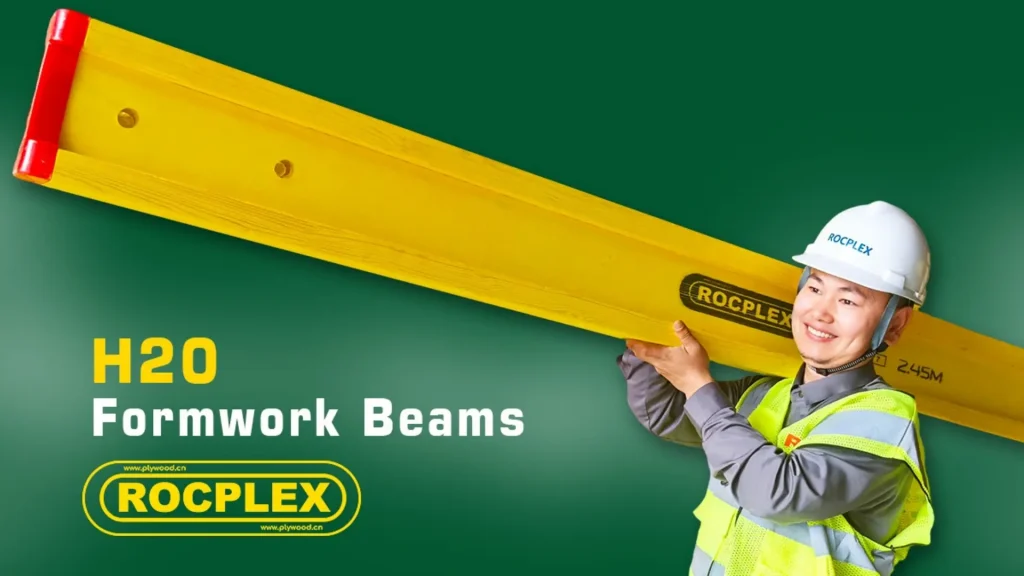
This takes a different route from a normal product page. Instead of repeating what an H20 beam is, it explains how to use one well, when to specify it, when LVL may fit better, and what details should be fixed before you ask ROCPLEX for a quotation. That makes the page stronger for both search traffic and real conversion.
Why H20 Formwork beams sit at the center of fast slab work
On an active slab cycle, beams do more than hold weight. They carry wet concrete loads through the deck, keep panel joints steady, and help crews repeat the same grid with less delay. ROCPLEX own beam article explains this clearly: good formwork beams keep the deck flat, control movement, and improve cycle speed. The same article also notes why contractors default to H20 on many daily jobs. The beam format is familiar, easy to handle, and fits common slab and table layouts without changing site routine.
- They support plywood and panels under slab decks.
- They help hold spacing and reduce deck movement.
- They improve reset speed on repeat table cycles.
- They lower waste when end damage is controlled.
That combination matters commercially. If a buyer serves contractors, distributors, or rental-style formwork users, the H20 format is easy to explain and easy to stock. ROCPLEX already presents H20 beams as part of a wider beam family, which helps buyers move between the H20 formwork beam product page and the broader formwork beams hub without losing the purchasing thread.
What the beam is really doing in a working formwork set
An H20 formwork beam is structure, not face. It is the part that supports the deck skin and helps the whole set stay predictable during the pour. On slab decks, the beam works under plywood or panel skins. In wall and column work, it helps hold lines and alignment. ROCPLEX beam guide lists slab, wall, column, and edge forming as the main application set, which is exactly the kind of coverage buyers want from one stock item.
This is also why beam selection should never be isolated from deck skin selection. If the job runs traditional slab formwork, the beam should be considered together with film faced plywood or the deck panel the site already uses. Your own timber formwork article makes that connection directly by pointing readers from beam choice back to the primary support and deck system.
When H20 works better than LVL and when it does not
Many buyers ask the same question: should this project use H20 or LVL? ROCPLEX published guidance gives a simple answer. Pick H20 when the job depends on fast slab cycles, common system compatibility, and easy handling. Consider LVL when the layout needs long straight runs or more planned bearer and joist logic. In other words, H20 is usually the workhorse for everyday slab tables, while LVL becomes useful in more specific engineered layouts.
| Job condition | H20 formwork beam | LVL formwork beam | Better fit |
|---|---|---|---|
| Fast slab table cycles | Familiar format and quick placement | Can work, but not always the first site choice | H20 |
| Common system compatibility | Very strong | Good, but depends on layout planning | H20 |
| Long straight bearer runs | Good | Often more suitable | LVL |
| Mixed slab and wall work | Practical all-round option | Useful in planned structural layouts | H20 |
| Buyers who need simple stock language | Easy to quote and reorder | Better for engineered discussions | H20 |
That table helps because it shifts the conversation away from “which beam is better” and toward “which beam fits this layout.” It also gives a natural internal path from H20 beams to formwork LVL when a buyer’s project is not standard slab work.
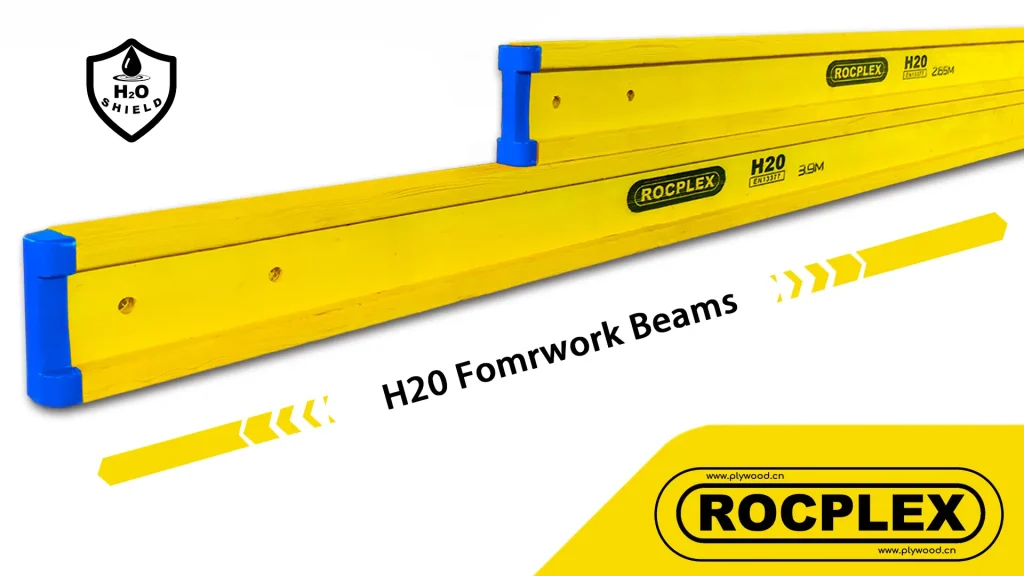
The quality checks that protect reuse value
Price per beam matters. Repeat performance matters more. ROCPLEX’s current beam article is strong on this point. It tells buyers to check straightness, stable sizing, end protection, surface protection, bonding quality, and lot consistency before placing a volume order. Those checks are practical because they connect directly to after-sales risk. A beam that arrives with mixed sizing or weak end protection can still look acceptable in photos, yet create site frustration within the first cycles.
- Check straightness across the lot, not only one sample beam.
- Confirm end protection, because end impacts reduce service life fast.
- Ask how the surface is protected against wear and moisture.
- Ask for lot consistency and clear marking before shipment.
- Request protected bundles if the order will travel long distance.
These points are not theory. ROCPLEX already highlights end protection, protected bundles, lot marking, and packing control as ways to cut complaints and protect reuse value. That makes them ideal conversion content, because they turn a general article into a quotation-ready checklist.
How to specify an H20 beam order without wasting emails
Weak RFQs create weak quotations. The ROCPLEX beam guide already outlines the right way to ask for a quote: state beam type, lengths, quantity, job use, destination port, target delivery time, and any packaging request such as labels, bundle protection, or pallet planning. That is one of the most useful parts of the site because it helps buyers shorten the path from traffic to order.
- Beam type: H20 formwork beam
- Length plan: one length or mixed schedule
- Quantity: packs, lots, or container basis
- Use: slab, wall, or mixed work
- Destination port and target delivery window
- Special requests: labels, bundle protection, pallet plan
A buyer who sends that list gets a better quotation. A buyer who only asks for “best price H20 beam” usually gets a number, but not a dependable supply plan. That is also why it helps to keep the article linked to the timber formwork checklist and the beam hub. The article then becomes part of a larger ROCPLEX buying path rather than a stand-alone blog post.
Standards and sourcing notes serious buyers should not skip
Buyers who compare suppliers often want one external checkpoint, not just factory claims. One useful reference is the official SIS overview for EN 13377 prefabricated timber formwork beams. It states that the standard covers classification, requirements, assessment procedures, and production control for prefabricated timber formwork beams intended for falsework and formwork. That matters because it gives procurement teams a neutral way to talk about product type and factory control.
If the project or market also asks for responsible timber sourcing, add that requirement early. FSC chain of custody certification explains how forest-based materials are verified along the product path, and PEFC supply chain guidance explains that chain of custody certification supports legal and sustainable sourcing for forest products. For exporters and wholesalers, that paperwork belongs in the RFQ, not after the goods are packed.
A practical rule for ROCPLEX H20 formwork beam buyers
Use an H20 formwork beam when the project needs a familiar beam format, fast slab cycles, and simple system compatibility. Move to LVL when the layout is more engineered and the straight-run logic matters more than day-to-day handling speed. Then lock the order with four things: the right length plan, a clear QC checklist, protected bundles, and the right deck partner. On many jobs, that means pairing the beam with ROCPLEX film faced plywood so the structural support and the concrete face work as one system.
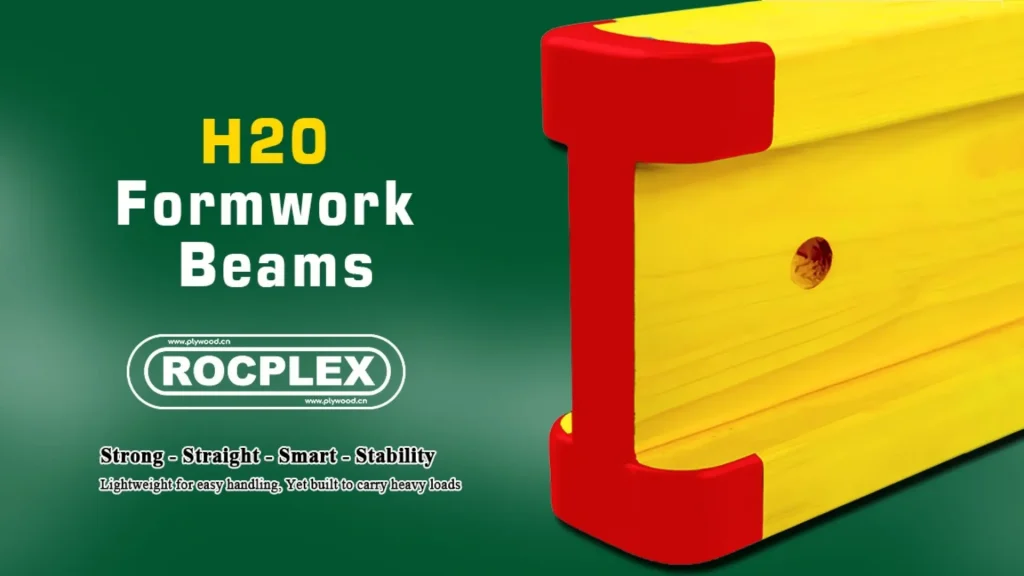
H20 formwork beam FAQ
What is an H20 formwork beam used for
It supports plywood and panels during concrete pours. It helps keep the deck flat and improves cycle speed on slab and wall work.
Why do contractors choose H20 beams so often
Because they are practical for daily cycles, easy to handle, and suited to repeat slab layouts. Good end protection also helps extend reuse life.
Are H20 beams the same as LVL beams
No. H20 is a common formwork beam format. LVL is an engineered alternative that often fits long straight runs and planned layouts better.
What should I send for an H20 beam quotation
Send beam type, length plan, quantity, use, destination port, and delivery target. Add any label or bundle protection request as well.
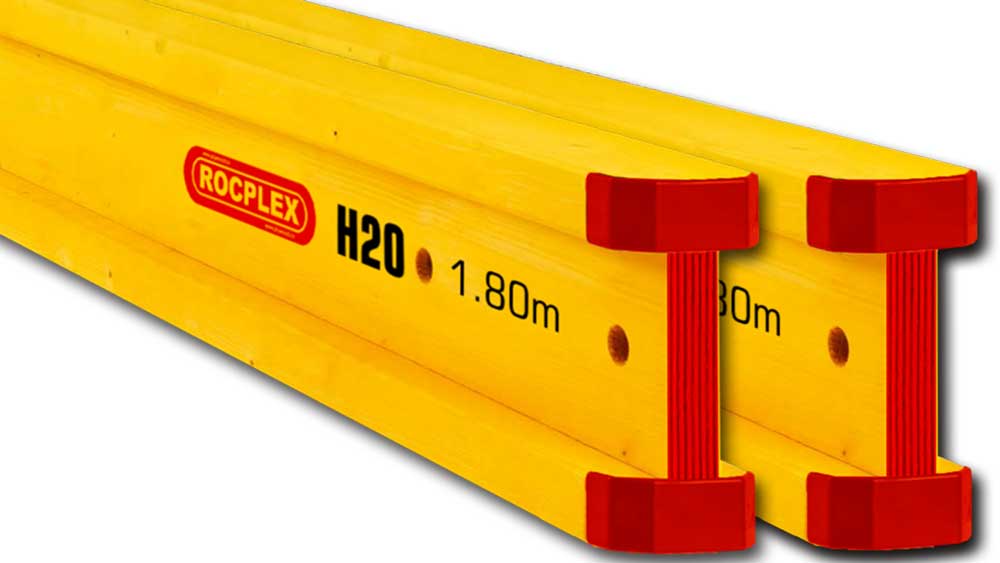
Slab H20 Beams
ROCPLEX Slab H20 beams are the go-to solution for construction projects demanding robust support. Crafted from high-quality timber, these beams provide exceptional strength and reliability. Perfect for formwork applications, ROCPLEX H20 Beams ensure your structures are well-supported and stable.
Post time: Apr-27-2026