

Cheap sheets often look attractive on a quotation. Then the first or second pour exposes the real cost. The panel moves out of line, the edge takes in water, the face wears too fast, and the crew starts repairing forms instead of moving concrete. That is why film faced plywood should be bought as an engineering decision, not as a commodity line item. Buyers who focus only on opening price often pay more later through waste, slower cycles, patching work, complaints, and replacement orders.
For contractors, importers, and distributors, the real buying question is simple. Will the panel stay flat, strip clean, fit consistently, and keep working under site pressure? ROCPLEX positions its Form Birch around the same practical answers: full birch strength, a 220 g/m² phenolic film on both sides, A-bond WBP bonding, and a four-coat sealed edge system, all framed around high reuse and lower cost per pour.
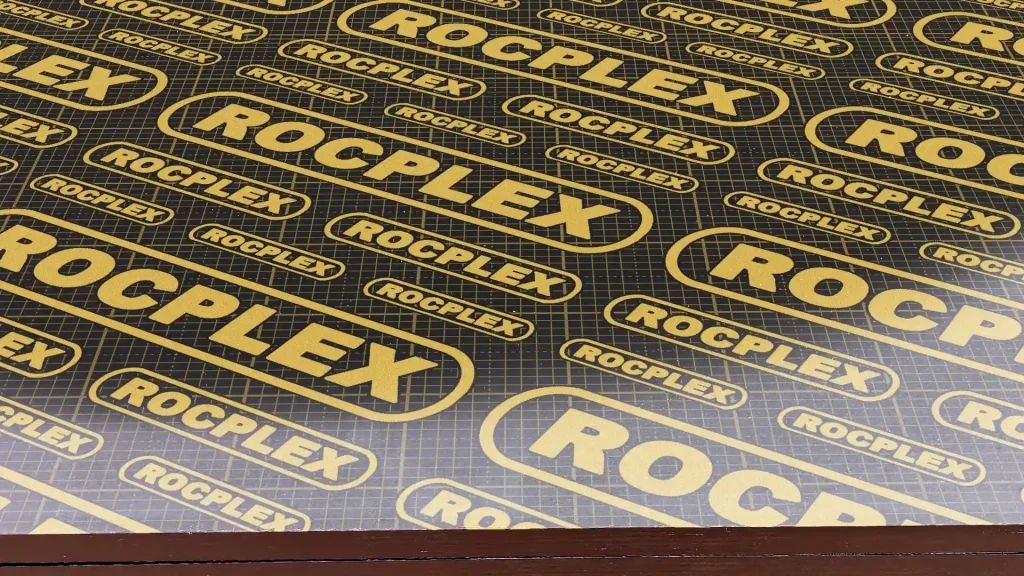
Why film faced plywood should not be treated like a standard sheet
In formwork work, the product is not judged only by how it looks in the warehouse. It is judged by what happens after repeated wet cycles, stripping, handling, and re-setting. Concrete form panels are designed for repeated use, so moisture resistance, bond quality, face durability, and dimensional control all matter in real purchasing decisions.
That buying logic changes the comparison. A low-grade panel may seem cheaper per sheet, yet still cost more if it warps early, leaves rough concrete, or forces mid-project repurchasing. A stronger panel may cost more at the start. But lower the true cost of the job by protecting reuse, labor time, and downstream finish quality. This is where technical structure becomes commercial value.
How ROCPLEX film faced plywood turns design controls into site performance
ROCPLEX works best when buyers understand the product as a cause-and-effect chain rather than a list of loose features. The current Form Birch positioning supports that approach. It ties panel performance to four connected controls: stable birch construction for stiffness, 220 g/m² phenolic film for face durability and cleaner release, A-bond WBP bonding for wet concrete routines, and four-times edge sealing to slow moisture entry.
ROCPLEX also states a typical reuse range of 20 to 80 cycles for its Form Birch. With results depending on handling, storage, stripping method, compaction, and release agent choice. That is the right way to present reuse. It is a performance range tied to site practice, not a careless blanket claim.
ROCPLEX film faced plywood performance chain
- Stable raw materials, high-quality veneer, and solid core structure
→ improve panel strength and dimensional reliability
→ reduce the risk of warping, bending, and internal separation
→ support more dependable site performance in demanding formwork use. - WBP or A-bond bonding
→ create durable bonding between the plies
→ help the panel stay intact in wet concrete routines
→ extend working life and reduce replacement frequency. - High-density phenolic film surface
→ create a smoother and harder working face
→ improve release and resist surface wear during stripping
→ support cleaner off-form concrete and less patching work. - Four-side sealed edges
→ reduce water entry from the most exposed part of the panel
→ minimize edge swelling and moisture damage in the core
→ improve reuse consistency over repeated cycles. - Consistent thickness and tight tolerance control
→ improve sheet-to-sheet fit
→ reduce on-site correction, shimming, and mismatch
→ save labor time during setup. - Strong reuse value
→ allow more cycles from each sheet
→ lower cost per use compared with short-life boards
→ shift the purchase from low opening price to stronger long-term value. - Stable manufacturing and quality control
→ keep batches closer in spec and performance
→ reduce complaint risk and claim pressure
→ help importers and distributors reorder with greater confidence.
A fast buyer comparison before approving a container
| Buyer check point | Low grade panel outcome | Better engineered panel outcome | Commercial impact |
|---|---|---|---|
| Core structure | Unstable flatness, weak zones, faster damage | Better shape retention and stiffness | Fewer rejected sheets |
| Bonding level | Early failure in wet use | More stable life in concrete routines | Lower replacement cost |
| Face quality | Rough release and faster wear | Cleaner stripping and slower abrasion | Better concrete finish |
| Edge protection | Swelling and moisture entry | Slower water ingress from sides | More reuse stability |
| Thickness consistency | Fitting issues and shimming | Easier alignment and setup | Lower labor waste |
| Batch consistency | Complaint risk across orders | More repeatable purchasing result | Safer distributor reputation |
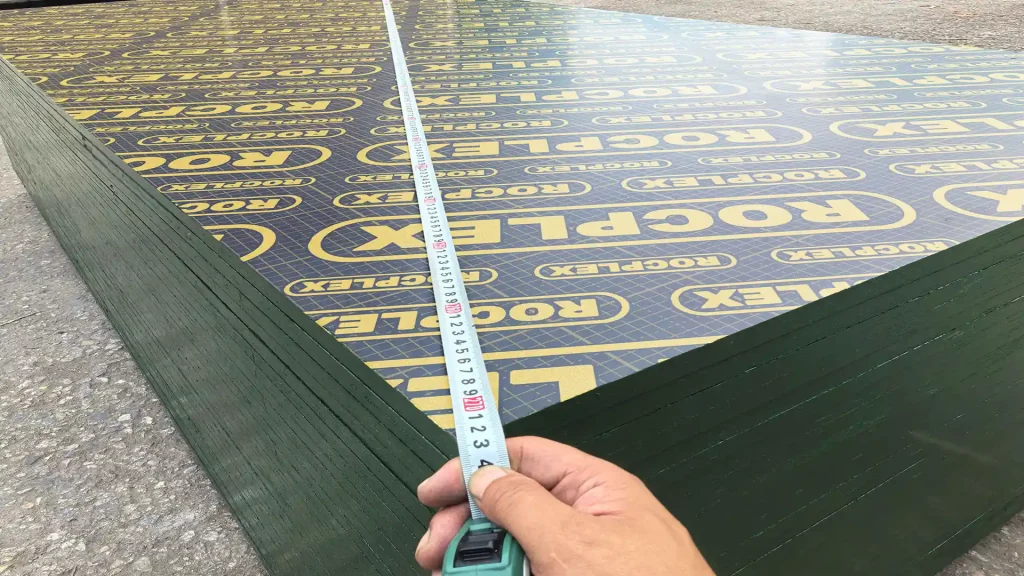
This table matters most for three buyer groups. It matters for the formwork subcontractor who cannot afford single-use waste in a tower cycle. Matters for the developer under fast-track pressure who cannot absorb fitting delays. It matters for the importer who needs one container to match the next. In all three cases, the panel choice affects profit through speed, finish, and risk control rather than through sheet price alone.
Five project failures that usually start with the wrong panel
Single-use waste in high-rise pouring. Cheap boards often lose shape too early. The crew then sorts damaged sheets, cuts replacement pieces, and burns time in a part of the job that should be repetitive and efficient.
Installation delays on fast-track work. Inconsistent thickness creates uneven joints and extra shimming. A panel that should simplify setup instead becomes a labor problem.
Surface ghosting on off-form concrete. When the face quality is poor or unstable, concrete shows marks, texture problems, and patch zones. The saved material cost then reappears as finishing cost.
Batch inconsistency for distributors. One strong shipment can build market trust. One weak batch can trigger claims, site complaints, and customer doubt that carries into the next season.
Inventory gaps during peak demand. If the supplier cannot keep the product stable and available, buyers end up sourcing urgently from mixed factories. That usually creates even more quality variation. Stable supply and repeatable specification matter just as much as sheet performance.
Where ROCPLEX fits best
ROCPLEX film faced plywood fits best where buyers care about repeat pours, cleaner finish, and reorder confidence. That includes high-rise pouring, wall and slab formwork, fast-track commercial jobs, and distributor programs that need the same product spec over repeated shipments. On the current site, ROCPLEX places its film faced plywood inside a wider one-stop formwork system that also includes H20 formwork beams and 3 ply yellow formwork panels, which helps buyers source around the real job rather than around a single sheet item.
That system logic is commercially useful. A buyer who is running table forms, slab cycles, or large wall sequences rarely wants only a sheet. They want predictable formwork behavior. When the plywood, beam, and panel supply all come from a coordinated source, planning gets easier and purchasing friction drops.
What to confirm before you send the PO
A safer order starts with six direct checks. Ask for the core build. Confirm the bonding level for wet concrete use. Check the face specification and film weight. Confirm how the edges are sealed. Ask for thickness tolerance control. Then ask how the supplier keeps one batch aligned with the next. That process is simple, but it filters out a large amount of avoidable risk.
- Core structure and veneer quality
- WBP or A-bond bonding system
- Phenolic film specification and face durability
- Four-side sealed edge protection
- Thickness consistency and production tolerance
- Batch stability and repeat supply capacity
If your market or project asks for responsible sourcing, keep that document flow separate from the product performance discussion. You can also review supplier capability against recognized industry references such as APA concrete form panel guidance, NIST PS 1 22 plywood standard information, and FSC chain of custody guidance.
For buyers comparing options on your own site, it also makes sense to review related pages such as ROCPLEX film faced plywood and formwork plywood before finalizing the order direction.
Film faced plywood FAQ
What is film faced plywood used for
Film faced plywood is mainly used for concrete formwork where repeat pours, cleaner release, and smoother finish matter.
Why does bonding matter so much
Bonding often controls how well the panel survives wet use. If the bond fails, reuse drops quickly.
What makes a premium film faced plywood different
A premium panel usually combines a more stable core, stronger wet-use bonding, a better face surface, and better edge protection.
How many reuses can buyers expect
Reuse depends on panel build and site handling. ROCPLEX currently states a typical 20 to 80 cycle range for Form Birch under real job conditions.
Why is supply stability important for distributors
Stable supply helps buyers avoid urgent replacement sourcing, mixed quality, and customer complaints caused by uneven batches.
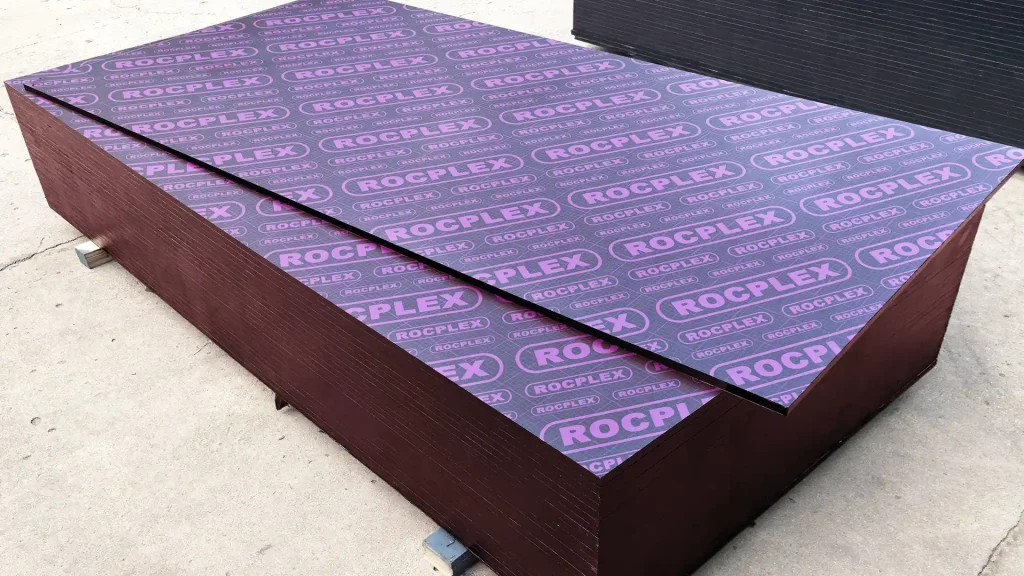
How better film faced plywood control leads to lower jobsite cost
The smartest film faced plywood purchase is rarely the cheapest sheet on day one. It is the panel that protects cycle count, finish quality, fitting speed, and reorder stability over the life of the job. ROCPLEX’s strongest sales argument is not that it sells plywood. It is that selected materials, WBP bonding, phenolic face control, sealed edges, and production discipline work together to reduce site failure risk and lower cost per pour. If your goal is stronger margins, fewer complaints, and a more dependable result on site, that is the buying logic worth using.
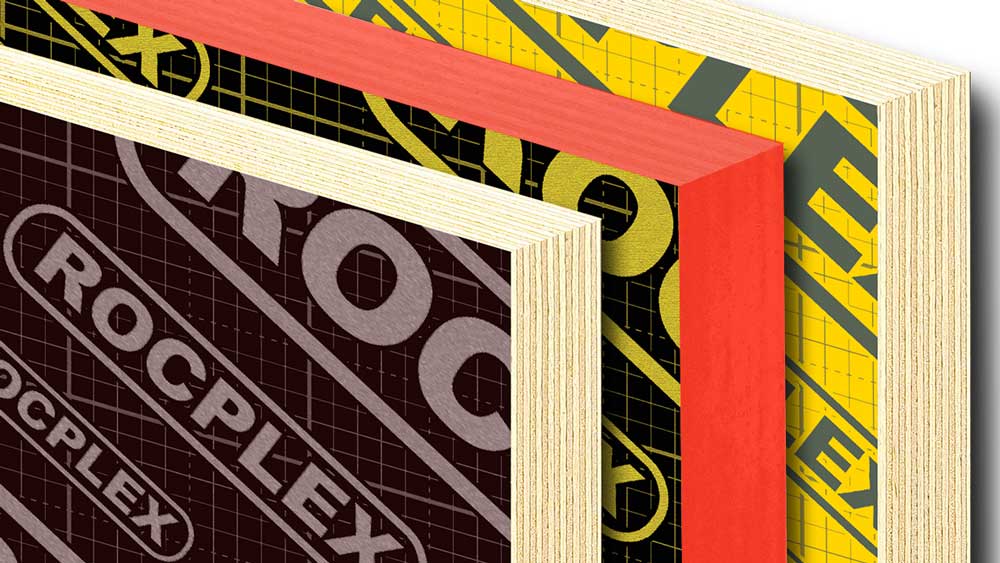
ROCPLEX Form Birch Film Faced Plywood
Film faced plywood should prove its value on site, not on paper. ROCPLEX Form Birch is a premium film faced plywood built for high reuse in concrete formwork. It aims to stay flat, release clean, and keep a stable face across repeat pours. The build focuses on three things that drive real cycles: 220 g/m² phenolic film on both sides, A-bond WBP bonding, and four-coat sealed edges. Full birch construction adds strength and stiffness for demanding routines. Share your size…
Post time: Apr-16-2026