

What is film faced plywood? It is a plywood panel covered with a resin treated film, usually phenolic film, on one or both faces. Builders use it mainly for concrete formwork because the film helps concrete release cleanly, protects the panel face, and supports repeat use when the core, glue line, and edges are made well.
For many buyers, film faced plywood is not just a sheet product. It is part of a site cost system. A better panel can help crews reduce sticking, limit surface repair, protect formwork schedules, and lower the real cost per pour. That is why serious buyers look beyond the sheet price and check the panel build.
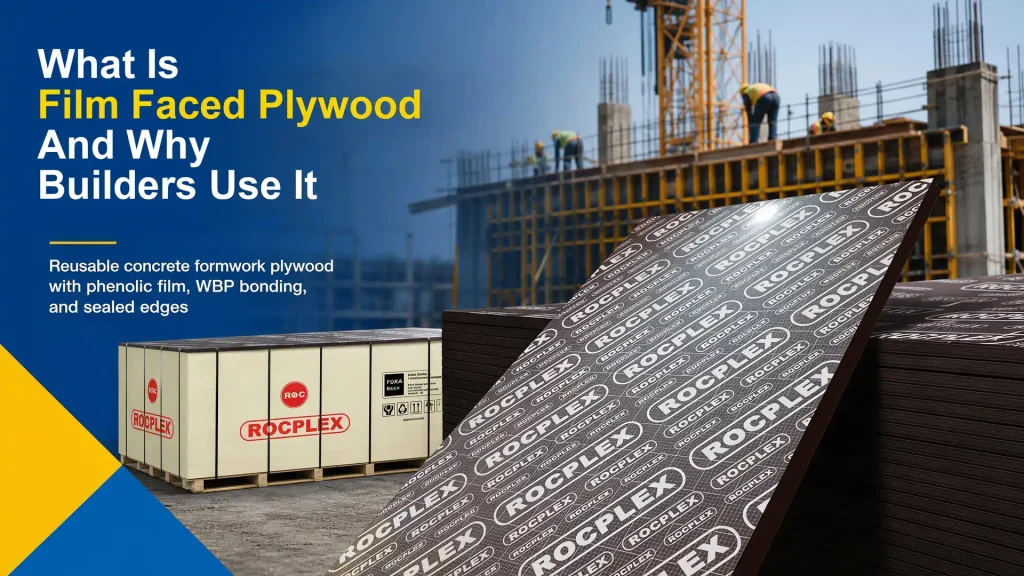
Why builders use film faced plywood in concrete work
Fresh concrete is wet, heavy, and abrasive. A plain plywood face can absorb moisture, wear fast, or hold concrete too tightly. Film faced plywood gives the formwork face a smoother and more resistant surface. This helps crews strip panels more easily after concrete gains strength.
The best result is a cleaner concrete surface with fewer marks. This matters on walls, columns, beams, slabs, stairs, and other formed areas where patch work costs time. For fair faced concrete, the face quality of the panel becomes even more important.
Builders also value repeat use. A low cost panel may look attractive at purchase, but it can become costly if it swells, delaminates, or loses its face after only a few pours. A stronger panel supports steadier output across repeat cycles.
How the film surface protects the panel
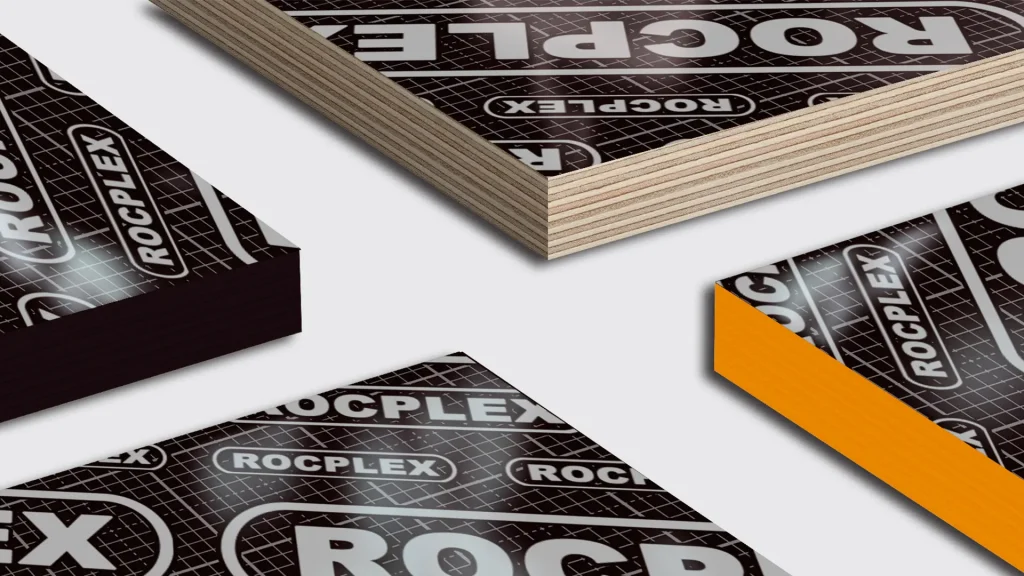
The film surface is the first part that touches wet concrete. In many high grade panels, this surface is made from phenolic resin impregnated film. This layer helps reduce water entry through the face and improves concrete release when crews use the correct release agent.
ROCPLEX Form Birch uses 220 g/m² phenolic film on both sides. This gives buyers a clear surface specification instead of a vague label. The face still needs correct site care, but a stronger film gives the panel a better chance of staying useful across repeat pours.
Film colour alone does not prove quality. Black film faced plywood and brown film faced plywood can both perform well or poorly. Buyers should check film weight, film type, core quality, glue line, edge sealing, and batch control before judging the product.
The core decides strength and stability
A good surface cannot save a weak core. The core affects stiffness, flatness, screw holding, edge strength, and reuse life. When the core has gaps or weak veneer layers, the panel may bend, twist, or fail under repeated concrete work.
Full birch film faced plywood is often selected for demanding routines because birch veneers can give the panel strong stiffness and stable handling. ROCPLEX Form Birch uses a birch base panel for strength and stability in wall and slab formwork programs.
For large buyers, core consistency also matters across containers. A first shipment may pass inspection, but repeat orders must match the same build. This is why professional importers should ask for a clear specification and not rely only on product photos.
Why WBP bonding matters in wet concrete formwork
Concrete formwork exposes panels to moisture, pressure, vibration, cleaning, and handling. If the glue line is weak, the panel can delaminate. Once delamination starts, reuse drops quickly and site complaints increase.
WBP film faced plywood uses a water resistant bonding system for wet site routines. ROCPLEX Form Birch uses A bond WBP bonding designed for demanding concrete formwork use. For tender or controlled projects, buyers should ask what bonding level and documents can be supplied.
Documentation can matter for importers, distributors, and project buyers. Chain of Custody documents may also be requested where certified wood sourcing is required. Buyers can review official guidance from FSC Chain of Custody and PEFC Chain of Custody when setting their purchase rules.
Edge sealing helps protect reuse life
Edges often fail before the face. Water can enter through open edges, nail points, damaged corners, or fresh cut sides. Once the edge swells, panels can lose shape and become harder to fit into formwork systems.
This is why edge sealing is not a small detail. ROCPLEX Form Birch uses multi coat sealed edges to slow water entry. If panels are cut on site, the fresh cut edges should be resealed before reuse. This simple step can help protect the panel and lower waste.
Where builders use film faced plywood
Film faced plywood is mainly used where concrete needs a temporary mould. Common applications include slab decks, wall formwork, column forms, beam sides, stairs, core walls, and special forming work. It is also used in frame systems where panels sit inside a larger formwork setup.
For slab work, buyers often focus on thickness, span, and panel flatness. For wall work, they often care more about the surface finish and repeat release. High rise projects, stable supply and repeat batch quality can be just as important as the first order price.
Builders may also compare film faced panels with formwork plywood, formply, 3 ply panels, and plastic coated panels. The right choice depends on job type, finish target, reuse target, and budget.
Film faced plywood compared with normal plywood
Normal plywood is not designed first for wet concrete contact. It may work for general building tasks, but concrete formwork creates special stress. Film faced plywood has a coated surface that helps protect the face and improve release.
The difference is not only the surface. A true formwork grade panel should also have suitable bonding, controlled thickness, stable core construction, and protected edges. If these parts are weak, the film will not deliver the expected reuse value.
| Buyer check | Why it matters | What to ask before ordering |
|---|---|---|
| Film surface | Controls release and face wear | What film type and film weight are used |
| Core quality | Affects strength and flatness | Is the core birch, hardwood, poplar, or mixed |
| Bonding | Controls delamination risk | Is the panel made with WBP bonding |
| Edge sealing | Slows moisture entry at sides | Are all edges sealed and can cut edges be resealed |
| Reuse target | Controls cost per pour | What site care is needed to reach the target |
| Documents | Supports tender and import checks | Can FSC, PEFC, test data, or product specs be supplied |
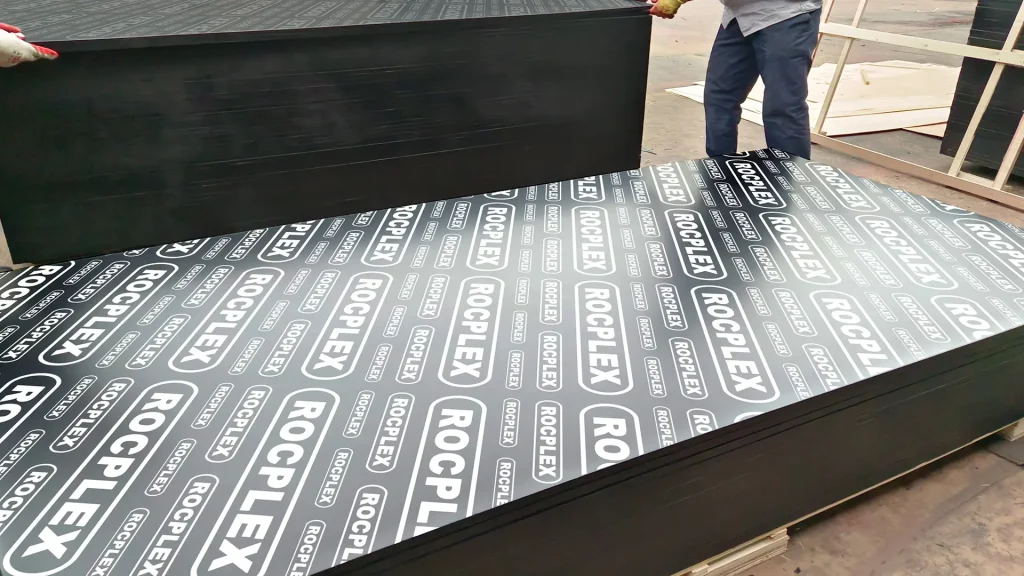
How builders get better cost per pour
The lowest sheet price does not always mean the lowest project cost. Cost per pour is the better measure. It divides the useful panel cost by the number of successful uses. A panel that lasts longer, releases better, and causes fewer repairs may give a lower real cost.
Good site care is part of the result. Crews should use a suitable release agent, strip panels without harsh damage, clean the face after use, store panels flat, keep them off the ground, and protect them from standing water. These habits help the panel perform closer to its intended cycle range.
Buyers planning repeat pours should share their target cycles with the supplier. They should also explain the job type, concrete finish target, thickness, size, packing method, port, and document needs. A clear RFQ helps the supplier recommend the right grade instead of quoting only the cheapest sheet.
When builders should choose a premium panel
A premium film faced plywood makes sense when finish quality, repeat reuse, and schedule control matter. Wall and column work often needs a cleaner face. Fast cycle projects need panels that remain stable after repeated stripping. Large distributors need consistent packing and repeatable specifications.
ROCPLEX Form Birch is built for these higher demand programs with phenolic film, WBP bonding, sealed edges, and full birch construction. Buyers can compare the details on the ROCPLEX film faced plywood page before preparing a bulk order.
For projects using panel systems with beams, buyers may also review H20 formwork beams. Matching the panel with the right support system helps crews control deflection, alignment, and handling speed.
FAQ about film faced plywood
What is film faced plywood used for?
Film faced plywood is mainly used for concrete formwork. It helps create a temporary mould for fresh concrete and supports cleaner release after the concrete sets.
Is film faced plywood waterproof?
Film faced plywood is water resistant, but site care still matters. The film, WBP bonding, and sealed edges help resist moisture, while cut edges should be resealed.
Is film faced plywood the same as shuttering plywood?
They are closely related. Shuttering plywood is a broad formwork term, while film faced plywood usually describes a coated plywood panel used for concrete forming.
Why does film faced plywood delaminate?
Delamination can happen when bonding is weak, edges absorb water, panels are stored poorly, or site handling damages the glue line and veneer layers.
How should buyers specify film faced plywood?
Buyers should state size, thickness, film colour, film weight, core type, bonding level, edge sealing, target reuse cycles, quantity, port, and document needs.
Practical buying note
Film faced plywood works best when the product specification matches the site routine. Buyers should judge it by core quality, WBP bonding, film durability, sealed edges, thickness tolerance, and expected reuse. When these details are clear, the panel becomes more than a sheet. It becomes a tool for smoother pours, cleaner concrete, and better formwork cost control.
For bulk orders, send your required size, thickness, target reuse cycles, finish level, quantity, and document needs. ROCPLEX can help match the right film faced plywood specification and packing plan for your concrete formwork program.
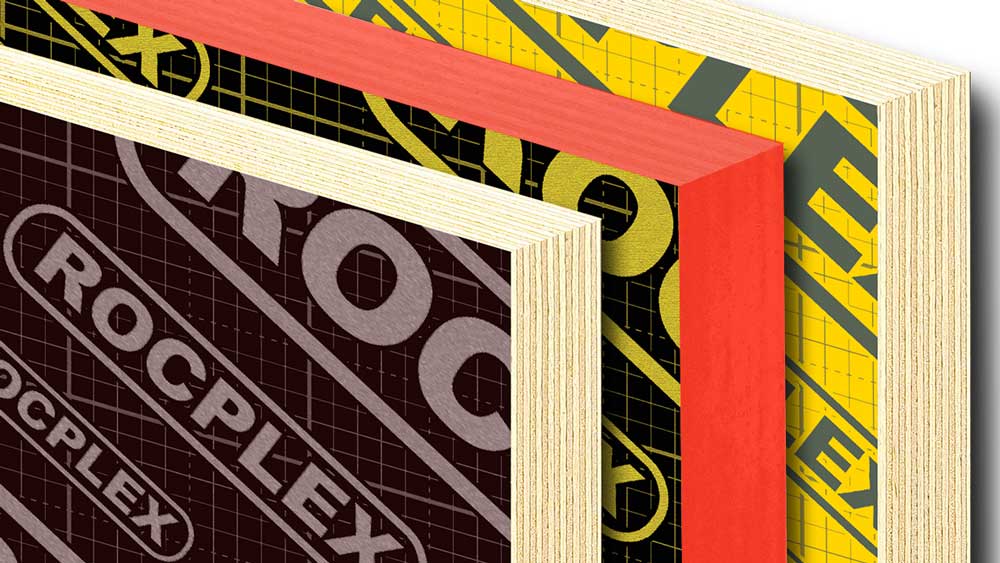
ROCPLEX Form Birch Film Faced Plywood
Film faced plywood should prove its value on site, not on paper. ROCPLEX Form Birch is a premium film faced plywood built for high reuse in concrete formwork. It aims to stay flat, release clean, and keep a stable face across repeat pours. The build focuses on three things that drive real cycles: 220 g/m² phenolic film on both sides, A-bond WBP bonding, and four-coat sealed edges. Full birch construction adds strength and stiffness for demanding routines. Share your size…
Post time: May-18-2026