

Film faced plywood price can vary widely because buyers are not always comparing the same panel. Price changes with film weight, core material, WBP bonding, edge sealing, thickness, size, tolerance, packing, documents, and target reuse cycles. A low sheet price may look attractive, but the real test is cost per pour.
For concrete formwork buyers, the cheapest panel is not always the lowest cost choice. If a panel sticks, swells, delaminates, or fails after limited use, the buyer pays again through replacement sheets, labour, concrete repair, delays, and complaints.
ROCPLEX supplies film faced plywood for buyers who need cleaner release, stable reuse, and clear specifications. This guide explains the main price factors to check before comparing quotes from different suppliers.
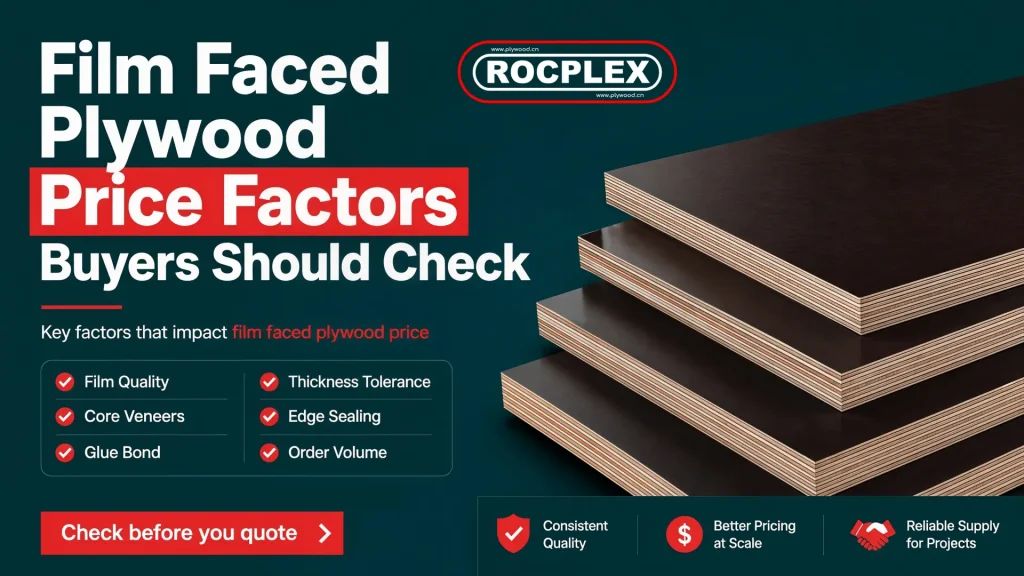
Why film faced plywood price varies so much
Film faced plywood can look similar in photos, but the build can be very different. Two black panels may have different film weights, different cores, different bonding systems, and different edge protection. Two brown panels may also perform very differently on site.
This is why a price list alone can mislead buyers. A supplier may quote a light duty panel for short use, while another may quote a high reuse panel for demanding wall and slab work. The price gap may reflect real product differences, not only margin.
Before choosing, buyers should ask one practical question: what result should this panel deliver on site? If the answer is smooth finish, repeat reuse, and fewer failures, then the specification must support that result.
Film weight affects surface life and release
The film surface is the working face of the panel. It touches wet concrete, release agent, cleaning tools, and site dirt. A stronger film can support cleaner release and slower surface wear during repeat pours.
Film weight is one reason film faced plywood price changes. A panel with a heavier phenolic film usually costs more than a basic coated sheet. However, it may also protect the face better when the job requires repeat use.
ROCPLEX Form Birch uses 220 g/m² phenolic film on both sides. This gives buyers a clear surface specification instead of a vague colour label. Black film and brown film can both work well when the surface quality and full build are controlled.
Core material changes both price and performance
The core is one of the biggest price factors. Birch, hardwood, poplar, mixed core, and other builds do not cost the same. They also do not perform the same under concrete pressure, handling, stripping, and storage.
A stronger core can help the panel stay flatter, resist bending, hold edges better, and support more predictable reuse. A weaker core may reduce the first price, but it can raise site cost if panels warp, show gaps, or fail early.
Full birch construction is often selected for demanding formwork routines. Buyers should ask for the core type in writing, especially when they compare quotes from several suppliers. A cheap price without a clear core description is not a safe comparison.
WBP bonding protects value in wet concrete work
Concrete formwork is wet work. Panels face fresh concrete, rain, cleaning water, release agent, and repeated handling. If bonding is weak, the layers can separate and the sheet loses value fast.
WBP bonding is one of the key checks behind film faced plywood price. Better bonding can cost more, but it helps reduce delamination risk in wet routines. For buyers, that can mean fewer replacements and fewer site claims.
ROCPLEX Form Birch uses A bond WBP bonding for wet concrete formwork use. For wider formwork planning, buyers can also review the ACI Guide to Formwork for Concrete, which covers formwork materials, quality, design, construction, and economy.
Edge sealing is a small cost with large impact
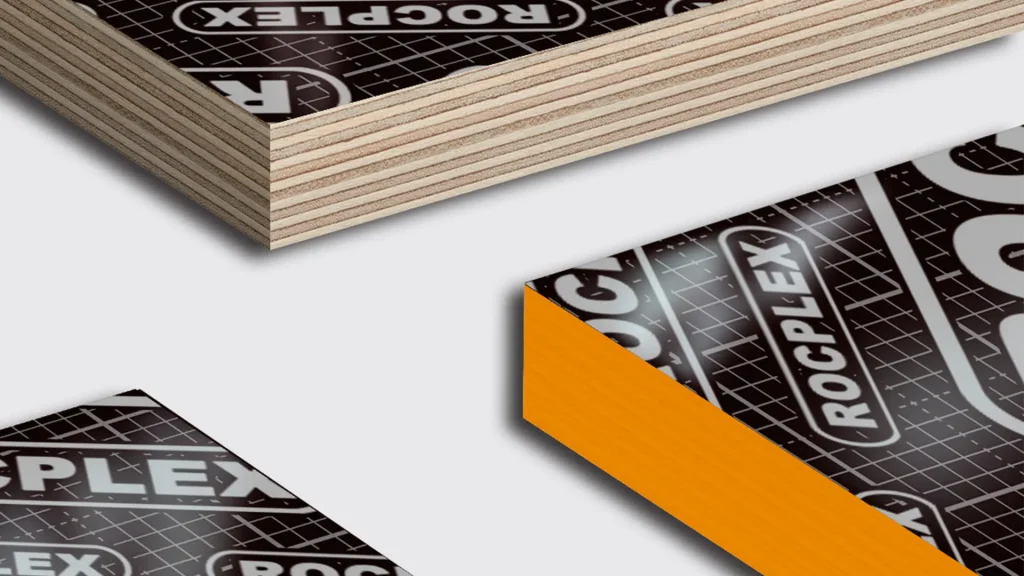
Edges often fail before the face. Water enters through open sides, nail holes, damaged corners, and cut edges. Once swelling starts, panels may become harder to reuse and harder to fit into a formwork system.
Proper edge sealing can add cost at production, but it helps protect the buyer’s investment. ROCPLEX Form Birch uses multi coat sealed edges to reduce moisture entry risk. If panels are cut on site, the new cut edges should be resealed before reuse.
When comparing quotes, buyers should ask whether all four edges are sealed, what coating is used, and how cut edge care should be handled. This detail can affect the real cost per pour more than many buyers expect.
Thickness and size affect container cost
Film faced plywood price also changes with thickness and size. Common formwork choices such as 12 mm, 15 mm, 18 mm, and 21 mm do not use the same amount of material. Larger panels may also affect handling, packing, and container loading.
A thicker sheet may give better stiffness for some jobs, but it also costs more and adds weight. A thinner sheet may suit lighter work, but it must match the support spacing and formwork system. The lowest price only works when the thickness fits the job.
Buyers using beams, frames, or slab systems should match the panel with the support layout. Related products such as H20 formwork beams can affect panel performance and site efficiency.
Packing and documents also influence final cost
Export packing is not only a shipping detail. Good packing protects corners, faces, edges, and bundles before panels reach the site. Poor packing can create damage before the first pour, which makes a low price less attractive.
Documents can also affect the final offer. Some buyers need test data, product specifications, packing lists, or certified sourcing support. If FSC or PEFC Chain of Custody documents are required, buyers should ask early instead of after production starts.
The official FSC Chain of Custody and PEFC Chain of Custody pages explain how certified forest based material tracking works through supply chains.
Cost per pour gives the fairest price comparison
Cost per pour gives buyers a clearer view than sheet price. It looks at how much useful work each panel gives before it must be replaced. A premium panel may cost more at purchase but still reduce total formwork cost if it lasts longer and creates fewer problems.
| Price factor | What it changes | Buyer risk if ignored |
|---|---|---|
| Film weight | Surface wear and release quality | Sticking, rough finish, early face damage |
| Core material | Strength, flatness, and edge stability | Warping, bending, voids, short reuse life |
| WBP bonding | Resistance to wet concrete routines | Delamination and fast panel failure |
| Edge sealing | Moisture resistance at panel sides | Swelling, corner damage, poor fit |
| Thickness | Stiffness, weight, and system fit | Overbuying, underbuilding, or site deflection |
| Packing | Protection during export and yard handling | Damage before first use |
| Documents | Tender, import, and resale support | Delay, rejection, or resale issues |
For professional buyers, the best quote is not the shortest quote. It is the quote that makes the specification clear and links price to expected site result.
How to ask for a useful price quote
A useful RFQ should include more than “film faced plywood price.” Buyers should state panel size, thickness, film colour, film weight, core type, WBP bonding, edge sealing, target reuse cycles, concrete finish level, quantity, packing needs, destination port, trade terms, and document requirements.
Buyers should also describe the application. Wall formwork, slab formwork, column work, precast work, fair faced concrete, and short use forming may need different panel grades. A supplier cannot quote the right panel without knowing the expected job result.
For wider product comparison, buyers may review formwork plywood, formply, and plastic plywood. Each option has a different cost and reuse profile.
FAQ about film faced plywood price
Why is film faced plywood price different between suppliers?
Prices vary because film weight, core type, WBP bonding, edge sealing, thickness, tolerance, packing, documents, and reuse targets may be different.
Is the cheapest film faced plywood a good choice?
Not always. A cheap sheet can cost more if it fails early, leaves poor concrete finish, or gives fewer reuse cycles.
Does black film cost more than brown film?
Colour alone does not decide price. Film type, film weight, core quality, bonding, and edge sealing matter more than black or brown colour.
How can buyers compare film faced plywood quotes?
Compare the full specification, not only the unit price. Check film, core, bonding, edges, thickness, tolerance, reuse target, packing, and documents.
What is the best way to lower formwork panel cost?
Focus on cost per pour. Choose a panel that matches the job, supports repeat use, reduces repair work, and arrives with stable quality.
Practical buying note
Film faced plywood price should be judged with the job result in mind. A good buyer checks film weight, core material, WBP bonding, sealed edges, thickness, packing, documents, and expected reuse. These details decide whether the panel is truly economical.
For bulk orders, send your size, thickness, film colour, target reuse cycles, finish requirement, quantity, destination port, and required documents. ROCPLEX can help match the right film faced plywood specification and packing plan for your concrete formwork program.
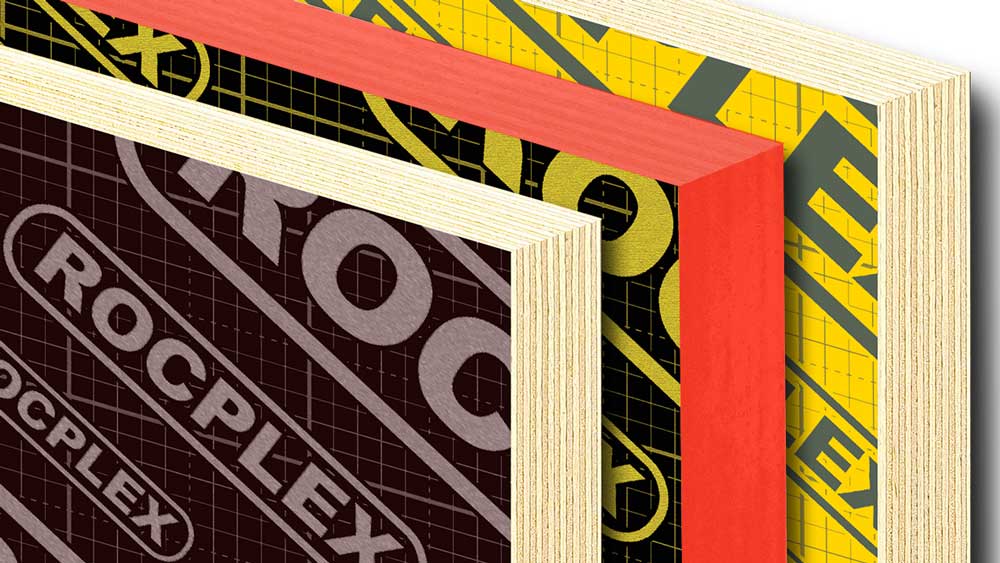
ROCPLEX Form Birch Film Faced Plywood
Film faced plywood should prove its value on site, not on paper. ROCPLEX Form Birch is a premium film faced plywood built for high reuse in concrete formwork. It aims to stay flat, release clean, and keep a stable face across repeat pours. The build focuses on three things that drive real cycles: 220 g/m² phenolic film on both sides, A-bond WBP bonding, and four-coat sealed edges. Full birch construction adds strength and stiffness for demanding routines. Share your size…
Post time: Jun-05-2026