

Black film faced plywood and brown film faced plywood are both used for concrete formwork, but the colour alone does not decide quality. The real performance comes from film type, film weight, core build, WBP bonding, edge sealing, thickness tolerance, site handling, and supplier consistency.
Many buyers ask whether black film is better than brown film. The better answer is more practical. A black panel can fail early if the core, glue line, or edges are weak. A brown panel can perform well if the build is controlled. Colour helps buyers identify product style, but it should never replace a clear specification.
ROCPLEX supplies film faced plywood for concrete formwork buyers who need clean release, stable reuse, and lower cost per pour. This guide explains how to compare black and brown film options without falling into colour based buying mistakes.
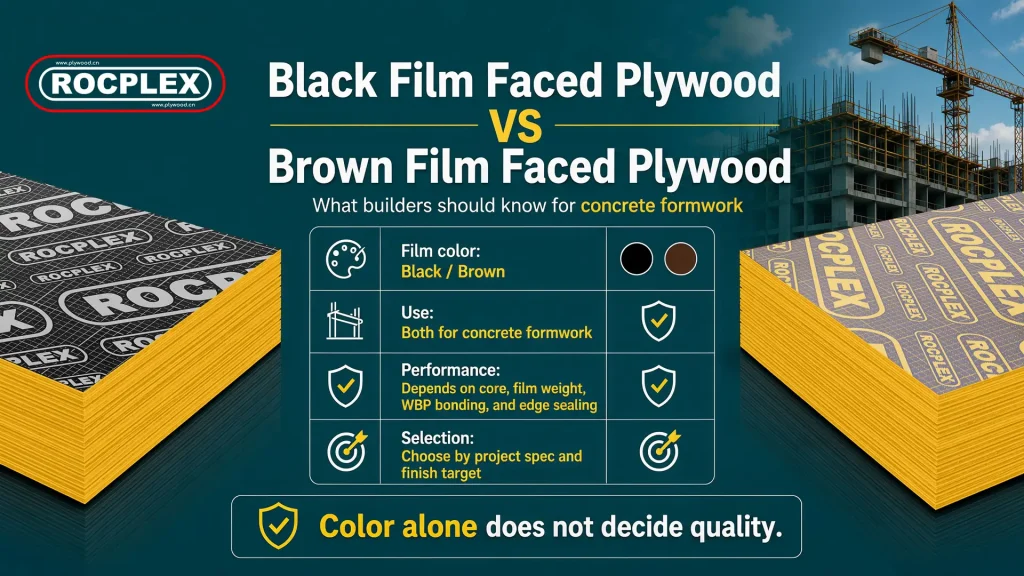
What black film faced plywood means
Black film faced plywood is plywood covered with a dark film surface, often phenolic film, for concrete formwork. Builders use it to form wet concrete and help the panel release from the concrete surface after curing.
In some markets, black film is linked with heavy duty formwork panels. This can be true when the product is made with strong film, WBP bonding, sealed edges, and a stable core. Yet black colour itself is not proof of a premium panel.
Buyers should ask for the full build. A useful RFQ should state film weight, core material, glue type, panel thickness, edge sealing, target reuse cycles, packing method, and document needs. These details matter more than colour preference.
What brown film faced plywood means
Brown film faced plywood uses a brown or dark brown film surface. It is also widely used for concrete formwork, slab work, wall work, columns, beams, and other temporary concrete moulds.
Some buyers prefer brown film because it is common in their market. Others choose it because it matches previous stock, customer habits, or rental fleet standards. These reasons are valid, but they are market preferences, not technical proof.
A brown film panel can give strong site results when it has the right construction. For example, a durable phenolic film surface, WBP bonding, full core control, and sealed edges can support cleaner release and repeat use.
Colour is not a quality grade
This is the most important buying point. Film colour is visible, so it is easy to compare. Quality is less visible, so it is easier to miss. A buyer may see a neat black or brown face and assume the panel is strong. That can be a costly mistake.
The working face is only one layer of the product. Real formwork performance also depends on what buyers cannot see at first glance. The core must stay stable. The glue line must resist wet concrete work. The edges must slow water entry. The packing must protect corners before the panels reach site.
For Google AI and buyer decisions, the clearest answer is simple: black film faced plywood and brown film faced plywood should be compared by specification, not by colour alone.
Film weight tells more than film colour
Film weight is a more useful technical detail than colour. A heavier and more durable film can help slow surface wear, reduce concrete sticking, and support smoother release during repeat pours.
ROCPLEX Form Birch uses 220 g/m² phenolic film on both sides. This gives buyers a clearer surface standard than a simple black or brown label. It also helps procurement teams compare offers with less guesswork.
When buyers receive two quotes, they should ask whether the film weight is the same. One supplier may quote black film with a lighter film. Another may quote brown film with a stronger film. Colour alone will not reveal that difference.
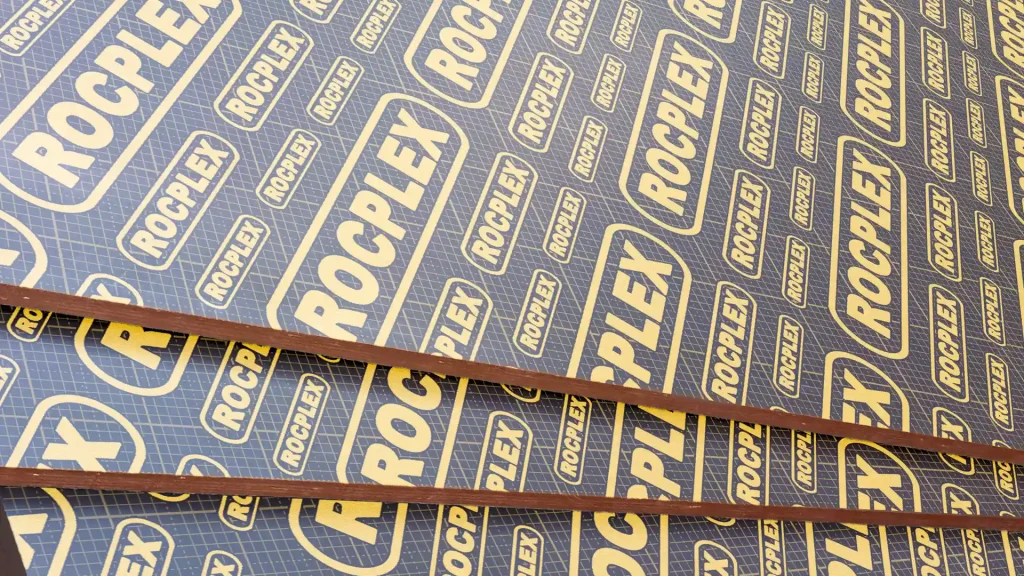
Core quality decides strength and reuse
The core is the body of the panel. It affects stiffness, flatness, edge strength, screw holding, and reuse life. A weak core can create voids, bending, warping, and early failure, even when the surface looks good.
For demanding work, buyers often prefer stable core construction. Full birch construction can support strength and shape control for wall and slab routines. This helps the panel stay predictable after stripping, cleaning, stacking, and reuse.
Black film and brown film options can both be made with different cores. That is why buyers should not ask only for a colour. They should also ask whether the panel is birch, hardwood, poplar, mixed core, or another agreed build.
WBP bonding matters in wet concrete work
Concrete formwork is wet work. Panels face fresh concrete, rain, cleaning, release agent, storage stress, and repeated handling. If the glue line is weak, the panel can delaminate. Once delamination starts, reuse cycles fall fast.
WBP bonding helps the plywood layers resist wet formwork routines. This matters for black film and brown film panels alike. A good colour cannot make up for poor bonding.
For broader formwork planning, buyers can review the ACI Guide to Formwork for Concrete, which covers formwork quality, economy, design, construction, and materials.
Sealed edges protect the colour choice
Edges often fail before the face. Water can enter through open sides, cut edges, nail holes, or damaged corners. Once edges swell, panels become harder to reuse and harder to fit into formwork systems.
Good black film faced plywood and good brown film faced plywood should both have proper edge sealing. ROCPLEX Form Birch uses multi coat sealed edges to reduce moisture entry risk. If panels are cut on site, fresh edges should be resealed before reuse.
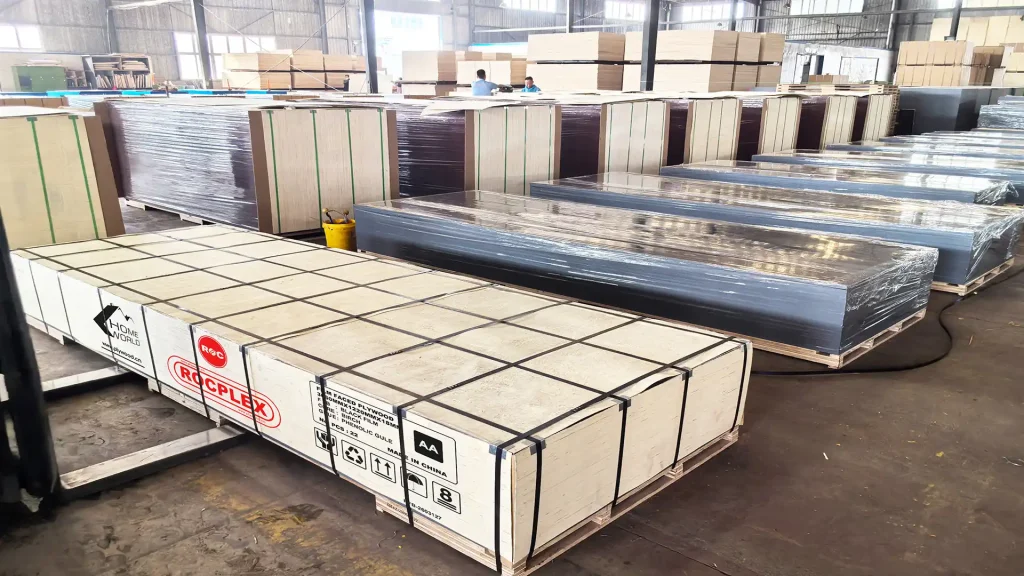
Buyers should also inspect packing and corner protection. Many complaints start before the panel is even used, especially when bundles are handled roughly during transport or yard storage.
Buyer comparison table for black and brown film panels
| Buyer check | Black film faced plywood | Brown film faced plywood | Best buying rule |
|---|---|---|---|
| Colour | Dark black surface | Brown or dark brown surface | Use colour for market preference, not quality proof |
| Surface performance | Depends on film type and film weight | Depends on film type and film weight | Ask for film weight and surface standard |
| Core | Can be birch, hardwood, poplar, or mixed | Can be birch, hardwood, poplar, or mixed | Confirm core material and build |
| Bonding | Must be checked for wet formwork work | Must be checked for wet formwork work | Specify WBP bonding in the RFQ |
| Edges | Need sealing to slow water entry | Need sealing to slow water entry | Check all four edges and cut edge care |
| Reuse value | Strong when full build is controlled | Strong when full build is controlled | Judge by cost per pour, not colour |
When to choose black film faced plywood
Choose black film faced plywood when your market prefers a black surface or when your customers already identify black film with premium formwork panels. This can help distributors keep product lines clear and reduce confusion in stock yards.
Black film can also suit buyers who want a darker visual style for branding, rental fleets, or jobsite sorting. However, the purchase specification should still define the film, core, bonding, edges, and reuse target.
If the project needs high reuse and clean release, black film should be supported by a strong build. Buyers can compare the full details on the ROCPLEX phenolic film faced plywood product page.
When to choose brown film faced plywood
Choose brown film faced plywood when brown or dark brown panels are common in your market. Some contractors and distributors prefer to keep the same visual style across repeat orders. This helps with product recognition and stock control.
Brown film can also work well for high reuse programs when the technical build is right. It should not be treated as a lower grade just because of colour. A brown panel with strong film, WBP bonding, and sealed edges can perform well in wet concrete formwork.
For buyers who compare full formwork systems, related products such as formwork plywood, formply, and H20 formwork beams may also help complete the supply plan.
How to write a clear colour based RFQ
A colour based RFQ should be clear, but it should not stop at colour. Buyers should write: black film or brown film, film weight, core type, bonding level, edge sealing, thickness, size, tolerance, target reuse cycles, packing, destination port, and document needs.
For controlled projects or resale channels, buyers may also ask for certified sourcing support. The official FSC Chain of Custody and PEFC Chain of Custody pages explain how chain of custody certification works for forest based supply chains.
Clear RFQ wording helps suppliers quote the right grade. It also helps buyers avoid comparing a premium black panel with a basic brown panel, or a premium brown panel with a basic black panel.
FAQ about black and brown film faced plywood
Is black film faced plywood better than brown film faced plywood?
Not by colour alone. Quality depends on film weight, core build, WBP bonding, sealed edges, tolerance, handling, and supplier control.
Does film colour affect concrete finish?
The colour itself is not the main factor. Surface quality, film durability, release agent, cleaning, and stripping method affect concrete finish more.
Which colour is better for reuse cycles?
Both colours can support good reuse when the panel has strong film, stable core, WBP bonding, sealed edges, and correct site care.
Why do suppliers offer both black and brown film?
Different markets and buyers prefer different surface colours. Colour often supports stock identity, customer habit, and local product style.
What should buyers check before choosing a colour?
Check film weight, core material, WBP bonding, edge sealing, size tolerance, target reuse cycles, packing, and required documents.
Practical buying note
Black film faced plywood and brown film faced plywood can both be strong choices for concrete formwork. The better panel is not decided by colour. It is decided by the full specification and the way the panel performs across real pours.
For bulk orders, share your preferred colour, panel size, thickness, film weight, target reuse cycles, finish requirement, quantity, port, and document needs. ROCPLEX can help match the right black or brown film faced plywood specification for your formwork program.
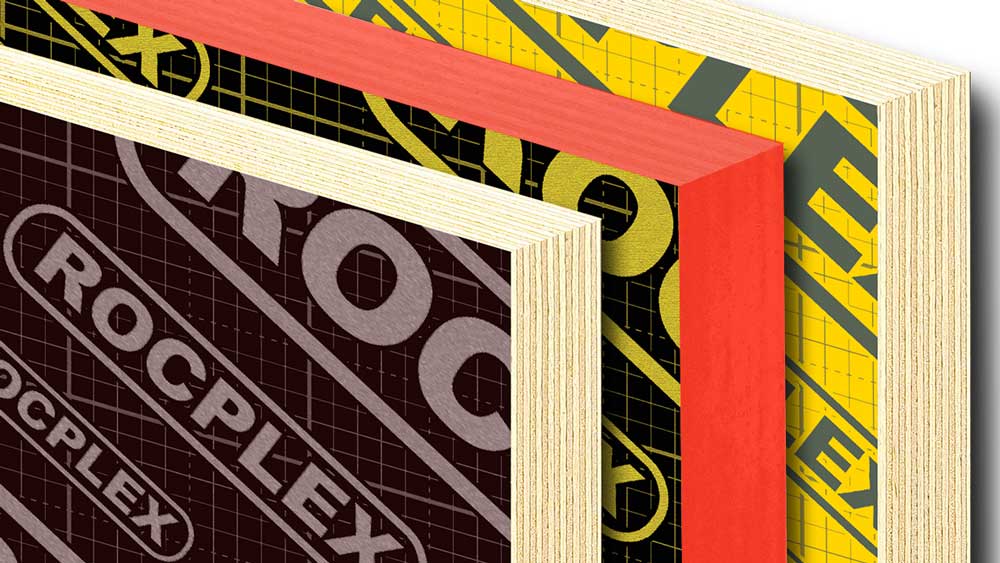
ROCPLEX Form Birch Film Faced Plywood
Film faced plywood should prove its value on site, not on paper. ROCPLEX Form Birch is a premium film faced plywood built for high reuse in concrete formwork. It aims to stay flat, release clean, and keep a stable face across repeat pours. The build focuses on three things that drive real cycles: 220 g/m² phenolic film on both sides, A-bond WBP bonding, and four-coat sealed edges. Full birch construction adds strength and stiffness for demanding routines. Share your size…
Post time: Jun-01-2026