

Concrete work moves fast. Crews cannot afford panels that swell, warp, or leave marks on a slab. They also cannot afford supply gaps that break a pour schedule. That is why many contractors and project buyers rely on film faced shuttering plywood for steady pours, a cleaner finish, and better cost per use.
In this guide, you will learn what makes a good panel build, which specs matter most, and how to avoid the common failures that cut re-use cycles. You will also get a simple buying checklist you can share with your supplier. If you want stable export supply, ROCPLEX can support your next job with consistent formwork panels and clear packing.
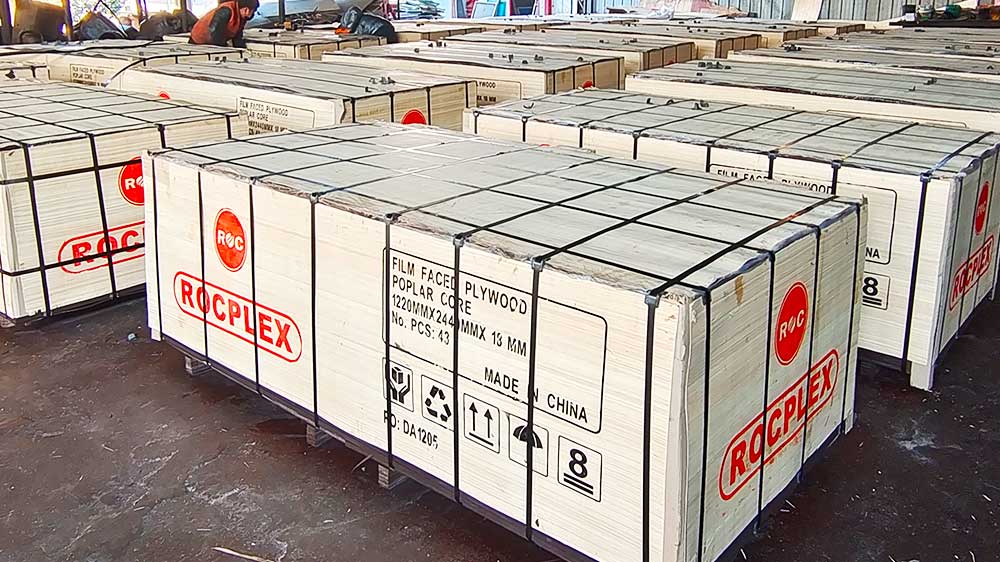
Film faced shuttering plywood: what it is and why it works
Film faced shuttering plywood is a plywood panel made for concrete formwork. The faces use a resin film that helps resist water, cement paste, and abrasion. As a result, the panel releases more cleanly and leaves a smoother concrete surface.
Builders choose shuttering plywood sheets because they want:
- cleaner concrete finish with less patching
- faster stripping and reset cycles
- stronger value across repeat pours
However, two panels can look similar on day one and still perform very differently after five pours. Therefore, the panel build matters more than the label.
Why builders choose film faced plywood for formwork
A good formwork face should protect time, quality, and risk. In addition, it should reduce labor waste on site. Here are the main reasons crews select film faced plywood for formwork again and again.
Shuttering plywood sheets for a smoother concrete finish
A stable film face supports a more even slab or wall finish. Therefore, you spend less time grinding, filling, and fixing small surface defects. Also, a smoother finish makes inspection and handover easier.
Formwork plywood panels that handle wet, harsh sites
Concrete sites stay wet. Rain, washdowns, and curing water all hit your panels. As a result, the bond line and edge seal matter as much as the face. When you specify a water-resistant build and strong edges, you reduce swelling and delamination risk.
Reusable formwork panels that lower “cost per pour”
Many buyers focus on sheet price. However, the real metric is cost per use. A panel that lasts longer often saves money, even if it costs more upfront. In addition, fewer defects reduce delays—and delays cost far more than a better panel.
Concrete form plywood that supports repeat orders
For project buyers and wholesalers, consistency wins. When your supplier delivers the same build each time, you avoid mixed lots and site complaints. Also, your inventory stays easier to control.
Film faced plywood specs that decide real performance
If you want predictable results on site, confirm these specs before you place an order. They have the biggest impact on re-use cycles.
Thickness and tolerance for shuttering ply stability
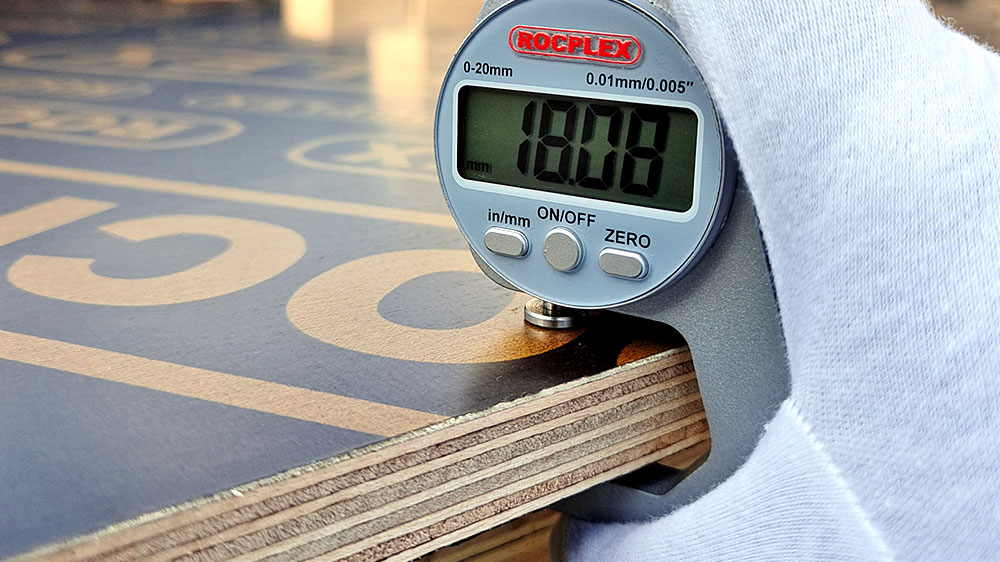
Small thickness swings create steps at joints, which can show on concrete. Therefore, tighter tolerance supports a flatter face and cleaner results.
Tip: Ask for tolerance data, not only “nominal thickness.”
Core build for formwork plywood panels
Core quality drives strength, screw holding, and flatness. It also affects how the panel handles edge hits. In addition, a stable core reduces voids, which helps prevent face weak spots and blowouts.
Common core options include poplar, mixed hardwood, eucalyptus, birch, or tailored blends. Each has a different balance of weight, strength, and cost.
Bond quality for WBP film faced plywood (trade term)
For formwork use, buyers often ask for water-resistant bonding (often called WBP in trade talk). Still, you should confirm how the supplier controls bonding and pressing. Glue labels alone do not guarantee bond quality. Therefore, process control matters.
Phenolic film faced plywood: film type and wear
Film quality affects abrasion resistance and release. A stronger film often gives longer service life and a more stable finish. However, it must bond well to the face veneer. If not, it can peel under heavy site use.
Edge sealing for film faced plywood
Edges fail first. Water enters through cuts, impacts, and worn corners. Therefore, a strong edge paint system and careful handling can extend panel life quickly. In addition, export packing should protect corners and keep sheets flat.
How to select the right shuttering plywood sheets for your project
Use these simple rules to match your panel build to your job. They reduce wrong orders and improve site outcomes.
If you need higher re-use cycles (reusable formwork panels)
Choose stronger film, stable core build, and better edge sealing. Also, confirm tolerance. These items improve life more than small price savings.
If you pour fast and strip often (formwork plywood panels)
Prioritize face wear resistance and clean release. In addition, plan a simple cleaning routine to protect the film face between pours.
If your site is humid or rainy (film faced plywood for formwork)
Focus on edge protection, storage, and cut-edge sealing. Even strong panels will suffer if they sit in water or stay wet for long periods.
If you ship long distance (concrete form plywood export packing)
Ask for stronger pallet support and corner protection. Also, request clear pallet markings so crews can manage lots and grades on site.
If the job needs a cleaner finish (film faced plywood finish)
Invest in face quality and thickness control. Repairs cost more than a better panel choice.
Common film faced plywood problems and how to prevent them
Most failures come from a small set of causes. The good news is you can prevent most of them with clear specs and basic site habits.
Delamination in shuttering plywood sheets
Causes: weak bond control, water entering the core, or harsh handling.
Fix: specify stable bonding, protect edges, and avoid soaking panels. Also, store stacks off the ground.
Edge swelling in shuttering ply
Causes: unsealed cuts, thin edge paint, or repeated corner hits.
Fix: reseal cut edges the same day. In addition, lift panels instead of dragging them.
Film wear or peeling on phenolic film faced plywood
Causes: dragging across rebar, dirty stripping, or poor cleaning.
Fix: lift, clean early, and apply release agent correctly. Too much oil can also cause marks, so keep it thin.
Warping in formwork plywood panels
Causes: moisture imbalance, bad stacking, or uneven support.
Fix: store flat with full support. Then cover stacks but allow airflow. Avoid strong sun on one side.
Concrete sticking on film faced plywood
Causes: no release oil, dirty face, or damaged film.
Fix: apply a thin, even release coat. Also, clean cement paste build-up before it hardens.
Handling tips to extend reusable formwork panels life
A good panel can still fail early if crews treat it like scrap. These steps protect re-use value:
- Clean the film face after stripping while residue is still soft
- Apply release agent in a thin, even layer
- Lift panels; do not drag them
- Protect edges during moving and stacking
- Seal fresh cuts right away
- Store panels flat, dry, and covered
- Rotate use so one face does not stay wet too long
These habits cost little. Yet they often add several more pours per sheet, especially on film faced shuttering plywood.
Buying checklist for film faced shuttering plywood orders
If you buy for projects or resale, use this checklist with any supplier:
- Core species and core build options
- Thickness tolerance range and batch control
- Film type and wear target
- Edge sealing system and number of coats
- Packing method for export and corner protection
- Pallet marking for easy site control
- Repeatability: can they supply the same build next container?
Also, confirm the supplier can deliver consistent lots. Consistency is what keeps contractors coming back.
ROCPLEX film faced shuttering plywood for consistent jobsite results
Many suppliers can sell a panel. Fewer suppliers can deliver the same build again and again with clear specs. ROCPLEX focuses on stable build control and export supply because that is what builders and wholesalers need.
ROCPLEX supports your formwork plan with:
- stable core selection matched to your target use
- controlled pressing and bonding for repeat performance
- film and face matching for clean release and wear control
- strong edge protection to reduce early swelling
- export packing discipline to reduce transit damage
For a fast quote, share:
- thickness, sheet size, and quantity
- target re-use range (standard / higher re-use)
- finish need (normal / cleaner finish)
- destination port and required timing
We will recommend a practical panel build and provide a clear offer.
cost per pour and re-use cycles guide
FAQ:
What is film faced shuttering plywood used for?
It is used as a form face for concrete walls, slabs, columns, and beams. The film helps resist water and supports cleaner release. Therefore, builders use it to reduce rework and speed up cycles.
Is shuttering plywood the same as regular plywood?
No. Regular plywood targets general use. Shuttering plywood sheets target wet, high-wear formwork work. As a result, they use tougher faces and stronger build control.
Is film faced plywood for formwork waterproof?
It resists water well, but water can still enter through damaged edges and fresh cuts. Therefore, edge sealing and storage habits matter as much as panel specs.
How do I stop edge swelling on shuttering ply?
Seal fresh cuts immediately, store stacks off the ground, and protect corners in handling. In addition, avoid leaving panels in standing water.
How many times can reusable formwork panels be used?
Re-use depends on film quality, core stability, bond control, and site handling. Also, pour type affects wear. If you protect edges and clean the face well, you will extend service life.
Do I need release oil every pour?
In most cases, yes. Release oil helps clean stripping and protects the film. However, apply a thin coat. Too much oil can cause marks.
What should I check when a container arrives?
Check pallet count, pallet condition, corner damage, face scratches, and thickness consistency. Also, open a few packs to confirm the build matches your order.
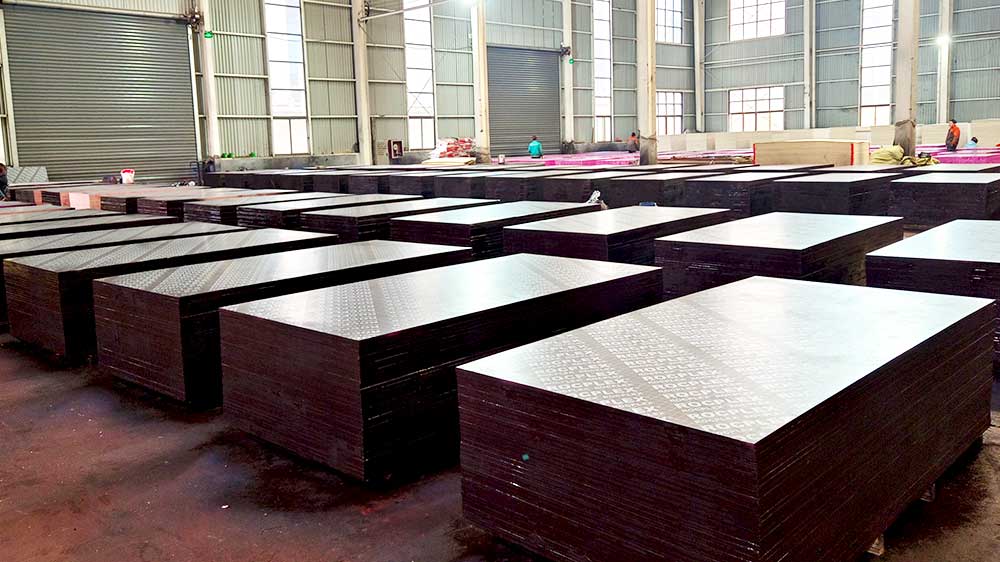
Choose the right shuttering plywood sheets, then protect them
When your form face performs well, the whole job runs smoother. You strip faster, patch less, and keep a steady cycle. As a result, you protect both time and quality.
That is why builders keep choosing film faced shuttering plywood for concrete work. If you want stable supply with clear specs and consistent packing, ROCPLEX can support your next project. Send your requirements, and we will recommend the right panel grade for your budget and cycle plan.
ROCPLEX Xlife formwork plywood
ACI guide to formwork for concrete
Safe Work Australia guide to formwork
Post time: Jul-27-2024