

Many buyers think the sheet decides formwork performance. In practice, the face often decides it first. Phenolic film faced plywood stands out because the film layer changes how the panel releases, cleans, and survives repeat pours. That is why serious buyers look past thickness and price alone. They want to know how the face behaves on a real site, how the edges hold up, and how many clean cycles the sheet can support before quality drops.
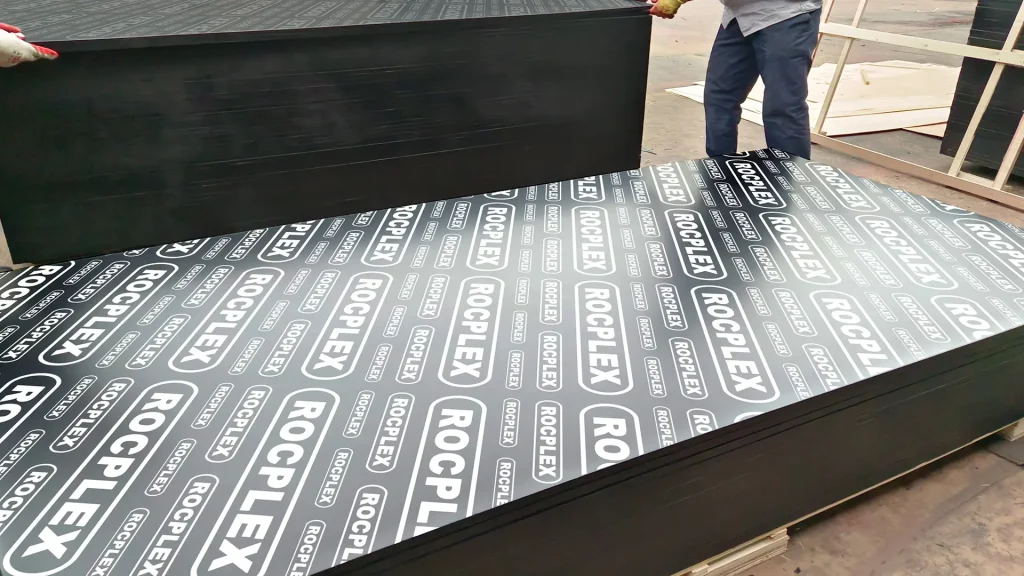
This matters even more in projects where finish quality, labor speed, and reuse all affect margin. A low-cost board can look attractive in the first quote. Yet it often loses value after a few pours if the face scratches early, cement sticks harder, or the edges start to swell. By contrast, a well-made phenolic film faced plywood panel is bought for cost per pour, not just cost per sheet.
For buyers who want an outside technical reference, APA’s guidance on concrete form panels is useful because it explains how panel type, moisture-resistant bonding, and intended forming use affect field performance.
Why the face matters more than many buyers expect
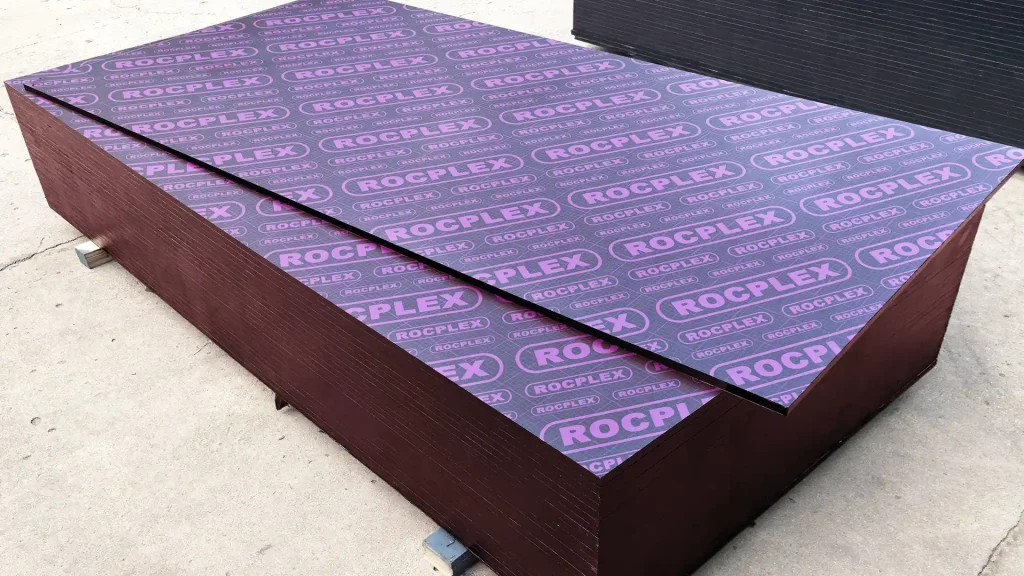
Concrete does not treat every panel surface the same way. A strong face helps the sheet release more cleanly and reduces the time crews spend scraping residue after stripping. On the ROCPLEX film faced plywood page, the product is positioned around three details that support repeat use in concrete formwork: a 220 g/m² phenolic film on both sides, A-bond WBP bonding, and four-coat sealed edges. Those details matter because surface wear and water entry are often what end a panel’s useful life first.
The same logic appears in broader industry guidance. The APA concrete form panel guidance notes that exterior-rated panels can be used in formwork, while special concrete form panels are recommended for most general forming uses. In other words, the right face and panel build are not marketing extras. They sit at the heart of real formwork performance.
What phenolic film changes on site
A phenolic film does several jobs at once. First, it creates a harder and more stable surface than raw plywood faces. Second, it helps reduce cement paste bonding, which supports cleaner release. Third, it makes wash-down and cleanup easier between pours. The recent Boards for Concrete Formwork article on your site makes this point well when it notes that phenolic film gives a hard skin, tolerates sun better, and cleans with less effort.
That change sounds small, but the effect grows across a project. When a crew strips fast, cleans fast, and resets fast, the panel supports site rhythm rather than slowing it down. On visible concrete, a steadier face also helps reduce patch work and surface disputes. Your formwork innovations article ties this directly to smoother surfaces and quicker stripping, which is exactly how buyers should judge value in the field.
Where core build and edge sealing earn their keep
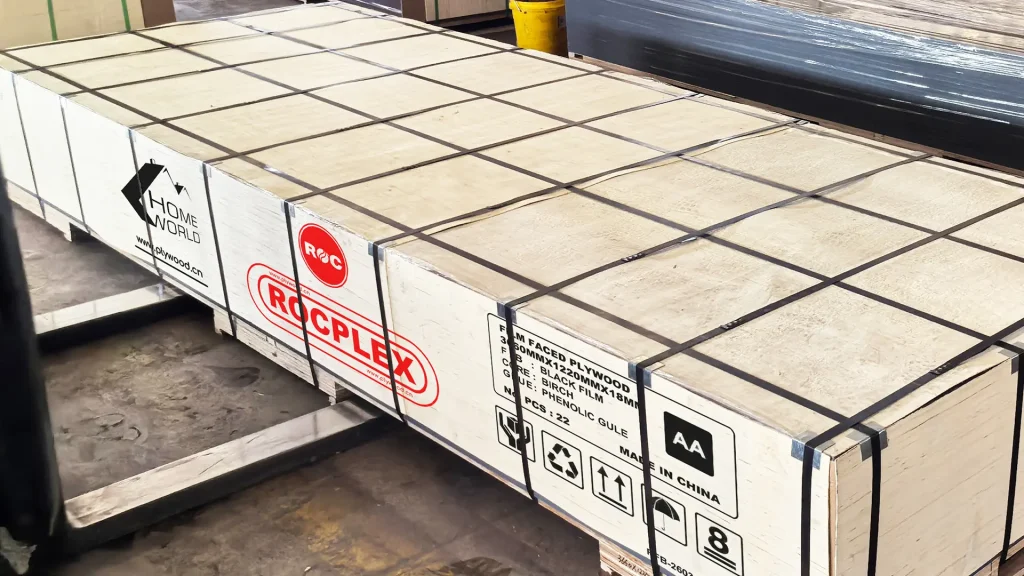
The face gets attention first, but the build under the face keeps the result stable. A good phenolic film faced plywood panel still needs a sound core, reliable bonding, and strong edge protection. If the core is weak or the edges take on water too quickly, the film alone cannot save the sheet for long. That is why your main film faced plywood page also stresses full birch strength and a four-times sealed edge system, not just the film layer itself.
Edge failure is a quiet cost on many jobs. Once the edge starts to swell, nailing becomes less predictable, stripping gets rougher, and panel alignment worsens. Buyers who only compare the sheet surface often miss this point. The better approach is to look at the full system: film quality, bond quality, core stability, and edge sealing. When those four factors work together, reuse becomes more predictable.
How it compares with other common panel choices
| Panel type | Best fit | Main strength | Main limit |
|---|---|---|---|
| Phenolic film faced plywood | General concrete formwork with reuse and finish targets | Clean release, practical reuse, smoother concrete face | Needs good handling and edge care to hold full value |
| Basic shuttering plywood | Lower-cycle work and simple pours | Lower entry cost | Shorter life and rougher finish in many jobs |
| PP plastic plywood | Very wet, abrasive, high-cycle jobs | High water resistance and easy cleanup | Higher upfront price |
This is where buyers should slow down. The cheapest option is not always the cheapest system. Your site already separates PP plastic plywood from phenolic film faced plywood for a reason. PP plastic can be the better answer in very wet or high-abuse conditions, while phenolic film faced plywood often wins as the balanced option for finish, reuse, and broad project suitability.
The same comparison shows up inside your older 12mm phenolic plywood article, which frames phenolic-faced material as the stronger option for demanding cycles and long-run value. Even when buyers do not use the same naming in every market, the buying logic stays the same. They are still comparing release, cleaning time, face life, and total cost over repeat pours.
The buying mistake that hurts margin most
The biggest mistake is treating phenolic film faced plywood as just another dark-faced board. Many sheets look similar in a yard stack. They do not perform the same once they hit water, nails, vibration, and stripping tools. If the buyer skips the film weight, bond type, edge treatment, or core build, the quote may look sharp but the job cost can drift fast.
- Ask what film is used on both faces.
- Ask how the edges are sealed and how many coats are applied.
- Ask what core species or build is being supplied.
- Ask what reuse range is realistic with proper handling.
- Ask which release agents are recommended for that face.
Your film faced plywood reuse guide already supports this approach. It explains that release agents should be used in a thin, even layer and that old residue should be removed before reapplication. That advice matters because even a premium face can lose value if site practice is poor.
What buyers should ask before placing an order
A good RFQ for phenolic film faced plywood should do more than ask for thickness and price. It should state the project type, target finish, expected reuse range, sheet size, climate, and destination market. This helps the supplier recommend the right build instead of pushing one stock answer. It also reduces the risk of buying a panel that fits the warehouse but not the pour.
If certified sourcing matters, ask for it at the quotation stage, not after production starts. FSC explains that chain of custody certification is designed for companies that produce and distribute forest-based products, and PEFC says its chain of custody certification is available to companies that manufacture, process, trade, or sell forest-based products. For importers and merchants, that paperwork can matter as much as the physical sheet when a project spec includes sourcing requirements.
Buy the panel for the pour you need, not the sheet you first saw.
That is how phenolic film faced plywood earns its premium.
If your project also needs certified sourcing, FSC chain of custody certification helps explain how certified forest-based products are tracked through the supply chain.
For buyers serving markets that ask for legal and sustainable sourcing proof, PEFC supply chain certification guidance is another strong reference to place in the article.
Where this product fits in a serious sourcing plan
Phenolic film faced plywood is at its best when you want a practical middle ground between low-cycle shuttering panels and higher-cost specialty surfaces. It gives a hard, formwork-ready face. Supports clean release. It helps protect finish quality. And when the core, bond, and edges are built well, it gives a steadier cost per pour than cheaper panels that wear out early.
For wholesalers and contractors, the practical takeaway is clear. Shortlist the panel only after you define the pour type, finish target, support layout, and expected reuse. Then compare phenolic film faced plywood with PP plastic or simpler shuttering panels based on real site conditions. Buyers who do this usually get better quotes, fewer claims, and more repeatable supply decisions.
FAQ
What is phenolic film faced plywood used for
It is mainly used for concrete formwork where buyers need cleaner release, better surface durability, and more predictable reuse.
Is phenolic film faced plywood waterproof
It is highly water resistant on the face, but long-term performance still depends on bonding quality, edge sealing, and site handling.
Is phenolic film faced plywood better than basic shuttering plywood
For many repeat-pour jobs, yes. It usually gives a better finish, easier cleanup, and stronger cost control over multiple cycles.
When should buyers choose PP plastic plywood instead
PP plastic plywood can be the better choice in very wet, abrasive, or high-cycle conditions where surface life matters most.
Post time: Apr-13-2026