

Three ply shuttering panel overview
Concrete rewards stable forms. Edges must stay square. Faces must release clean. A three layer build helps. That’s why a three ply shuttering panel is engineered with a crosswise core to control movement. Dense outer lamellae resist wear. Glue lines carry heat and pressure. Coating shields against moisture and abrasion. ROCPLEX applies tight controls. We track moisture, thickness, and flatness. Data rides with each shipment.

Who benefits from this comparison
Contractors want predictable pours. Foremen want less rework. Buyers want fewer returns. Wholesalers want steady stock turns. Engineers want repeatable stiffness. Estimators want clear cycle math. This guide serves those needs with practical notes.
Three ply shuttering panel vs plywood boards
Plywood offers flexibility and price options. Yet core gaps can print on concrete. Thin veneers also bruise at edges. Three ply uses solid lamellae throughout. The core runs crosswise for stability. Seams stay tighter across spans. Therefore honeycombing risk drops. Finishes look more uniform on tall walls.
Three ply shuttering panel vs triply panel 27mm
Triply panel 27mm targets heavy loads and long spans. It suits wall gangs and big slabs. A three ply shuttering panel prioritizes handling speed. It helps mixed crews move fast. Both serve formwork well. Choose by load, reuse goals, and crew habits. ROCPLEX supplies both lines for clarity.
Finish outcomes and fair-faced results
Finish sells your work. Even color matters. Texture matters too. A sound face releases quickly. Release oil spreads smoothly across the coat. Air pockets reduce with tight joints. Therefore grinding time drops. Clients notice the clean look. Repeat work follows good outcomes.
Coatings, edges, and moisture control
Coating weight sets wear life. Thin coats scratch faster. Thick coats resist abrasion longer. Edge sealing matters as well. Edges take hits from forks and clamps. Sealed edges slow water ingress. That slows swelling at corners. ROCPLEX seals all sides at the mill. Crews should re-seal after cuts.
Three ply shuttering panel stiffness and load
Deflection control protects finish. Excess sag shows as ripples. Three ply structure helps manage sag. The crosswise core resists width movement. Outer plies carry bending stress. Thickness also matters. 27mm limits deflection on wider centers. 21mm suits tighter centers and lighter work.
Handling, ergonomics, and safety
Crews lift panels many times each day. Predictable weight improves safety. Balanced density keeps lifts smooth. Accurate sizes reduce awkward cuts. Fewer recuts mean fewer risks. Teams move faster with less strain. Good ergonomics protect both speed and health.
System fit and compatibility
Panels must fit beams, walers, and clamps. Tolerances drive fit. Straight edges clamp tighter and leak less. Consistent thickness improves clamp settings. ROCPLEX targets narrow tolerances. Therefore systems align faster on site. Coordination improves across tasks.
Three ply shuttering panel sizing and tolerances
Common sizes serve common grids. Accuracy counts more than variety. Thickness must sit within a tight band. Flatness matters across the sheet. Corners should match square. ROCPLEX confirms all points per batch. Records remain available for audits.
Release oils and clean stripping
Not all oils behave the same. Some stain faces. Others soften coats. Always follow supplier guidance. Apply thin, even films. Excess oil collects fines. That layer then grabs the face. Keep sprayers clean and calibrated. Crews will strip earlier and safer.
Three ply shuttering panel cost per pour model
Price alone misleads buyers. Count reuses and labor. Add putty, sanding, and delays. Then include rejects and claims. A better panel lowers those costs. ROCPLEX shares a simple model. Enter cycles, labor rates, and coatings. Compare totals, not only sheet price. Smarter math guides better buys.
Sustainability and responsible sourcing
Reuse supports sustainability. More cycles mean fewer sheets consumed. Responsible forests matter too. Efficient pressing reduces waste at mills. Accurate cutting reduces site waste. ROCPLEX invests in both routes. You gain performance and a lighter footprint.
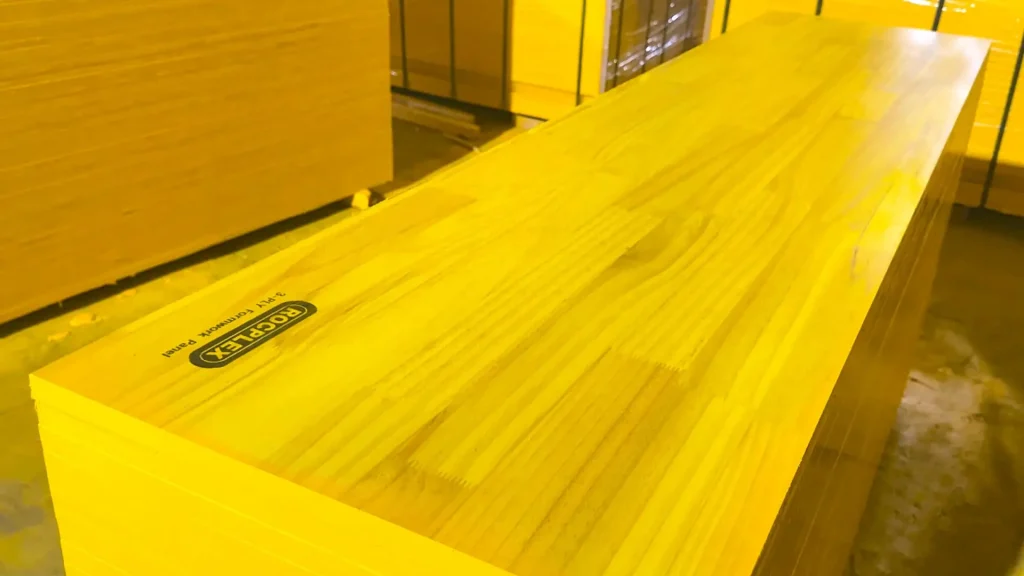
ROCPLEX shuttering panel quality controls
Quality starts with species selection. Moisture sits in a narrow band. Glue spread stays consistent. Press time and temperature stay controlled. Coating weight remains even across faces. Edges receive full sealing. Thickness and flatness receive final checks. Batches ship with traceable data.
Three ply shuttering panel FAQs
What is the structure?
It is a solid-wood panel with three layers. The middle layer runs crosswise.
How many reuses can I expect?
Results depend on care, coating, and site habits. Good routines raise counts.
Can I cut panels on site?
Yes. Use sharp blades and clean tables. Re-seal edges after each cut.
Which thickness should I choose?
Choose 27mm for wider spans or heavier loads. Choose 21mm for lighter work.
How does it compare to a 3 ply formwork panel?
They share structure. Process control and coating often decide reuse counts.
Which oil should I use?
Use approved release oils. Avoid products that attack the face coat.
Field tips that extend cycles
Clean panels after every pour. Use soft scrapers, not steel blades. Avoid dirty rags. Dirt scratches coatings. Stack panels dry and shaded. Use dunnage under bundles. Cover stacks from sun and rain. Fix chips before the next pour. Small habits deliver large gains.
Logistics for wholesalers and yards
Loading should protect corners. Straps must hold without crushing edges. Labels should face the aisle. Mixed packs serve varied orders. Fork pockets match common equipment. Drivers leave faster with planned lanes. Good yard flow reduces damage and time.
Training for new crews
Run a short talk before first use. Explain oils, cleaning, and storage. Show how to move panels safely. Assign someone to check edges. Reward teams for extra cycles. Visible charts motivate crews. Everyone wins when panels last longer.
Three ply shuttering panel for fair-faced work
Fair-faced surfaces demand stable forms. Faces must stay smooth. Edges must align. Our panels help deliver that. Coatings resist abrasion and marks. Cross cores resist width shifts. Therefore pours print clean and even. Architects like consistent tone and texture.
Thickness choices and deflection planning
Deflection drives finish and joint quality. Consider span, pressure, and brace layout. Choose 27mm when spans widen. Choose 21mm for close centers. Use actual pressure estimates. Wet walls push harder than slabs. Calibrate expectations before the pour.
Risk management and common mistakes
Do not over-oil faces and not use contaminated oil. Not stack on wet ground and not skip end-of-shift cleaning. Do not ignore small chips and not drag panels across steel. Each mistake shortens life quickly. Avoid them and protect cycles.
Procurement checklist for busy buyers
Confirm species and glue system. Check coating weight and curing. Verify thickness tolerance and flatness. Ask for edge sealing details. Match sizes to your system grid. Request batch QC sheets. Plan storage and handling. Track cycles by bundle. Use the data in negotiations.
Three ply shuttering panel in hot and cold weather
Heat challenges glue lines and coatings. Quality bonds hold under heat. Coatings must also resist softening. Cold slows chemical reactions. Stripping times may change. Monitor conditions during pours. Adjust oil use and timing. Protect stacks from extremes.
Comparing with yellow formwork panel ranges
Yellow panels vary by maker. Coating thickness often drives cycle gaps. Edge sealing also varies widely. ROCPLEX targets consistency across batches. You see fewer surprises after transport. Joints close faster. Release feels more predictable.
Comparing with concrete formwork boards
Generic boards can hit a low price point. Yet flatness may vary. Moisture control may also drift. Edges might chip sooner. Three ply solutions reduce those risks. They hold geometry longer. This stability protects both finish and schedule.
Three ply shuttering panel and safety culture
Predictable panels support safe routines. Workers trust consistent grips and sizes. Mark damaged panels for repair. Keep aisles clear for forklifts. Cover stacks to prevent slips. Safety grows with order and care.
Estimating cycle life with real numbers
Start with a baseline assumption. Add or subtract for care quality. Add or subtract for climate. Track cycles by bundle ID. Replace guesses with data. Share results with crews. Recognition builds better habits.
ROCPLEX service and documents
Documents should not slow jobs. Packing lists ship early. Photos record bundle condition. COOs and QC sheets arrive on time. Counts match loading plans. You pass customs without delay. Yards move product the same day.
Three ply shuttering panel troubleshooting
Sticking at strip means oil issues. Check dilution and spray heads. Edge swelling suggests water exposure. Improve covers and re-sealing. Scratches mean dirty tools. Clean scrapers and rags. Uneven color points to joint leaks. Tighten clamps and check flatness.
Warranty and support notes
Support matters after delivery. ROCPLEX answers fast with data. We review site photos when needed. We suggest care tweaks for longer life. Our aim is simple. Help you pour, strip, and repeat with confidence.
Price clarity and negotiation pointers
Quote with a cost-per-pour model. Share cycle targets and care steps. Offer trial bundles for new crews. Add edge sealant kits on first orders. These small add-ons lift outcomes. Better outcomes defend price.
Case uses across project types
Residential basements need clean walls. Parking decks need faster stripping. High-rise cores need predictable cycles. Industrial tanks need tight joints. Three ply solutions serve each case well. Choose thickness and coat by pressure.
Partnering with ROCPLEX yards
We help plan stock ahead of bids and advise on mix ratios by region. We adjust packs by thickness demand and share care posters for crews. Partners gain smoother turns and fewer claims.
Three ply shuttering panel summary for decision makers
Focus on cycles, finish, and time. Evaluate coating, edges, and tolerances. Track costs beyond sheet price. Consider crew habits and climate. Use data to choose the right line. ROCPLEX supports each step with records.
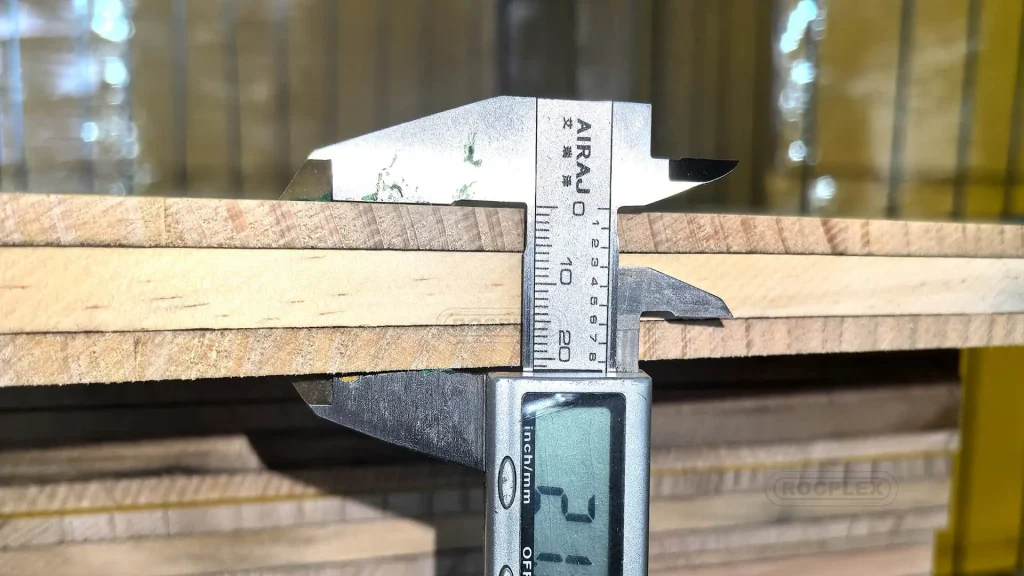
Request ROCPLEX shuttering panel samples
Ready to test on your next pour? Request ROCPLEX shuttering panel samples and a simple cost model. Add triply panel 27mm for heavy zones. Our team replies quickly with sizing, packs, and shipping. Let us help your crews pour, strip, and repeat—without surprises.
Post time: Feb-16-2026