

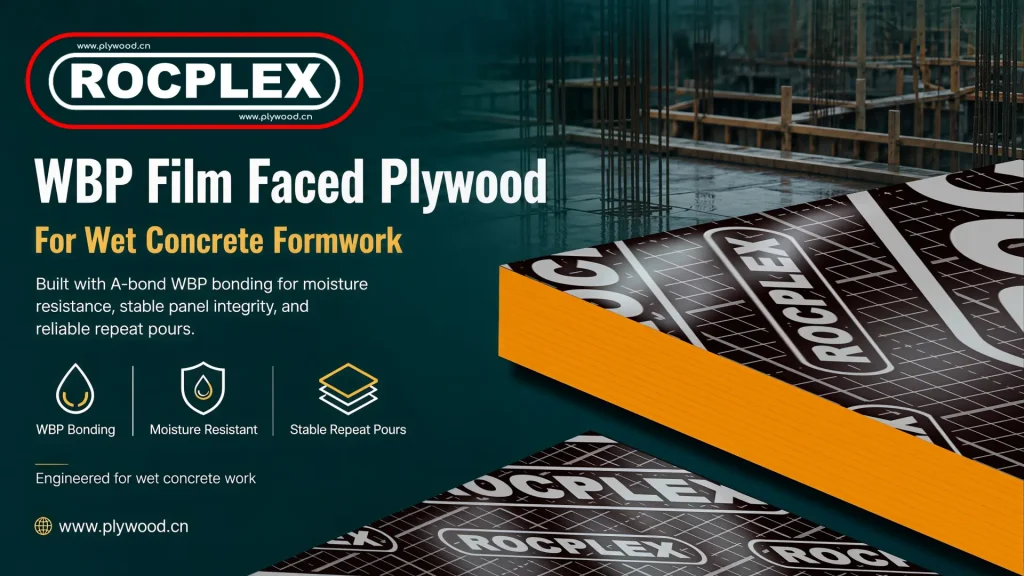
WBP film faced plywood is a coated plywood panel made for wet concrete formwork routines. WBP bonding helps the plywood resist glue line failure when panels face fresh concrete, site moisture, rain, cleaning, and repeat use. For builders, it is one of the key checks before buying formwork panels for slabs, walls, columns, and beams.
Yet WBP bonding is only one part of the answer. A strong formwork panel also needs a durable film surface, stable core, sealed edges, and correct site handling. When these details work together, buyers get cleaner release, better shape control, fewer early failures, and a lower cost per pour.
ROCPLEX builds film faced plywood for concrete formwork programs where wet site use and repeat pours matter. This guide explains why WBP bonding matters and how buyers should specify it before placing bulk orders.
What WBP means in film faced plywood
WBP is commonly used to describe water boil proof bonding in plywood. In formwork buying, the term usually points to a glue line made for stronger moisture resistance. The goal is simple. The plywood layers should stay bonded when the panel faces wet concrete and normal site stress.
This does not mean the panel can be abused without limit. WBP film faced plywood still needs sealed edges, good storage, release agent, and careful stripping. However, better bonding gives the sheet a stronger base for repeat wet use.
For buyers, WBP should not be treated as a loose sales word. It should be written clearly in the RFQ, together with core type, film weight, edge sealing, size, thickness, tolerance, and target reuse cycles.
Why wet concrete formwork needs stronger bonding
Concrete formwork is a hard test for plywood. Fresh concrete is wet and heavy. Panels also face vibration, pressure, nail holes, release oil, cleaning, stacking, and transport. If the glue line is weak, the layers can separate. Once delamination starts, the panel loses value fast.
Wet job sites make the risk higher. Rain, wash water, muddy ground, and poor storage can push water into panel edges or damaged faces. A good bonding system helps the plywood stay more stable when these conditions appear.
This is why WBP film faced plywood is often preferred for repeat concrete work. It gives buyers better protection against one of the most costly failures in formwork panels: early delamination.
WBP bonding is not the same as full waterproof performance
Buyers should understand this point clearly. WBP bonding improves moisture resistance at the glue line. It does not make every part of the sheet permanently waterproof in all site conditions. The face, edge, corner, cut side, and handling method still affect the final result.
The film surface helps protect the face. The edge sealing helps slow water entry at the sides. The core helps the panel stay flat and strong. WBP bonding helps the plywood layers stay together. A failure in one part can reduce the whole panel’s service life.
For this reason, buyers should avoid simple claims like “waterproof plywood” unless the full specification is clear. The safer term for serious procurement is WBP film faced plywood with stated film, core, edge, and handling requirements.
How phenolic film supports WBP bonding
The film surface is the first defence against wet concrete. A durable phenolic film helps reduce concrete sticking, slows face wear, and supports cleaner release. If the surface wears too early, more water and cement residue can attack the panel.
ROCPLEX Form Birch uses 220 g/m² phenolic film on both sides. This detail gives buyers a clear surface standard. It also supports better reuse when the panel is stripped, cleaned, and stored correctly.
Still, the face film cannot replace bonding quality. A good surface on a weak glue line may still fail in wet work. A serious buyer checks both the film surface and the WBP bonding before comparing price.
The core must stay stable under wet site stress
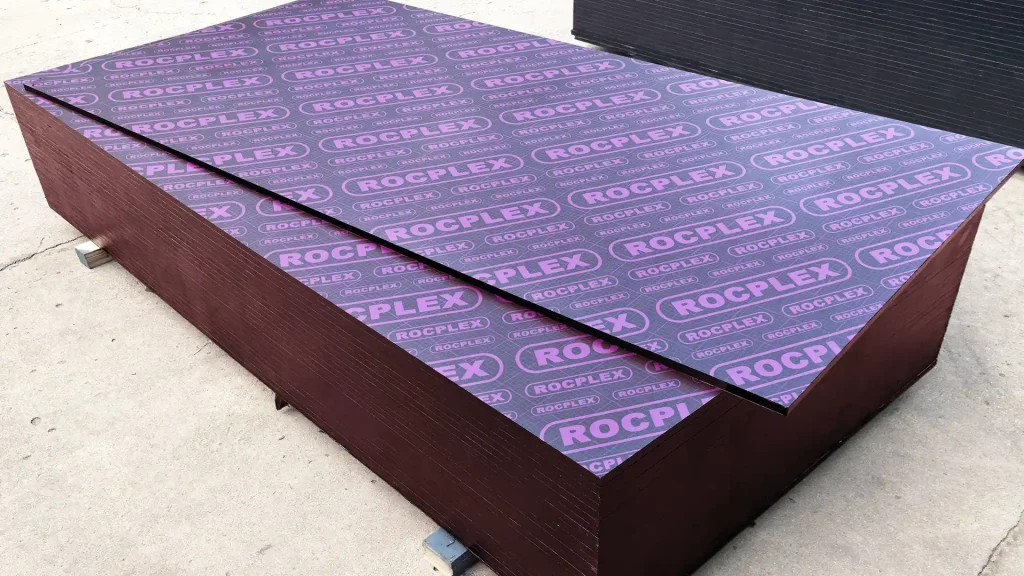
The core decides how the panel holds shape. A weak core can bend, twist, split, or show gaps. In wet concrete formwork, these problems can grow faster because moisture and pressure work together.
Full birch construction gives a panel stronger stiffness and more stable handling. This can be useful in wall, slab, beam, and special forming work where the panel must remain predictable across repeat cycles.
For bulk orders, buyers should ask whether the supplier can keep the same core build across repeat shipments. WBP film faced plywood is only reliable when the supplier controls both the bond and the core.
Edge sealing protects the weakest entry point
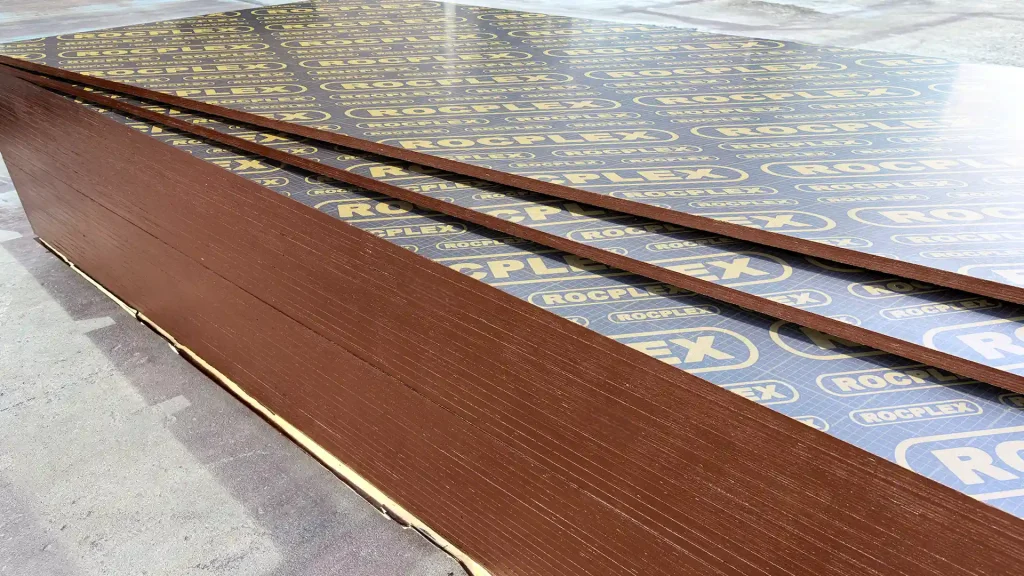
Many panel failures begin at the edge. Water can enter through open edges, damaged corners, nail holes, and fresh cut sides. Once the edge swells, the panel becomes harder to fit, harder to reuse, and more likely to fail.
ROCPLEX Form Birch uses four coat sealed edges to reduce water entry risk. This is important because even strong WBP bonding can be tested if water enters the sheet again and again through exposed sides.
If panels are cut on site, the new cut edges should be resealed before reuse. This small step often protects more value than buyers expect.
Common failures when bonding is weak
Weak bonding can create several site problems. The most obvious one is delamination. Layers start to separate, and the sheet becomes unsafe or uneconomic for repeat use. Surface bubbles may also appear when moisture and pressure attack the panel.
Poor bonding can also affect concrete finish. If the panel face moves or the surface loses support, the finished concrete may show marks, uneven texture, or areas that need repair. This adds labour and slows site progress.
For buyers, these are hidden costs. They may not appear in the first quote. They appear later through short reuse life, site claims, replacement orders, and finish repair.
Buyer comparison table for wet concrete jobs
| Buyer check | Why it matters in wet formwork | What to ask supplier |
|---|---|---|
| WBP bonding | Helps reduce delamination risk | What bonding system is used |
| Phenolic film | Protects the face and supports release | What film type and film weight are used |
| Core quality | Keeps the panel stable under pressure | Is the core birch, hardwood, poplar, or mixed |
| Edge sealing | Slows water entry at sides | Are all four edges sealed |
| Cut edge care | Protects panels after trimming | Should cut edges be resealed on site |
| Reuse target | Controls cost per pour | What handling is needed to reach target cycles |
How to write a clear RFQ for WBP film faced plywood
A clear RFQ helps buyers avoid weak or vague products. The request should state size, thickness, film colour, film weight, core type, WBP bonding, edge sealing, target reuse cycles, concrete finish level, packing method, quantity, destination port, and required documents.
Buyers should also describe the jobsite. Wet climate, high rise slab work, wall formwork, precast work, and coastal projects may need stronger control than simple short use formwork. The more details the supplier sees, the better the recommendation can be.
For full formwork systems, buyers may also review formwork plywood, formply, and H20 formwork beams. Matching the panel with the right support system helps protect alignment, finish, and cycle speed.
Good formwork planning also needs safe design, suitable materials, and site control. The ACI Guide to Formwork for Concrete is a useful reference for formwork design, construction, materials, quality, and economy.
Documentation can support serious orders
For importers, distributors, and tender projects, documents may matter as much as the sheet itself. Ask early if the order needs product data, test information, packing details, or certified sourcing support.
Where timber sourcing documents are required, buyers may review FSC Chain of Custody and PEFC Chain of Custody guidance before writing the RFQ.
Clear documents help reduce confusion during import, resale, and project review. They also help buyers compare suppliers on more than price.
FAQ about WBP film faced plywood
What is WBP film faced plywood?
WBP film faced plywood is a resin coated plywood panel with moisture resistant bonding for wet concrete formwork and repeat site use.
Is WBP film faced plywood waterproof?
It has water resistant bonding, but total performance still depends on film quality, edge sealing, core build, cut edge care, and storage.
Why does bonding matter in formwork plywood?
Bonding keeps plywood layers together. Weak bonding can cause delamination, swelling, poor finish, short reuse life, and site complaints.
Does phenolic film replace WBP bonding?
No. Phenolic film protects the surface, while WBP bonding protects the glue line. Buyers should check both before ordering.
What should buyers ask before ordering?
Ask for film weight, core type, WBP bonding, edge sealing, thickness tolerance, target reuse cycles, packing, port, and documents.
Practical buying note
WBP film faced plywood is a safer choice when wet concrete work, repeat use, and finish control matter. It should not be judged by the bonding name alone. Buyers should check the full chain: phenolic film, WBP bonding, stable core, sealed edges, careful stripping, dry storage, and realistic reuse targets.
For bulk orders, send your size, thickness, jobsite condition, target reuse cycles, finish needs, quantity, destination port, and document requirements. ROCPLEX can help match the right WBP film faced plywood specification and packing plan for wet concrete formwork work.
ROCPLEX Form Birch Film Faced Plywood
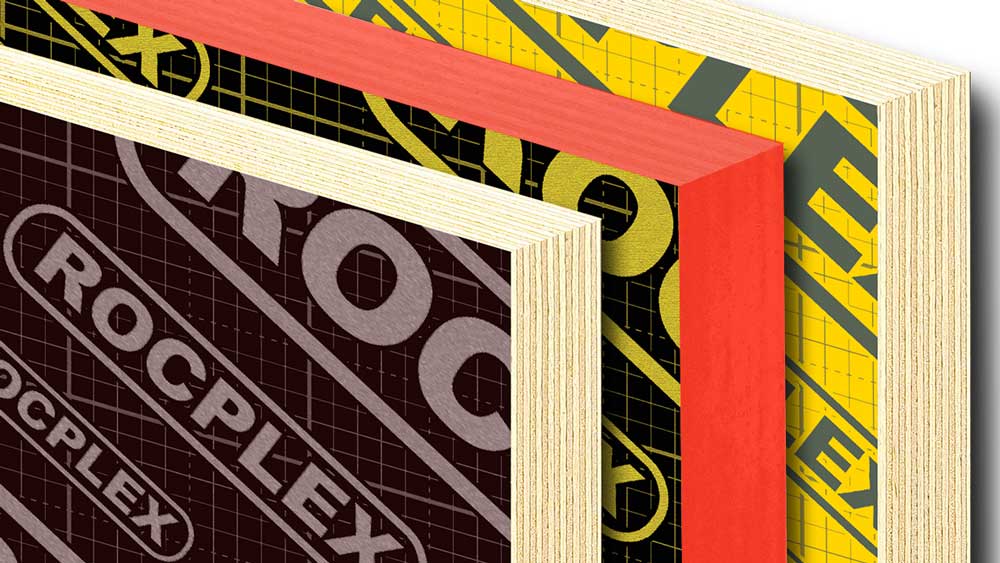
Film faced plywood should prove its value on site, not on paper. ROCPLEX Form Birch is a premium film faced plywood built for high reuse in concrete formwork. It aims to stay flat, release clean, and keep a stable face across repeat pours. The build focuses on three things that drive real cycles: 220 g/m² phenolic film on both sides, A-bond WBP bonding, and four-coat sealed edges. Full birch construction adds strength and stiffness for demanding routines. Share your size…
Post time: May-28-2026