

What Is Anti-Slip Plywood?
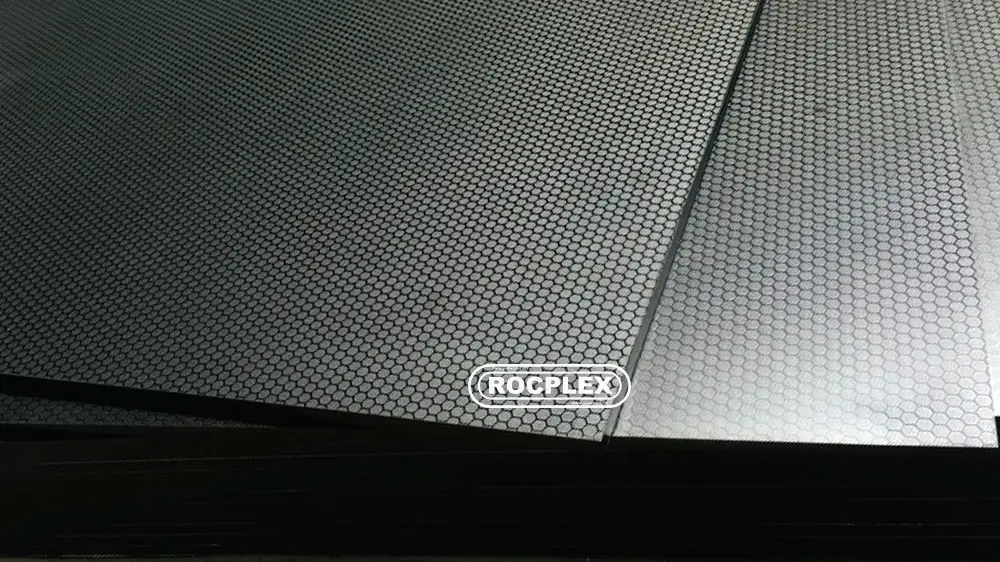
Anti-Slip Plywood is plywood with a textured, high-grip surface. The texture improves traction under boots and tyres. As a result, people move with better control in wet areas. Many buyers use it for ramps, temporary floors, and loading platforms. Others use it for transport decks that handle daily abrasion.
This product appears under several market names. Some buyers ask for slip resistant plywood in project specs. Others search non slip plywood for fleets and workshops. You may also see anti slip film faced plywood in supplier catalogues. The product goal stays the same across all labels. You want stable panels that keep grip and stay flat.
ROCPLEX produces Anti-Slip Plywood for export buyers who need repeat quality. We focus on consistent face patterns and stable core bonding. We also build programs around common, high-demand sizes. That approach helps wholesalers keep stock simple and predictable.
Why Anti-Slip Plywood matters for safety and cost
Slips create more than injuries. They also cause delays, claims, and wasted labour. A single fall can stop a site for hours. A single cargo shift can damage a full load. Therefore, many teams now treat traction as a basic requirement.
Grip surfaces reduce risk during routine work. Workers carry tools, hoses, and materials across decks. Drivers push trolleys across wet ramps. Loaders walk on trailer floors during rain. Under those conditions, smooth boards become a liability. A textured face gives a practical, low-maintenance upgrade.
Cost control also improves with the right panel. Better traction lowers damage to goods and reduces downtime. In addition, a hard film face can extend reuse cycles. That matters for rental decks and temporary access platforms. Longer life reduces replacement frequency and lowers total spend.
Slip risk rises when rain, dust, and slurry reduce surface friction. For practical site guidance, refer to Safe Work Australia’s slips, trips and falls resources and align your deck surface choice with the real traffic and cleaning routine.
If you want a firm quotation for 18mm 1220×2440, black film or brown film, mesh or hex, and WBP, send your destination port and quantity through our contact page. We will reply with packing, lead time, and a pattern photo for repeat-batch control.
How the grip surface is made
Manufacturers create traction by pressing a patterned film onto the plywood face. Heat and pressure bond the film to the top veneer. The press plate forms the texture depth and pattern shape. After pressing, the surface becomes dense and abrasion resistant.
Film quality plays a major role in performance. A strong film keeps grip longer under grit and traffic. A weak film can polish over time and lose traction. For that reason, buyers should ask about film grade and wear behaviour. Clear samples and pattern photos help avoid disputes.
Edge protection also supports surface performance. Water often enters from exposed edges first. Swelling can lift faces and reduce flatness. Sealed edges slow moisture pickup and reduce chipping. This step matters most for outdoor storage and wet jobs.
Mesh versus hex: choosing the right traction
Mesh film faced plywood uses a raised grid pattern. The grid creates many contact points for boots and wheels. It also helps channel water and dust away from pressure points. For many buyers, this option balances grip and easy cleaning.
Some markets call it phenolic mesh plywood. The term highlights the phenolic resin film used on the face. That film resists cement splash, mild chemicals, and abrasion. As a result, it suits mixed construction use and general cargo decks.
Hex patterns provide a more aggressive feel. Many buyers know it as hexagrip plywood. This pattern can feel sharper under boots, especially on ramps. It often suits steep access points and frequent turning wheels. However, heavy texture may hold more dirt in some settings.
A quick way to choose is to match pattern to use. Mesh patterns suit flat decks and daily sweeping. Hex patterns suit ramps and areas with higher slip risk. If possible, test a sample with wet boots and a loaded trolley. That simple check prevents the wrong purchase.
Core construction and why it affects performance
The face provides grip, but the core carries the load. The core must resist impact, flexing, and fastener pull-out. Veneer selection and layup quality drive those outcomes. Tight control on veneer moisture reduces warp and twist. Accurate veneer thickness improves panel stability.
Bond quality matters even more in wet conditions. WBP bonding supports repeated wetting and drying cycles. It also protects panels during shipping delays and yard storage. Many buyers standardise on WBP because it reduces risk across markets. For indoor-only work, MR glue may appear in some quotes. Still, WBP remains the safer default for most export programs.
Void control is also important for transport decks. Voids can create soft spots under wheel loads. Soft spots lead to surface cracks and fast face wear. Therefore, buyers should request core photos or a cut sample. Clear QC standards reduce claims and keep programs stable.
Where Anti-Slip Plywood is used most
Anti-Slip Plywood appears in three main demand zones. The first is construction access. The second is transport decking. The third is industrial flooring for workshops and mezzanines. Each zone has different stress points, so specifications should reflect that.
On job sites, the panel often serves as temporary walkway flooring. It also covers scaffold decks, steps, and landings. Traction helps when surfaces get dusty or wet. Film faces also resist concrete splash and mild abrasion.
In transport, the panel becomes trailer floor plywood. It also works as truck flooring plywood in box bodies. These applications face rolling loads, point impacts, and frequent cleaning. For that reason, buyers often choose harder films and stronger cores. Pattern choice also depends on ramp angle and cargo handling style.
In workshops, grip panels support safer movement. Workers move carts and equipment across floors. Oil, sawdust, or moisture can reduce traction. A textured film helps reduce slips without complex floor systems.
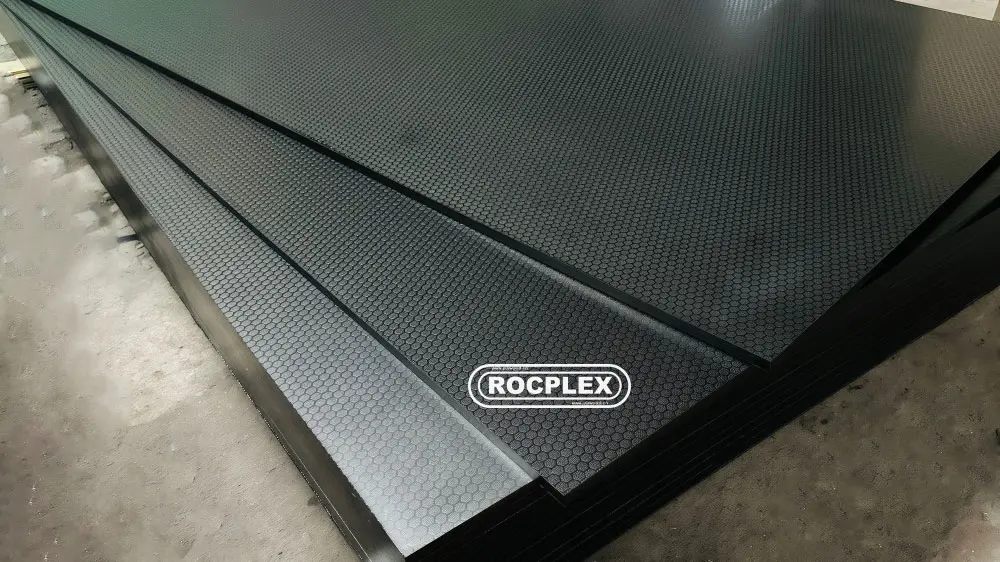
For projects that need reliable traction, ROCPLEX Anti Slip Plywood provides a textured face that supports safer movement on ramps, platforms, and loading zones. If you prefer to browse options by application, you can also view our Antislip Plywood range for common surface patterns and use cases.
The common export spec that simplifies buying
Many wholesale programs run on a standard item. The most common is 18mm thickness in 1220×2440 mm sheets. This size cuts efficiently and loads well in containers. It also fitsFosters easy handling in most warehouses.
Face colour is usually black film or brown film. Black film gives a clean, uniform appearance on decks. Brown film suits buyers who prefer a traditional phenolic look. Both colours can pair with mesh or hex patterns. The choice often depends on market preference and brand style.
WBP bonding is the standard for outdoor and transport use. It helps maintain bond integrity under wet exposure. Combined with sealed edges, it reduces swelling and extends service life. When programs require repeat batches, confirm thickness tolerance and squareness. These details reduce installation issues and improve customer feedback.
ROCPLEX regularly supplies this core range for export buyers. We keep patterns consistent across batches when the spec is locked. We also provide clear packing labels and bundle marking. That reduces receiving mistakes and speeds up stock rotation.
Buying checklist that prevents the usual problems
Most claims come from unclear specs. A short checklist avoids those issues and speeds up quoting. Use these points in your purchase order and pre-shipment review.
Specification checklist
- Application: ramp, platform, trailer deck, or workshop floor.
- Surface: mesh film faced plywood or hex pattern.
- Film colour: black film or brown film.
- Thickness: 18mm, or your required range.
- Sheet size: 1220×2440 mm, or custom cutting.
- Glue: WBP for wet and transport exposure.
- Edges: sealed on all four sides for wet duty.
- Tolerance: thickness and squareness limits for repeat fitting.
Control checklist
- Confirm pattern photo for the approved batch.
- Request packing photos before container loading.
- Ask for bundle labels that match your item codes.
- Approve one sample when changing pattern or core.
This approach reduces disputes and improves repeatability. It also helps new buyers order with confidence.
Installation and maintenance tips that extend service life
Good handling adds real value, especially for repeat-use decks. Use sharp carbide blades for cutting. Support the sheet to avoid edge tear. Seal every fresh edge after cutting, because that area absorbs moisture fastest.
Fastener choice also matters. Use corrosion resistant screws for wet or outdoor use. Keep spacing consistent on supports to reduce bounce. Place the textured face upward for traction. Where possible, align the pattern to encourage water run-off.
Cleaning should stay simple and regular. Sweep grit before it grinds the face film. Wash with mild soap and water for heavy dirt. Avoid waxy cleaners that reduce friction. Inspect high traffic zones and replace damaged panels early. Early replacement prevents larger deck failures later.
People also ask about Anti-Slip Plywood
Is Anti-Slip Plywood waterproof?
The film face resists water on the surface. However, edges can still absorb moisture. Choose WBP bonding for wet duty and seal cut edges. Store panels off the ground in the yard.
Which is better for ramps, mesh or hex?
Hex patterns often feel sharper on steep ramps. Mesh patterns feel more uniform on flat decks. Cleaning tends to be easier with mesh surfaces. A wet-boot sample test gives a quick answer.
Can I use it for trailers and trucks?
Yes, this is a common use case. Trailer floor plywood needs wear resistance and stable bonding. Select a tough film and strong core for rolling loads. Confirm thickness tolerance for easy installation.
What thickness do buyers use most?
Many programs use 18mm for general decking. Heavier loads may require thicker sheets or closer framing. Match thickness to span and wheel load. Your builder can confirm the safe layout.
How do I compare suppliers quickly?
Ask for core photos, glue type, and surface film details. Request tolerance limits and packing standards. Start with a small trial order if you can. Then check batch-to-batch consistency on reorders.
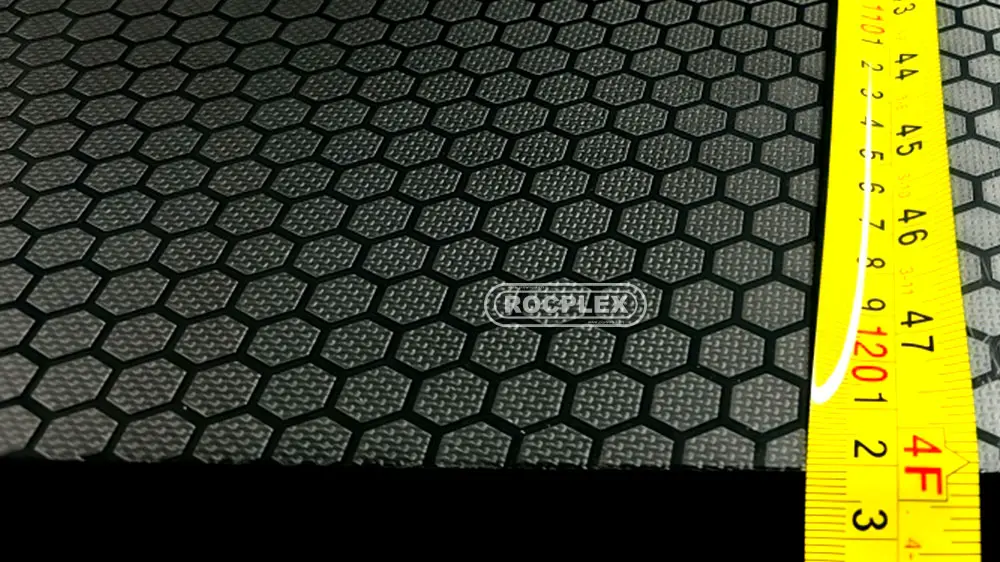
Confirm the 18mm spec before you place the order
Start by sending your exact use case and traffic level. Then state the standard sheet you want, such as 18mm at 1220×2440 mm. Choose black film or brown film based on your market. Next, pick mesh or hex texture based on ramps and cleaning needs. Add WBP bonding and sealed edges for wet exposure. Finally, request a pattern photo for repeat batches and a packing photo before loading. With these details, ROCPLEX can quote faster and keep future shipments consistent.
When you specify WBP bonding, you are mainly protecting long-term bond performance under wet cycling. If you need a clear reference point for bonding classes, see the overview of EN 314-2 bond quality requirements. For buyers comparing panel faces, our film faced plywood and PP plastic plywood pages can help you judge wear, cleaning, and reuse expectations.
Post time: Apr-15-2023