

Three-ply shuttering panel overview for buyers
Formwork must move fast and finish clean. Contractors depend on repeatable panels. Wholesalers need fewer returns. A three-ply core makes that balance possible. Two outer layers run lengthwise. The middle runs crosswise. That layout controls movement under load. Three ply shuttering panel also keeps edges square after many pours. ROCPLEX builds to tight targets. We measure moisture, thickness, and flatness per batch. Those checks protect your day on site.
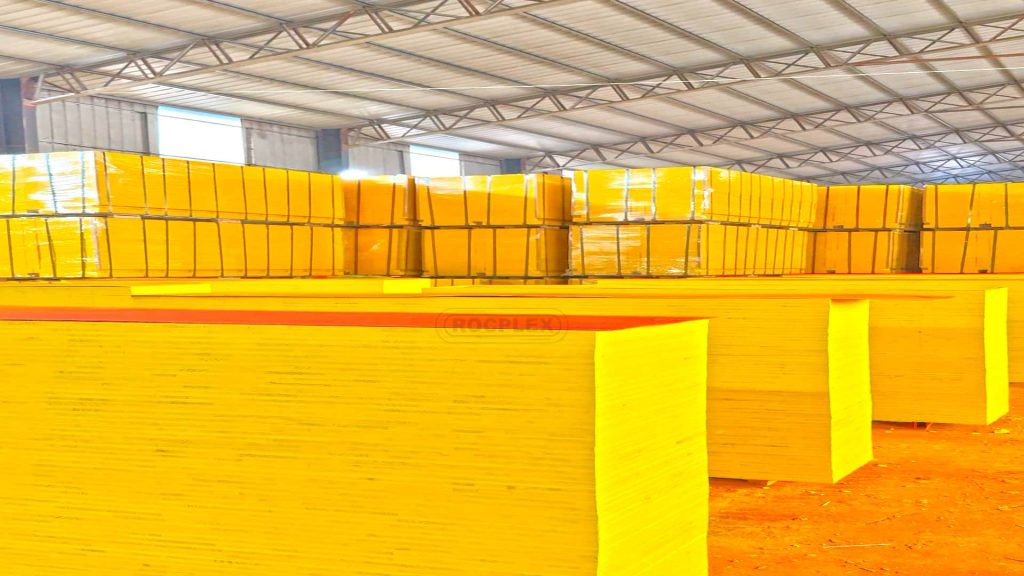
How ROCPLEX Three-ply shuttering panel differs
Small details create large gains. First, we select stable species. Then we control lamella moisture within a narrow band. Next, we apply a consistent glue spread. Press time and temperature follow set curves. Finally, we seal edges and drill test coupons. This process delivers predictable cycles. It also keeps face checks low. Therefore you strip early and repair less. Your concrete shows fewer stripes and pits.
Triply panel vs Three-ply shuttering panel
Both products use three solid layers. Yet they behave differently across sites. Triply panel 27mm often targets heavy loads. It suits wall gangs and big slabs. A Three-ply shuttering panel focuses on fast handling. It suits mixed crews and frequent moves. ROCPLEX offers both lines. You match the panel to the pour. That choice reduces waste and speeds work.
Yellow formwork panel vs Three-ply shuttering panel
Yellow panels look similar at first glance. However, coating weight varies a lot. Some coats resist abrasion well. Others wear fast near clamps. Our three-ply face receives a tough topcoat. The layer resists water and release oil. As a result, the finish stays even longer. Corners also hold shape better. Thus your seam lines stay clean.
Concrete formwork boards vs Three-ply shuttering panel
Generic boards can look cheap on day one. The low price tempts buyers. Yet swelling and cupping soon hurt results. Moreover, uneven cores cause early edge loss. A three-ply structure fights those risks. Crosswise fibers resist movement across the width. Consequently, joints close tight with less shimming. You keep your pour window on track.
Material and bond choices that lift cycles
Species matter. So do bond lines. We use MUF or equivalent structural glues. The glue line cures under heat and pressure. Strong bonds stop face telegraphing. They also hold through hot afternoons. Meanwhile, dense outer lamellae add wear resistance. Coating then seals the system. The stack works as a team. That is why reuse counts climb.
Thickness, 27mm options, and flatness
Many sites ask for 21mm triply panel or 27mm triply panel. Thicker sheets reduce deflection. They also carry clamping loads better. Triply panel 27mm suits high load zones. ROCPLEX Three-ply shuttering panel supplies 27mm as a standard choice. We control thickness to tight tolerances. Flat sheets close gaps faster. Crews notice the difference with every pour.
Surface finish, release, and fair-faced concrete
Finish sells your work. That truth never changes. Our faces print smooth and even. Release oil spreads clean across the coat. Therefore stripping runs fast and safe. Fewer pulls stick or tear. Fair-faced walls need less grinding. You move to curing sooner. Clients see uniform color and texture. Your team wins more repeat jobs.
Edge sealing and moisture control
Edges take the worst hits. Forks, clamps, and drops chew them first. We answer that with full sealing. The seal slows water uptake. It also reduces fiber lift. After each shift, crews should clean and re-seal scuffs. That small habit buys extra cycles. It also keeps honeycombing away at seams.
Handling, weight, and safety on site
Teams lift panels all day. Weight balance matters. Consistent density protects back health and speed. Our sheets land within narrow weight bands. Grips feel steady across bundles. Moreover, accurate sizes mean fewer awkward cuts. Crews waste less material. They also hit fewer anchors. Safety improves when work flows smoothly.
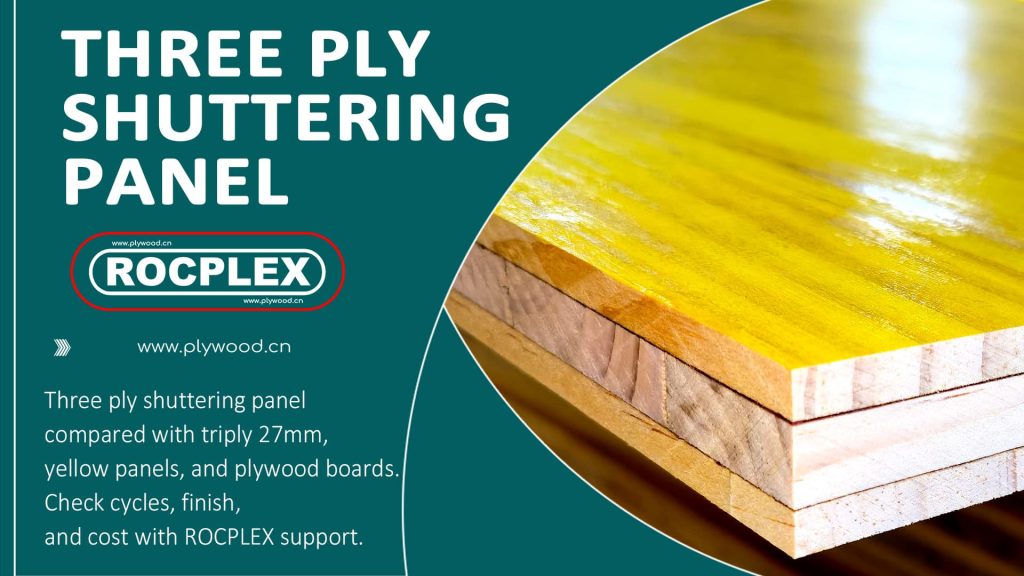
Cost per pour model for smart quotes
Three ply shuttering panel price tells only part of the story. You must count reuses and labor. Also add putty, sanding, and returns. A better panel raises reuse counts. It cuts finishing time after stripping. ROCPLEX shares a simple cost-per-pour model. You plug in cycles and labor rates. The result guides a clear buy decision. Often the higher grade wins on total cost.
Care routines that protect cycles
Clean panels after each pour. Use soft scrapers and approved oils. Avoid dirty rags that scratch coats. Stack sheets dry and shaded. Keep bundles off the ground. Rotate stock to spread wear. Re-seal edges when chips appear. These steps take minutes. Yet they often add many extra reuses. Good care multiplies value.
Standards and labels you should check
Labels help buyers compare mills. Panels should state species, glue system, and thickness. Ask for EN class data when relevant. Keep beam standards separate. H20 beams follow their own rule set. Panels follow another. Clear specs reduce disputes later. ROCPLEX provides batch records on request. The records show moisture, thickness, and flatness data.
Pack, sizes, and logistics for wholesalers
Yards move product all day. We pack square and tight. Corner protectors guard the edges. Straps hold bundles firm under long rides. Labels face the aisle for fast picks. Mixed thickness packs serve varied orders. Fork pockets suit common equipment. Drivers in turn spend less time loading. That saves overtime and claims.
FAQs for quick decisions
What is a Three-ply shuttering panel?
It is a solid-wood panel with three layers. The core runs crosswise. That layout stabilizes the sheet during pours.
How many reuses can I expect?
Cycles always depend on care and coating. Many teams report strong numbers with good routines.
Can I cut sheets on site?
Yes. Use sharp blades and clean tables. Seal edges after each cut for best life.
Which thickness should I choose?
27mm suits heavy loads and wider spans. 21mm fits lighter jobs and tight budgets.
How does it compare with a 3 ply formwork panel?
Both are close. However, controlled glue spread and thicker coats often lift reuse.
What release oil should I use?
Follow your concrete supplier’s list. Avoid oils that attack the surface coat.
Is ROCPLEX supply stable for large orders?
Yes. We ship steady volumes year-round. Batch data supports each container.
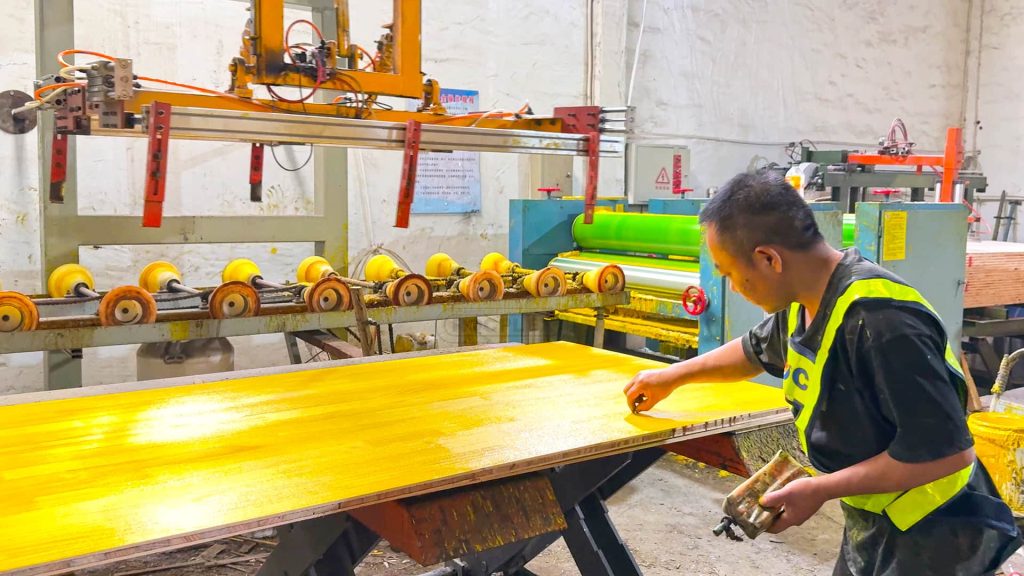
Why contractors switch to ROCPLEX Three-ply shuttering panel
Predictability wins jobs. Our sheets arrive flat and square. Edges line up without fuss. Coating weight stays even across faces. Therefore pores fill less with cement. Crews strip earlier and clean faster. On multi-storey work, those minutes stack. Schedules hold, and budgets breathe. Supervisors also praise the low claim rate. Problems shrink when panels behave.
Field feedback from repeat pours
Foremen report fewer damaged corners. They also report less shim time at joints. Furthermore, the finish stays even across wide areas. Repeat pours show stable color and gloss. Cold mornings and hot afternoons matter less. The bond lines hold through thermal swings. As a result, patch crews arrive later or not at all.
Spec snapshot for fast quoting
- Type: three-layer solid-wood formwork panel
- Core: crosswise lamella for stability
- Faces: dense layers for wear and smooth print
- Adhesive: structural MUF or equivalent
- Coating: high-wear finish suited to release oils
- Edges: factory sealed on all sides
- Thicknesses: 21mm and 27mm common
- Sizes: standard and custom on request
- Fit: works with clamps, walers, and H20 beams
- Docs: batch QC data available for each shipment
Buyer checklist for the next order
1) Confirm sheet thickness and tolerance.
2) Ask for coating weight and type.
3) Check moisture targets at dispatch.
4) Request edge sealing details.
5) Align sizes with your formwork system.
6) Plan storage with covers and dunnage.
7) Set a simple cleaning routine.
8) Track cycles by bundle and site.
9) Compare cost per pour, not only price.
10) Schedule replenishment to avoid rush fees.
Three-ply shuttering panel vs plywood form boards
Plywood offers a familiar route. It can be cheap and flexible. Yet core gaps and thin veneers add risk. Three-ply uses solid lamellae. That change improves screw hold and edge strength. Moreover, crosswise cores limit width movement. You see straighter seams after rain or heat. Finish quality also improves on tall walls.
Three-ply shuttering panel vs trilayer formwork panel naming
Buyers often see many names online. Three-ply, trilayer, and 3 ply shuttering panel all appear. The structure stays the same. What changes is species, glue, and coat. ROCPLEX keeps those variables tight. You then get repeat results across containers. Naming should never cloud the choice. Performance should decide it.
Three-ply shuttering panel and sustainability
Reuse beats landfill. More cycles mean fewer sheets consumed. That saves money and resources. Responsible sourcing also matters. We work with certified forests where required. We reduce waste in pressing and trimming. Long life then closes the loop further. Your projects can publish better sustainability notes. Clients care about that today.
Training tips for faster first pours
Run a short toolbox talk before the first pour. Show crews the care rules. Assign someone to watch release oil. Keep scrapers and soft brushes at hand. Set a daily clean time at shift end. Fix chips right away. These small steps prevent large costs. New teams learn them in minutes. Everyone benefits all month.
Stock planning for wholesalers
Demand spikes when sites ramp. Prepare stock ahead of bids. Keep 27mm for heavy gangs. Hold 21mm for price-sensitive jobs. Offer sample packs for trials. Mark pallets by thickness and face class. Maintain a simple returns policy. That policy builds trust with fast movers. Partners then treat you as a first call.
Price clarity and negotiation notes
Quote with a cycle model. Share assumed care steps. Show the finish target in photos. Buyers appreciate honesty on limits. Offer mixed bundles for trials. Add edge sealant kits to the first order. These extras raise success odds. Better outcomes then support premium value.
ROCPLEX service and documents
Paperwork should never slow delivery. We prepare packing lists, COOs, and QC sheets early. Dimensions and counts match loading. Photos record bundle condition before seal. You receive all files for customs and claims. This discipline saves days and stress. Shipments reach yards ready to move.
Common mistakes and how to avoid them
Do not use dirty oil. It stains faces and hurts release. Do not stack on wet ground. Moisture creeps up and swells edges. Do not delay cleaning after stripping. Cement fines will chew coatings. Do not ignore small chips. They grow into breaks. Fix issues early and keep cycles high.
Request ROCPLEX Three-ply shuttering panel samples and a cost-per-pour quote
Ready to speed pours and cut rework? Ask for ROCPLEX Three-ply shuttering panel samples today. We will model your cost per pour. You can also request triply panel 27mm for load tests. Our team replies fast with data and shipping plans. Let us help your crews pour, strip, and repeat with confidence.
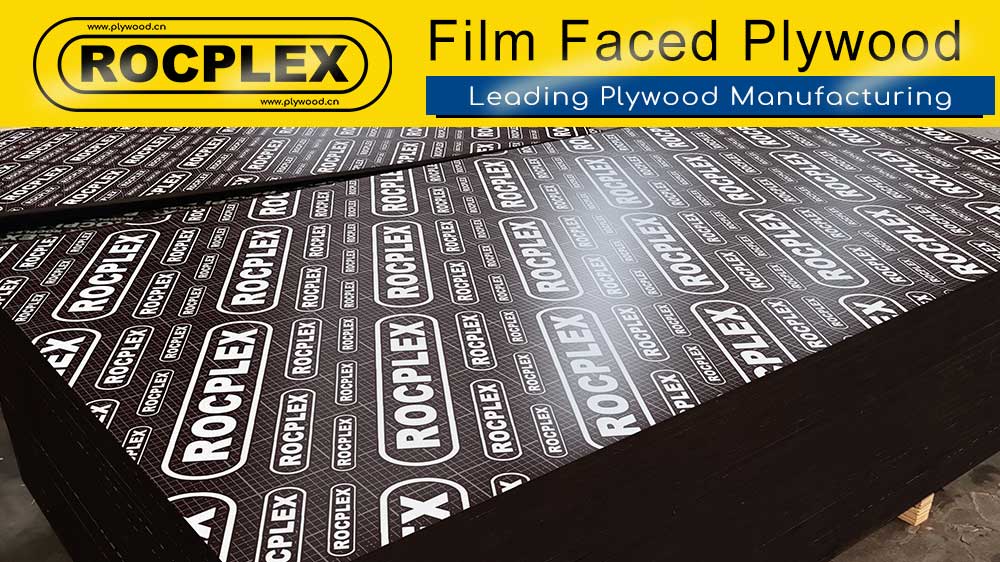
Formwork Plywood
Formwork plywood, also known as formply, shuttering plywood, or film faced plywood. It is a durable and versatile material used in concrete formwork and other construction applications.
What is Formwork plywood?
Formwork plywood is specifically designed for use in concrete formwork, providing a smooth, uniform, and durable surface that can withstand the harsh conditions encountered in construction projects. The surface of formply is smooth and non-porous, reducing the need for additional finishing work and saving time and costs.
Formwork construction film faced plywood is made from layers of hardwood or softwood veneers bonded together with strong, moisture-resistant adhesives like phenolic or melamine resin. This engineered construction offers excellent strength, rigidity, and durability, making it capable of withstanding heavy loads and repeated use.
Advantages of Formwork plywood.
One of the significant advantages of formply is its water and chemical resistance. Treated with water-resistant and chemical-resistant coatings. It can maintain its structural integrity even when exposed to harsh elements found on construction sites.
Shuttering plywood is also reusable, making it a cost-effective option for construction projects. With proper care and maintenance, it can be used multiple times, reducing waste and minimizing costs.
Construction use shuttering plywood has various applications in the construction industry, including concrete formwork, wall and column shuttering, slabs and beams, and temporary structures like scaffolding and exhibition booths.
Formwork plywood is a versatile, durable, and cost-effective solution for construction projects. Its strength, water resistance, and reusability make it a popular choice for concrete formwork and other applications.
Formwork plywood is available in a range of sizes and thicknesses to suit various construction needs. It can be easily cut to size and shaped according to the specific requirements of the project. This versatility makes it a popular choice among contractors and builders who require customized solutions for their construction projects. Whether it is for building foundations, walls, columns, slabs, or temporary structures, formwork plywood is a reliable and cost-effective option that provides excellent performance and durability.
Post time: Dec-08-2025