

Triply Panel 21mm is often the fastest way to stabilize daily formwork work. It also helps teams control the real budget number: cost per pour. Sheet price matters, of course. However, labor time, cleaning time, repairs, and waste often decide the final cost. So, if you want a stronger bid and fewer delays, you need a panel that stays flat, releases clean, and resists edge swelling after cuts.
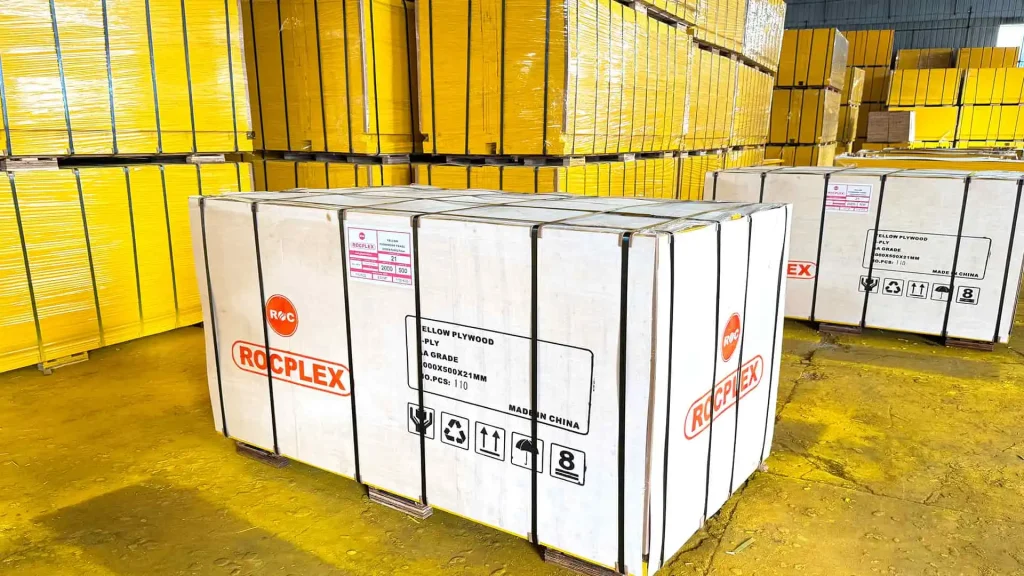
ROCPLEX builds Triply Panel 21mm for busy sites that run short cycles. We control moisture, bonding, press results, and edge sealing. As a result, you get more consistent sheets, fewer surprises, and a smoother reset rhythm.
Why Triply Panel 21mm works so well on concrete formwork
A good site product should save time in small ways, every day. Triply panels do that when the build is right.
- Faster handling: 21mm panels feel stable under load, yet crews can still move them with standard site methods.
- Cleaner release: a consistent face helps reduce paste build-up, so stripping is easier.
- Less edge trouble: strong edge sealing helps block water entry at cuts and corners.
- Simple repairs: small edge chips are easy to reseal, so panels stay in service.
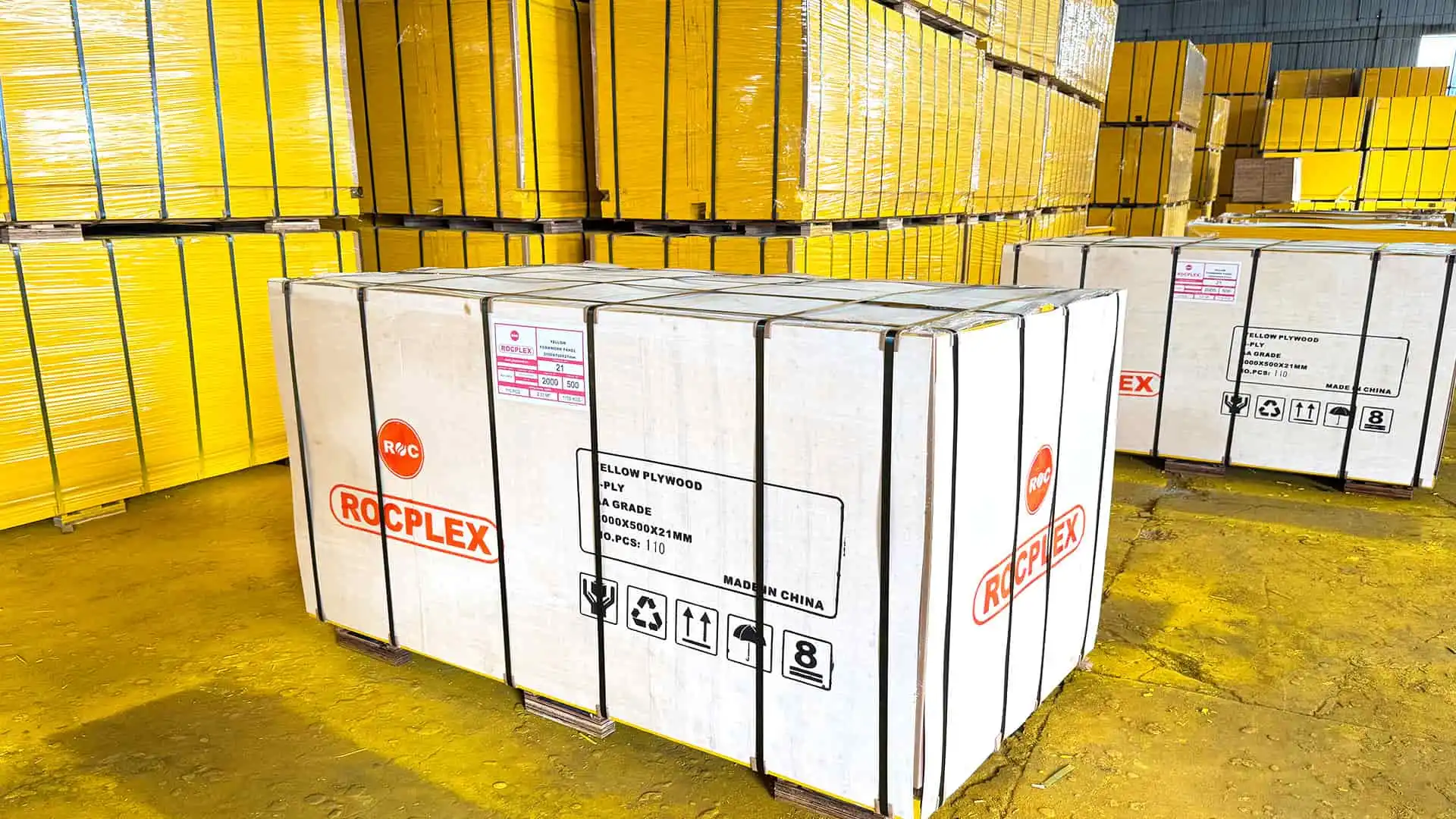
Because these gains repeat every pour, they often beat a lower “ticket price” panel that fails early.
What is a 21mm triply panel, in simple terms
A 21mm triply panel is a three-layer solid wood panel with cross-oriented layers. This structure helps the sheet hold shape. It also helps the panel resist twisting and cupping during wet work.
Many buyers also call it:
- 21mm shuttering panel
- 21mm formwork board
- three ply shuttering panel 21mm
These names vary by market. Still, the job is the same: stable formwork skin with reliable reuse value.
Triply Panel 21mm pricing: what drives the number you see
If you want a quote that makes sense, you need to understand what changes the price.
Veneer and timber grade
Better wood selection improves:
- flatness
- strength at edges
- life under repeated wet/dry cycles
So, a higher-grade panel can cost more per sheet. Yet it can cost less per pour.
Glue system and bond consistency
Bond strength matters in wet concrete work. Even more important, the bond must stay consistent across the whole sheet. A weak zone can ruin a panel early.
Face coating and surface rules
Face quality affects release and finish. It also affects cleaning time. Therefore, face rules influence labor cost, not only appearance.
Edge sealing and seal quality
Edges fail first on many jobs. So, edge sealing often decides real life. Full seal coats and good dry time matter.
Size, packaging, and order volume
Bigger sheets can reduce joints and speed coverage. However, they can raise freight and handling cost. Volume also affects unit price, because packing and loading improve.
Freight and local demand
Freight routes, fuel, and seasonal demand can shift pricing. That is normal. What you can control is the spec you choose and how you use the panel on site.
Cost per pour: the only comparison method that stays fair
If you compare systems, compare them by the same area and the same pour plan. Then use cost per pour.
Cost per pour = (Panel price ÷ reuses) + labor + cleaning + repair + transport + waste
Quick way to apply it
- Pick a zone (slab, wall, detail).
- Set a realistic reuse target for that zone.
- Add strip + wipe minutes per cycle.
- Add edge reseal time after cutting.
- Add transport cost based on weight and distance.
- Add waste from offcuts and damage.
This method removes guesswork. It also shows why a better-built Triply Panel 21mm can win even when the sheet price is not the lowest.
ROCPLEX controls that protect Triply Panel 21mm value
A panel only pays back when it survives cycles. So, ROCPLEX focuses on the controls that protect cycle life.
Tight moisture control
We keep moisture in range to support stability. As a result, panels stay flatter and fit frames better.
Even glue spread and strong bonding
Uniform bonding supports repeat use. It also helps resist peeling and layer failure.
Press control for stable thickness
Stable thickness improves fit with clamps and walers. It also reduces gaps and rocking edges. Therefore, it protects finish and speed.
Full edge sealing
Edge seal slows water entry at cuts and corners. In addition, it reduces swelling that can damage fit on the next pour.
Clear labels for batch control
Labels support faster site checks and easier repeat orders. They also help teams track performance by zone.
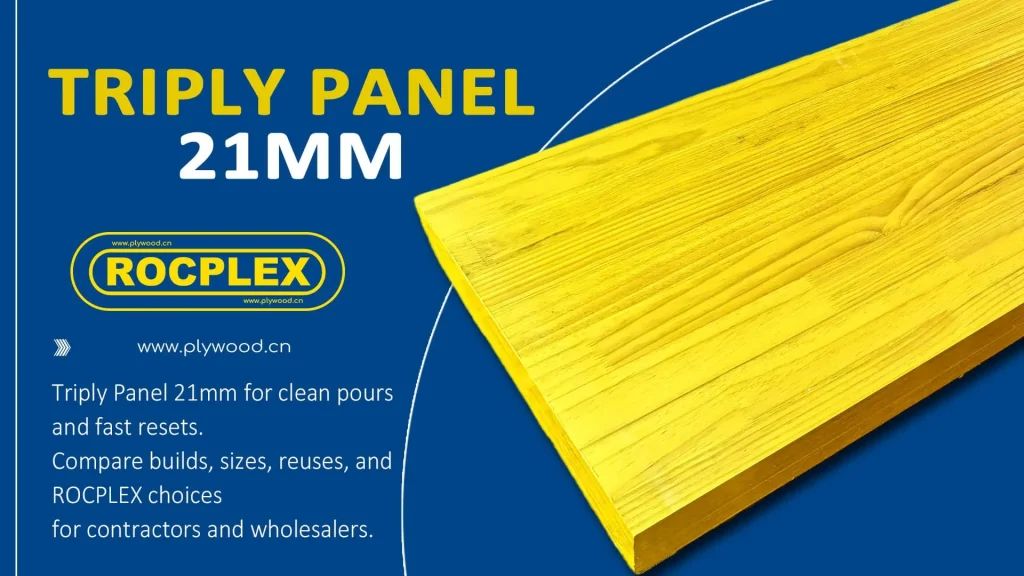
Triply Panel 21mm vs film faced plywood
Film faced plywood is common in formwork. It offers a hard film and a smooth finish. Still, some jobs prefer triply.
Triply panels can be a better fit when:
- crews cut openings often
- edges take daily hits
- resets happen fast
- simple repairs matter
Film faced plywood can be a better fit when:
- wear is very high in one zone
- you want a tough film surface for long runs
For many projects, the best answer is a mix. Use film faced plywood where wear is highest. Then use Triply Panel 21mm where speed and flexibility matter.
Triply Panel 21mm vs plastic formwork systems
Plastic formwork can wash easily. It also resists water by nature. However, plastic modules can cost more, and layout changes can slow work.
Triply panels usually win when:
- the layout changes often
- you need fast cut-outs
- you want quick, low-cost repairs
- you want standard tools, not special parts
So, if your job has mixed geometry, triply often keeps the pace.
Triply Panel 21mm vs aluminum and steel formwork
Aluminum frames
Aluminum runs fast on repeats. Yet upfront cost is high. Training also takes time. Custom modules can limit quick changes.
Triply panels help when:
- you need fast openings
- you need flexible edges
- you want to reduce rental sets on hybrid jobs
Steel panels
Steel is flat and durable. Still, weight changes everything. Heavy panels can force crane time, extra hands, or slower resets.
Triply panels help when:
- pours are smaller
- access is tight
- manual speed matters
- you need quick repairs without welding
Again, many sites run hybrid plans. Steel or aluminum covers the heavy repeat zones. Triply covers the flexible zones.
Best job uses for a 21mm three ply formwork panel
A 21mm three ply formwork panel is often used for:
- slab formwork skins and table resets
- beam and edge zones with frequent cuts
- walls within your frame design and spacing
- low-rise, villas, and mixed layouts
- temporary platforms where design allows
If you want strong results, match the panel to the zone. Then rotate panels between zones to spread wear.
How Triply Panel 21mm supports clean pours
Finish quality depends on more than the panel. Still, the panel sets the baseline.
To protect finish:
- keep faces clean between pours
- apply release agent in thin, even coats
- avoid heavy oil build-up
- repair chips early, not later
When you keep this rhythm, stripping stays easy and surface defects drop. That reduces patch time and speeds handover.
Handling and safety: small gains that add up
Better handling reduces strain. It also improves pace. So, it protects labor cost.
Triply panels support:
- standard lifting and carrying methods
- fast manual resets in detail zones
- simple cutting and drilling with common tools
- quick repairs without hot works
Less fatigue means steadier output. That matters on short cycles.
Storage and edge care: how to extend reuse cycles
Even the best panel needs simple care. These steps are easy and effective:
- Store sheets on dunnage, not on ground.
- Cover the top. Keep side airflow.
- Wipe faces before storage, so paste does not harden.
- Reseal every fresh cut the same day.
- Rotate panels by zone to spread wear.
- Keep a basic repair kit near the pour area.
If you do these steps, you protect the reuse value of Triply Panel 21mm.
Buying checklist before you request a Triply Panel 21mm quote
Use this checklist to get a quote that matches your real job:
- Required sheet sizes and thickness
- Finish zones (visible vs non-visible)
- Frame type and spacing plan
- Crew size and lifting method
- Release agent type and application method
- Cleaning tools and timing
- Storage method and cover plan
- Expected reuse target by zone
- Repair plan and spare ratio
- Delivery date, port, and unloading limits
A clear brief produces a cleaner pack plan. It also reduces waste on site.
People Also Ask: Triply Panel 21mm
How many reuses can Triply Panel 21mm deliver?
Reuse depends on handling, storage, release agent habits, and edge care. With good habits, many teams see strong cycle value by zone.
Is Triply Panel 21mm always better than thinner panels?
Not always. 21mm supports stiffness and spans. Still, spacing and loads decide the best choice.
Does rain ruin a 21mm shuttering panel?
Rain becomes a problem when water enters edges and stacks stay wet. Edge sealing and airflow storage prevent most issues.
Which release agent works best?
Use a release agent made for wood formwork. Apply thin, even coats to improve release and reduce cleaning time.
Get the right ROCPLEX pack, not just a fast price
If you want a quote that protects cost per pour, send:
- drawings or takeoff list
- target finish zones
- pour schedule and deadlines
- delivery port and terms
ROCPLEX will respond with clear specs, pack details, and practical use guidance. That way, your Triply Panel 21mm order arrives ready for real site pace.
Post time: Jan-26-2026